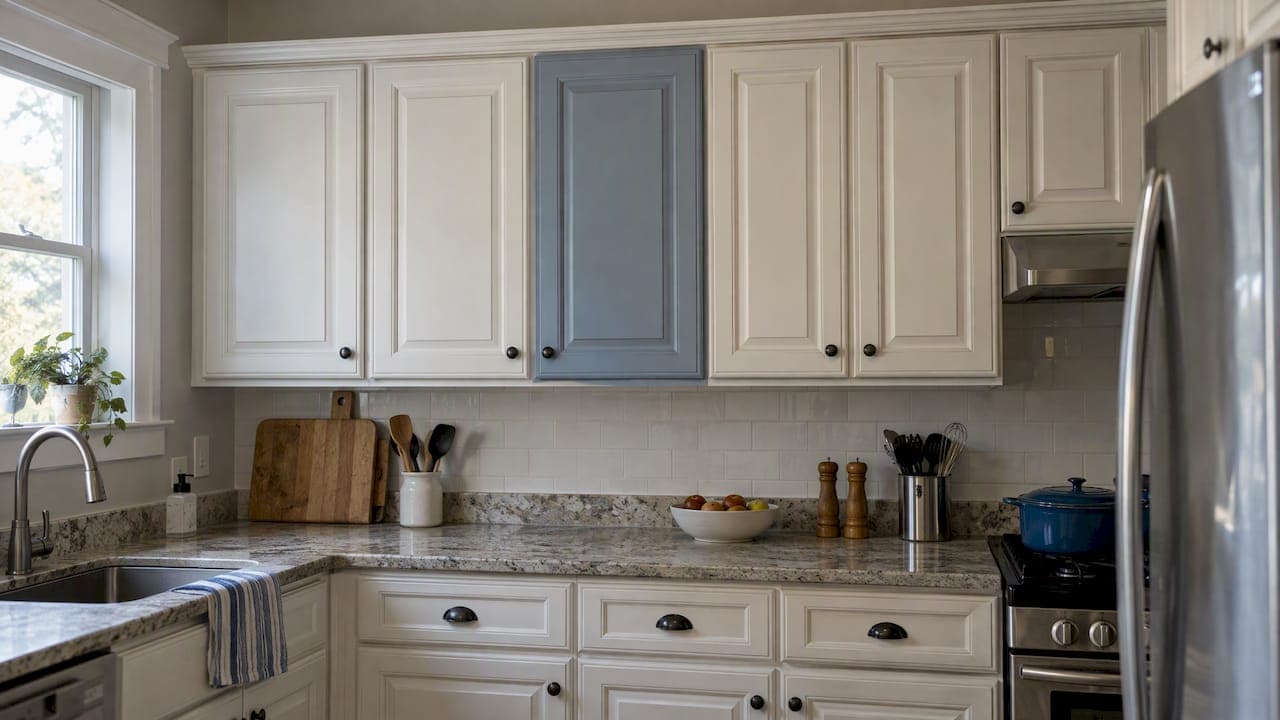
Raised panel cabinet style describes a door where the center panel sits slightly proud of its surrounding frame, creating visible depth and crisp shadow lines across the door face. This construction has anchored traditional and transitional kitchens for decades because it reads as substantial and formal without needing ornate hardware. It works well whether you choose a custom build, an assembled cabinet, or a ready-to-assemble option.
TL;DR:
- For doors under 24 inches wide, a 5/8 inch panel and 1/16 to 1/8 inch floating clearance support movement; mortise and tenon joints last longer.
- Deep cathedral or ornate profiles can overwhelm small kitchens; simplified square panels and light neutrals keep the traditional depth visually lighter.
- RTA cabinets generally cost less and ship faster than custom work; compare quotes by door or linear foot, and confirm whether installation is included.
- Painted finishes wear sooner at contact points than stained wood, so choose paint only if you accept more frequent touchups and careful cleaning.
- Choose plywood cabinet boxes over particle board, especially in humid kitchens or under sinks, where screw and hardware retention matters.
Table of Contents
- What makes a panel "raised," and why does construction matter?
- Which raised-panel profiles should you look for?
- What materials and construction details actually matter?
- How do finishes and colors change the look of a raised panel?
- How do you choose the right raised-panel style for your kitchen?
- What should you expect to pay for raised-panel cabinets?
- How do you maintain and repair raised-panel cabinets?
- Project-ready raised panel cabinets built for real kitchens
- Why raised panels still hold up in modern kitchens
- Ready to order your raised-panel cabinets?
- FAQ
- Sources
What makes a panel "raised," and why does construction matter?
A raised panel door has three parts: two vertical stiles, horizontal rails, and a center panel that floats in a groove rather than sitting flush or fixed. That panel typically rises about 1/16 inch to 1/8 inch above the frame, a tolerance that construction guidance recommends to let the wood expand and contract with humidity without cracking or cupping.
The frame itself is usually joined with mortise-and-tenon or cope-and-stick joinery, both of which hold up to repeated opening and closing far better than simple butt joints. The panel floats free inside its groove, so seasonal movement happens without stressing the joints around it.
Which raised-panel profiles should you look for?
Not every raised panel looks the same, and the profile you choose changes how formal or relaxed your kitchen feels. Browsing image galleries of raised-panel kitchens is one of the fastest ways to see how these differences play out in real rooms, since thumbnails rarely capture profile depth accurately.
- Square or simplified raised panels give a clean, traditional look without heavy ornamentation.
- Ogee and beaded profiles add curved, formal detailing often found in classic or estate-style kitchens.
- Cathedral and arched panels bring a classical accent, usually reserved for formal dining-adjacent kitchens.
- Reverse-bevel and shaker-influenced raised panels soften the formality for transitional spaces that want some depth without heavy carving.
Deeper profiles and more ornate edge detail make cabinets feel heavier and more traditional, while shallow, simplified panels keep the same shadow-line effect but feel lighter and more current. If you want our full breakdown of cabinet door styles, it compares raised panel against shaker and slab options side by side.
What materials and construction details actually matter?
Panel thickness and floating clearance affect how a raised panel door performs over time, not just how it looks on day one. For doors under 24 inches wide, a 5/8 inch panel thickness with a 1/16 inch to 1/8 inch floating clearance is a common workshop standard that balances rigidity against the panel's need to move.
Species choice matters too. Oak and cherry take stain well and show grain character, while maple and poplar give a smoother, more uniform surface for paint. Quartersawn lumber resists warping better than flat-sawn boards, which matters most on wider panels.
The cabinet box underneath deserves equal attention. Plywood boxes hold screws and hardware far more reliably than particle board, especially in humid kitchens or under sinks. For the doors themselves, you'll typically choose between solid wood, veneered panels, or thermofoil, each with different price and durability tradeoffs.

How do finishes and colors change the look of a raised panel?
Stain tends to highlight the grain and depth of a raised panel, which is why oak and cherry raised panels so often appear stained rather than painted. Paint, by contrast, emphasizes the shadow lines and edge detail more than the wood itself, which is why maple and poplar panels are popular painted choices. Our guide to cabinet finish types walks through durability differences between the two in more depth.
- Glaze or antiquing settles into the recessed grooves around the panel, making the profile detail pop even more.
- Light neutrals (soft white, warm gray) reduce the visual weight of a raised panel and keep a kitchen feeling current.
- Deep blues and rich stains amplify the formal, traditional character raised panels are known for.
- Hardware and countertops in simple lines help balance an ornate profile so the kitchen doesn't feel overdone.
How do you choose the right raised-panel style for your kitchen?
Picking a profile isn't just about personal taste. Room scale matters: a deeply carved cathedral panel can overwhelm a small galley kitchen, while that same profile might look right at home in a larger space with sightlines that let the detail breathe.
- Match profile complexity to your overall style. Simple square panels suit transitional kitchens; ogee or cathedral profiles suit traditional or formal ones.
- Consider finish durability. Painted finishes show wear at contact points sooner than stained wood, so factor in how much touch-up you're willing to do.
- Set your budget and timeline early. Ready-to-assemble cabinets ship faster and cost less than fully custom work; assembled cabinets sit in between.
- Ask about panel tolerances. A reputable builder or supplier should be able to tell you panel thickness and floating clearance without hesitation.
- Check joinery type. Mortise-and-tenon or cope-and-stick construction tends to outlast simpler joints.
- Confirm lead time in writing. This matters more with custom and semi-custom orders than with RTA or assembled lines.
Pro Tip: Bring a sample door home before you commit. Profile depth that looks subtle under showroom lighting can look very different under your own kitchen's lighting.
What should you expect to pay for raised-panel cabinets?
Pricing on raised-panel cabinets varies by how much of the work is done for you. Fully custom orders sit at the top of the range because every door is built to spec, while assembled stock cabinets cost less since production is standardized. Ready-to-assemble (RTA) cabinets typically land at the most affordable end, since you handle final assembly yourself.

A few factors drive cost regardless of tier: wood species, applied moldings, finish complexity (plain stain versus glazed and antiqued), hardware choice, and any specialty door sizes. Lead times follow the same pattern: custom work takes the longest, RTA ships fastest.
When comparing bids, ask whether pricing is per door or per linear foot, since suppliers mix these methods and it makes apples-to-apples comparison difficult otherwise. Installation cost is usually separate from the cabinet price itself, so confirm whether a quote includes it.
How do you maintain and repair raised-panel cabinets?
Cleaning routines depend on finish. Painted raised panels do well with a soft cloth and mild soap, avoiding abrasive pads that can dull sheen in the recessed grooves. Stained and sealed wood tolerates slightly stronger cleaners but still benefits from gentle handling around the panel edges where finish wears thinnest.
Small repairs like glaze touch-ups or hinge adjustments are routine and don't require replacing the whole door. Full refinishing makes sense when the finish has worn broadly but the wood underneath is sound; replacement becomes the better option when panels have cracked or warped beyond what sanding and refinishing can fix.
A quick seasonal check, especially after major humidity swings, helps you catch panel movement or loose hinges before they become bigger problems.
Project-ready raised panel cabinets built for real kitchens
Raised-panel cabinets are built around construction fundamentals: plywood boxes for lasting strength, solid wood doors for the depth and shadow lines raised panels are known for, and fast shipping so projects don't stall waiting on lead times. The process is built around solving two biggest frustrations in this market: cabinets that take months to arrive and cabinets that cost far more than the quality justifies.
If you want to handle final assembly yourself and keep costs tight, our RTA Cabinets line, including the Shaker, Classic, and Slim Series, gives you that flexibility. If you'd rather receive cabinets ready to install, our Assembled Cabinets line removes that step entirely. Both are built for residential and commercial projects alike, whether tackling one kitchen or managing several units.
Why raised panels still hold up in modern kitchens
Raised panels earn their staying power through proportion, not nostalgia. A simplified profile, paired with a light neutral finish and clean hardware, keeps that traditional depth relevant in kitchens that otherwise lean contemporary. The detail that matters most is restraint: let the shadow lines do the work, and skip the extra flourishes your space doesn't need. Weigh your profile choice against your room's scale and your project's budget before you commit.
— Nathan
Ready to order your raised-panel cabinets?
We carry raised-panel styling across both our RTA and assembled lines, so you can choose the buying path that fits your project and timeline. Every box is built from plywood, every door from solid wood, and every order ships fast enough to keep your renovation on schedule.

- Explore Assembled Cabinets if you'd rather skip assembly entirely.
- Visit our full product lineup to compare kitchen and bathroom options side by side.
- Prefer refacing over full replacement? WoodMade Illinois covers refacing and painting services worth considering alongside new cabinets.
Shop our raised-panel collections today, or reach out for a project quote if you're still comparing options.
FAQ
Are raised panel cabinet doors in style?
Yes, raised panel doors remain a staple in traditional and transitional kitchens, especially when paired with simplified profiles and lighter finishes. They're frequently shown paired with modern countertops and hardware to soften their formal character.
Are raised panel cabinets dated?
A heavily ornate, dark-stained raised panel can feel dated in a strictly modern kitchen, but simplified profiles in lighter finishes read as current. The profile itself isn't dated; the specific combination of depth, color, and hardware is what shapes that perception.
Are raised panel cabinets coming back?
Raised panels never fully left, since they've stayed common in traditional and transitional kitchen design throughout. What's changed is pairing them with cleaner hardware and lighter palettes to fit more contemporary spaces.
Are raised panel cabinets more expensive?
Cost depends more on buying format than on the raised panel detail itself. Custom raised-panel doors cost more than assembled stock options, and RTA versions, like our Shaker and Classic Series, tend to be the most budget-friendly route.
Sources
- Design Essentials for Raised Panel Cabinetry (Classic Techniques)
- Kitchen with raised-panel cabinets ideas — Houzz