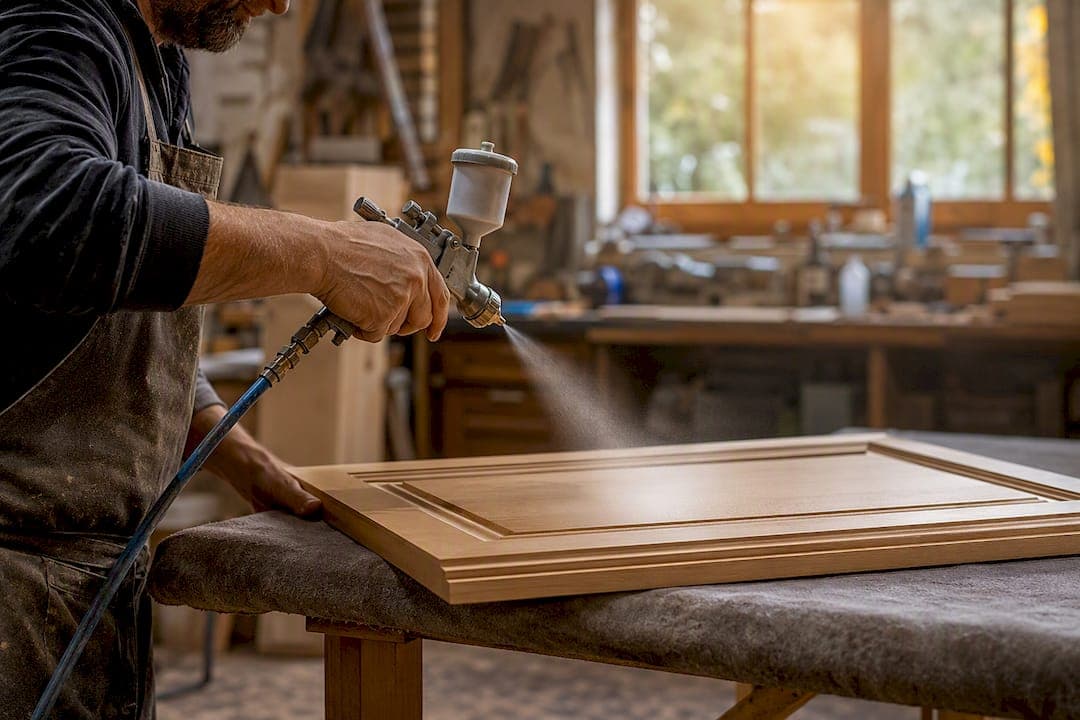
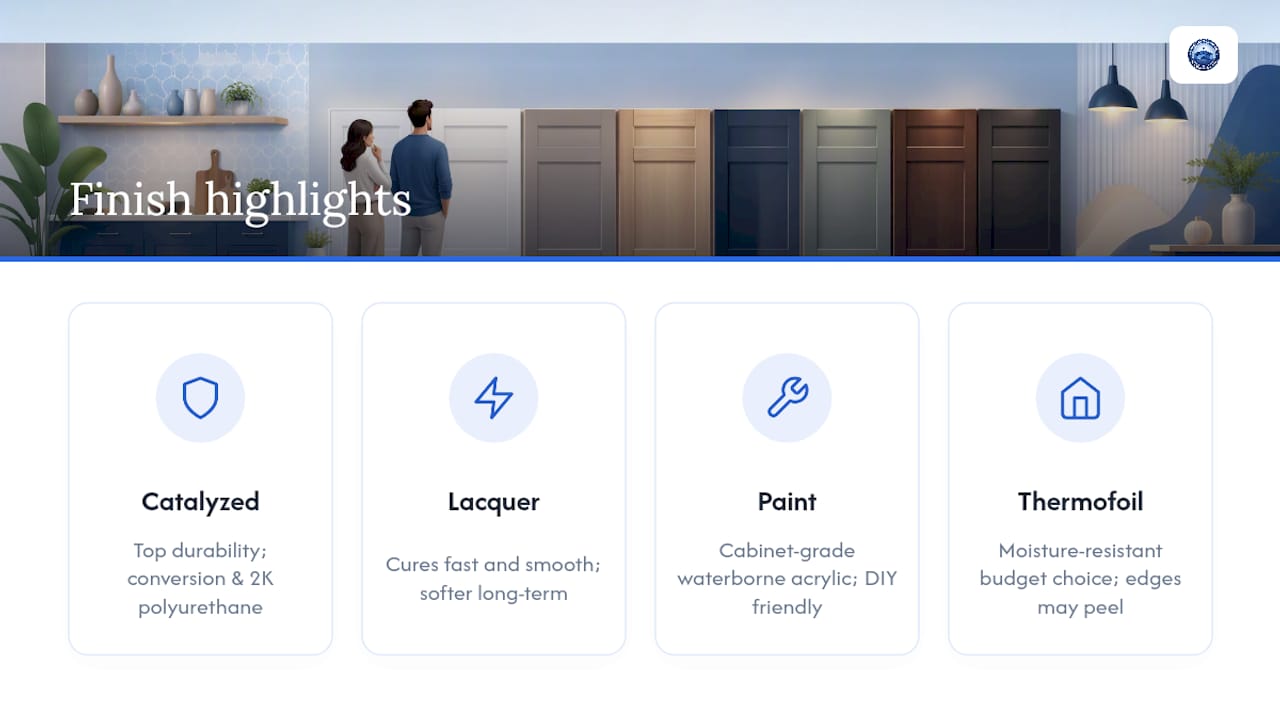
The main cabinet finish types are paint, stain with a clear topcoat, lacquer, conversion varnish (a "2K" catalyzed system), varnish or polyurethane, laminate/thermofoil/melamine, veneer, acrylic, and decorative glazes. For most kitchens, factory-applied catalyzed coatings like conversion varnish deliver the best long-term durability, while DIY painters get the most livable results with cabinet-grade waterborne paint in satin or semi-gloss, sprayed rather than brushed whenever that's an option.
- Best for durability: conversion varnish or 2K polyurethane, factory-sprayed
- Best for DIY: waterborne acrylic paint, satin or semi-gloss, applied with an HVLP sprayer
- Best for budget/moisture areas: thermofoil or laminate over a stable substrate
Every finish trades something for something else. A glossy lacquer looks stunning under kitchen lighting but shows every fingerprint. A hand-brushed oil varnish is easy to apply but ambers with age. Satin and semi-gloss sheens win in most kitchens because they hide daily wear without looking flat; to understand the nuances of sheen selection, see What is the Best Sheen for Interior Doors? | One Day Doors & Closets.
Key Takeaways
Cabinet longevity depends more on coating chemistry and application method than on color or brand name, and satin or semi-gloss sheens outperform flat or high gloss in daily kitchen use.
| Point | Details |
|---|---|
| Match finish to usage | Busy kitchens need catalyzed coatings; low-traffic cabinetry can use simpler paint or clear coats. |
| Choose satin or semi-gloss | These sheens balance cleanability and appearance better than matte or high gloss in most kitchens. |
| Spray beats brush for durability | Factory-sprayed conversion varnish and 2K poly cure harder and more evenly than brushed coatings. |
| Ask about KCMA testing | Request chemical resistance test data before assuming a "premium" finish is genuinely durable. |
| Start with a stable substrate | Best Cabinet Specialist's plywood boxes and solid wood doors give any finish a base built to last. |
Table of Contents
- Cabinet Finish Types Explained: Coatings vs. Substrates vs. Decorative Layers
- Painted Cabinets: Best Paint Types, Sheens, and Application Methods
- Stained Wood and Veneer: When Natural Grain Is Worth Protecting
- Lacquer, Conversion Varnish, and 2K Finishes: The Professional Standard
- Polyurethane and Varnish Clear Coats: What You Can Brush On Yourself
- Laminate, Thermofoil, and Acrylic Doors: Budget and Moisture-Smart Choices
- Glazes, Distressing, and High-Gloss Acrylic: Decorative Layers That Change Maintenance
- Choosing the Right Sheen: Satin, Semi-Gloss, Matte, and Gloss Compared
- How to Choose the Right Cabinet Finish for Your Project
- Why Best Cabinet Specialist's Approach Matches This Durability-First Logic
- What Actually Matters When You're Choosing a Finish
- Get Cabinets Built for the Finish You Actually Want
- Frequently Asked Questions
- Sources
Cabinet Finish Types Explained: Coatings vs. Substrates vs. Decorative Layers
Cabinet finishes fall into three categories, and confusing them is the most common mistake homeowners make when comparing quotes. A coating is a topcoat applied over a wood surface, such as paint, stain and clearcoat, lacquer, or conversion varnish. A substrate finish is baked into the material itself, like laminate, thermofoil, or wood veneer. Decorative treatments — glazing, distressing, hand-rubbing — sit on top of either one to add character.
Coatings are usually sprayed at the factory for the hardest cure; substrate finishes arrive pre-finished and need no coating at all.
| Finish category | Visual effect | Durability | Price band |
|---|---|---|---|
| Coating (paint, lacquer, conversion varnish) | Custom color, deep sheen | Varies widely by product | Low to high |
| Substrate (laminate, thermofoil, veneer) | Consistent, uniform look | Good for moisture, weak at seams/heat | Low to mid |
| Decorative (glaze, distressing) | Traditional, textured | Adds a layer to maintain | Mid to high |
Painted Cabinets: Best Paint Types, Sheens, and Application Methods
Paint remains the most requested cabinet finish, and the base matters more than the color. Waterborne acrylic cabinet-grade paint (the kind cabinet shops actually use, not standard wall paint) cures harder, resists yellowing, and cleans up with soap and water. Oil-based alkyd paint lays down a glassier finish and self-levels beautifully, but it ambers over time and takes days to fully cure.
Sheen matters as much as paint type. Satin and semi-gloss are the workhorses of kitchen painting: they wipe clean without highlighting every roller mark or grain line. Flat and matte sheens look sophisticated in photos but show grease and fingerprints within weeks near a stove. High gloss looks showroom-fresh on day one, then broadcasts every scratch and drip.
- Prime with a bonding primer, especially over existing paint or oak grain
- Spray for a factory-smooth result; brush and roll only with a quality synthetic brush plus light sanding between coats
- Cure time matters: many waterborne paints need 2 to 3 weeks before they reach full hardness
Pro Tip: If you're painting doors yourself, remove and lay them flat to spray or brush. Vertical surfaces sag, and gravity always wins near hinges.
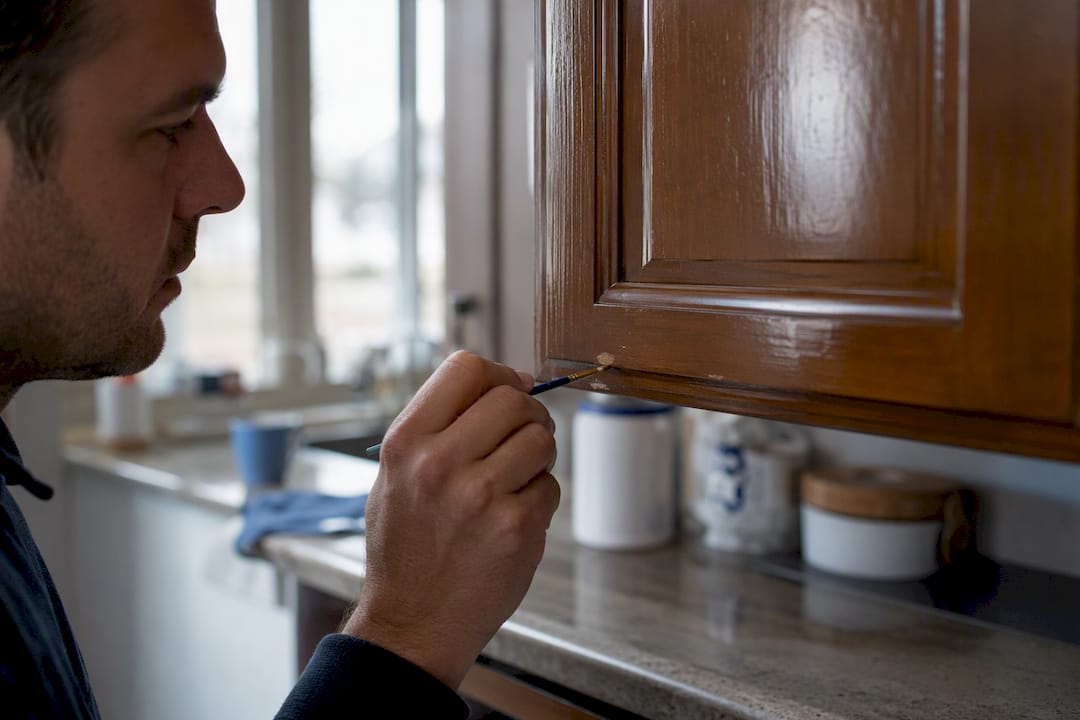
Touch-ups on painted cabinets are straightforward if you saved the exact product name and sheen. Chips near the sink and stove are the most common repair calls.
Stained Wood and Veneer: When Natural Grain Is Worth Protecting
Stain doesn't protect anything on its own. It's a colorant that soaks into open wood grain, and it always needs a clear topcoat to resist moisture and wear. Solid wood cabinet doors take stain beautifully because grain patterns vary door to door, giving a kitchen real depth. Solid wood doors also sand and refinish well decades later, which is something engineered panels can't match.
Veneer, a thin layer of real wood over a plywood or MDF core, gives you that same grain look at a lower cost and with better dimensional stability. Veneer resists warping in humidity swings better than solid wood slabs, which makes it a smart choice for kitchens near dishwashers or exterior walls with temperature swings.
- Conversion varnish over stain: the toughest option, best for daily-use kitchens
- 2K polyurethane over stain: excellent chemical and scratch resistance, professional application recommended
- Lacquer over stain: fast-curing and smooth, but softer than conversion varnish long-term
Lacquer, Conversion Varnish, and 2K Finishes: The Professional Standard
Pre-catalyzed lacquer, conversion varnish, and 2K polyurethane are the three finishes that separate a factory-built cabinet from a weekend paint job. Pre-cat lacquer has a catalyst mixed in before spraying and cures through solvent evaporation. Conversion varnish and true 2K systems cure through a chemical cross-linking reaction, which builds a denser, harder film. That chemistry difference is why conversion varnish and quality 2K polyurethane outperform standard wall paint on scratch, chemical, and moisture resistance in nearly every independent comparison.
The tradeoff is application. These systems require spray equipment, proper ventilation, and a catalyst added at a precise ratio, which is why they're almost always shop-applied rather than DIY. Older acid-cure conversion varnishes also carry noticeable VOCs and formaldehyde during cure. Newer formulas close that gap: EnviroVar is a formaldehyde-free conversion varnish built specifically to lower odor and emissions while keeping the durability of traditional acid-cure systems.
- Best fit: high-traffic family kitchens, rental properties, resale-focused remodels
- Cure time: fast, often ready to handle within a day, fully cured within a week
- Expect a premium over basic paint, offset by fewer repaints over the life of the cabinet
Pro Tip: Ask any finisher whether their conversion varnish is KCMA tested for household chemical resistance. That single question filters out vague "premium finish" marketing fast.
Polyurethane and Varnish Clear Coats: What You Can Brush On Yourself
Waterborne polyurethane and oil-modified varnish are the clear coats most homeowners can actually apply without spray equipment. Waterborne poly dries clear, resists yellowing for years, and cleans up with water, making it the better pick over stained maple or white-washed oak where you want the wood tone to stay true. Oil-modified varnish lays down thicker and self-levels nicely, but it ambers noticeably within a year or two, which can be a problem over light or gray-toned wood.
- Waterborne poly over stain: true color retention, moderate durability
- Oil-modified varnish over stain: warmer amber cast, slightly better self-leveling
- Neither clear coat works well directly over paint; use a dedicated topcoat rated for painted surfaces instead
Refresh dulled clear coats with a light scuff-sand and a fresh coat rather than stripping to bare wood, which saves both time and the original stain color.
Laminate, Thermofoil, and Acrylic Doors: Budget and Moisture-Smart Choices
High-pressure laminate (HPL), thermofoil, melamine, and acrylic are engineered surfaces rather than sprayed coatings, bonded to an MDF or particleboard core under heat and pressure. Thermofoil wraps a vinyl film around routed door profiles, which is why it excels at shaker-style doors but can peel at edges near a dishwasher or oven vent over time. Melamine and laminate stay flat and resist moisture well on cabinet boxes and simple slab doors. Acrylic doors bring a high-gloss, glass-like surface without the fingerprint sensitivity of lacquer.
- Best for: rental units, laundry rooms, bathrooms, and budget kitchens where moisture resistance matters more than repairability
- Limitation: damaged sections usually require full door replacement rather than a touch-up
- Typical lifespan runs shorter than catalyzed wood coatings, especially at heat-exposed edges
Glazes, Distressing, and High-Gloss Acrylic: Decorative Layers That Change Maintenance
Glazing brushes a tinted, translucent layer into corners and profile details, then wipes it back to highlight raised panels. It works best on traditional and transitional door styles with visible molding, and it adds real depth to stained or painted cabinets alike. Distressing (physical dents, worn edges, rub-through) pairs naturally with glaze for a farmhouse or old-world look.
High-gloss acrylic and lacquer sit at the opposite end of the style spectrum: sleek, reflective, and modern. They photograph beautifully but need daily wiping to stay streak-free, since any smear or water spot shows immediately under kitchen lighting.
- Glaze and distressing: low daily maintenance, harder to touch up evenly if damaged
- High gloss: highest visual impact, highest cleaning frequency
- Mixing finishes (gloss island, satin perimeter) adds contrast without full-kitchen upkeep
Pro Tip: If you love high gloss, save it for an island or accent wall of cabinets rather than the whole kitchen. You get the visual punch without babysitting every door.
Choosing the Right Sheen: Satin, Semi-Gloss, Matte, and Gloss Compared
Sheen selection matters as much as the finish family itself. Satin and semi-gloss give most kitchens the best balance of cleanability and looks; matte finishes show oil smudges and water spots more readily, and high gloss reveals every flaw in the surface prep underneath it. Manufacturer product sheets typically list sheen options ranging from dull to full gloss, so ask what's actually available before assuming a supplier offers your preferred level.
- Semi-gloss: best for cooktop walls, sinks, and high-touch door fronts
- Satin: the safest all-around choice for full kitchens with kids or frequent cooking
- Matte: works in low-traffic butler's pantries or formal dining cabinetry
- Gloss: reserve for accent pieces or bathroom vanities with lighter daily use
Clean satin and semi-gloss cabinets with a soft cloth and a mild dish soap solution. Skip anything abrasive, ammonia-based, or a magic-eraser style pad. All of those dull the sheen and, on painted surfaces, can burnish a visible sheen mismatch right where you scrubbed.
How to Choose the Right Cabinet Finish for Your Project
Work through this checklist before you order doors or hire a finisher.
- Define the room and use pattern. A kitchen with daily cooking and kids needs a harder-wearing finish than a butler's pantry or a low-traffic laundry cabinet.
- Set a realistic budget band. Catalyzed factory finishes cost more upfront but usually outlast one or two repaint cycles of a basic paint job.
- Decide DIY vs. professional. Paint and brushed clear coats are realistic weekend projects; conversion varnish, 2K poly, and true lacquer need spray equipment and ventilation most homeowners don't have.
- Match sheen to lifestyle, not just the showroom sample. Ask to see a sample door under your own kitchen lighting if possible.
- Confirm expected lifespan and warranty terms in writing, not just verbally.
When you're talking to a supplier or finisher, ask these specific questions:
- What product family is this (conversion varnish, lacquer, waterborne paint)?
- Has it been tested to KCMA standards for household chemical resistance?
- What's the application method, spray or brush, and what's the cure time before normal use?
- What sheen options are available for this specific product?
Watch for red flags: a vague "premium lacquer finish" with no product name, no test data offered when you ask, or a supplier steering you toward the cheapest coating without discussing your actual usage.
Pro Tip: Get the exact product name and sheen level in writing on your invoice or spec sheet. It's the single easiest way to order a perfect touch-up can years later.
Why Best Cabinet Specialist's Approach Matches This Durability-First Logic
Best Cabinet Specialist builds cabinets around the same priorities this guide walks through: plywood boxes for structural stability, solid wood doors that take stain and paint well, and finish options selected for how a kitchen actually gets used, not just how it photographs. Soft-close hardware and fast shipping round out a lineup built for homeowners, contractors, and builders who need project-ready cabinets without a months-long custom finish timeline.
- Choose Best Cabinet Specialist's assembled or RTA cabinets when you want durable construction and practical finish options without commissioning a fully custom spray job
- Consider a custom finisher instead when you need an exact proprietary color match or a highly specialized glaze technique
- Explore finish durability guidance and hardware finish pairing for deeper detail on maintaining your specific choice
What Actually Matters When You're Choosing a Finish
Most cabinet advice online ranks finishes by how they look in a showroom photo, which is exactly backward. Gloss lacquer wins every visual comparison and loses every real-kitchen comparison within six months, because nobody mentions how often you'll be wiping fingerprints off it before dinner guests arrive.
The bigger blind spot is application method. Homeowners fixate on choosing between paint, stain, or lacquer, when the real durability gap often comes down to spray versus brush. A mediocre paint sprayed correctly in a controlled shop environment will usually outlast an excellent paint brushed on in a garage, because the cured film is thinner, more even, and free of brush marks that trap grease.
If there's one thing worth prioritizing above finish family or brand name, it's asking whether a coating has been tested against a real standard like KCMA's chemical resistance requirements. That single question does more to separate a genuine catalyzed finish from marketing language than any amount of sheen comparison. Everything else, including color and gloss level, is a preference. Durability under test conditions is a fact.
Get Cabinets Built for the Finish You Actually Want
If you've read this far, you already know that finish performance starts with what's underneath it. Best Cabinet Specialist builds every cabinet on plywood boxes with solid wood doors, so whatever finish you choose, paint, stain, or a factory catalyzed coating, it's going on a base that won't swell, sag, or void the finish warranty a few years in. That's the gap that trips up a lot of DIY refinishing projects: a great topcoat over a weak substrate still fails early.

Homeowners get soft-close hardware and a range of finish and color options without the long lead times custom shops often quote. Contractors and builders get trade-friendly pricing and fast shipping on bulk orders, so a finish upgrade doesn't stall a whole project timeline. If you're planning a kitchen refresh or a full remodel, browse current cabinet styles and finish options and get a quote built around the exact finish and sheen this guide helped you choose.
Frequently Asked Questions
What is the most durable cabinet finish type? Conversion varnish and high-quality 2K polyurethane, both catalyzed systems, outperform standard paint on scratch, chemical, and moisture resistance and are the finishes most factory-built cabinets rely on.
Is lacquer better than paint for kitchen cabinets? Lacquer cures faster and lays down smoother than most paints, but it's typically softer than conversion varnish over the long run. Paint, especially cabinet-grade waterborne acrylic, remains the more practical DIY option since it doesn't require spray equipment to look professional.
What sheen should I choose for kitchen cabinets? Satin or semi-gloss works for nearly every kitchen because both sheens hide daily wear without looking flat or overly reflective. Reserve high gloss for accent pieces and matte for low-traffic cabinetry.
Are thermofoil or laminate cabinets a good choice for a kitchen? They're a solid, moisture-resistant option for budget kitchens, rentals, and bathrooms, though edges near heat sources like ovens can peel over time and damaged sections usually need full door replacement rather than a spot repair.
Do cabinet finishes affect indoor air quality? Some catalyzed finishes historically carried noticeable VOCs and formaldehyde during cure. Newer options like EnviroVar's formaldehyde-free conversion varnish close that gap while keeping comparable durability.