
The most common cabinet door styles are Shaker, slab/flat, raised panel, recessed/flat panel, beadboard, glass/mullion, louvered, and barn/plank. Choosing among them comes down to three things: match the visual character to your home's architecture, weigh how much maintenance you're willing to do, and set a realistic budget before you fall in love with a profile.
Here's a quick index so you can jump straight to the style that caught your eye:
- Shaker — five-piece frame, flat center panel, transitional
- Slab/Flat — single smooth panel, minimal, modern
- Raised panel — center panel raised above the frame, traditional
- Recessed/Flat panel — center panel set below the frame, classic
- Beadboard — vertical grooves, cottage/farmhouse
- Glass/Mullion — glass inserts, open and airy
- Louvered — horizontal slats, coastal/casual
- Barn/Plank — horizontal planks, rustic
One important distinction before you dive in: door style and installation type are separate decisions. Two identical Shaker doors can look and cost very differently depending on whether they're installed as full-overlay or inset. Keep that in mind as you read through the gallery below.
Table of Contents
- 1. What does each cabinet door style actually look like?
- 2. How cabinet doors are built: frame-and-panel vs slab construction
- 3. Overlay vs inset: how installation type changes the look and cost
- 4. Materials and finishes: what actually changes look, durability, and cost
- 5. How to choose the right door style for your kitchen
- 6. Typical U.S. cost ranges and lead times
- Key Takeaways
- The detail most buyers overlook
- Ready to find your cabinet doors at Best Cabinet Specialist
- Useful sources and further reading
1. What does each cabinet door style actually look like?
The eight core profiles cover nearly every kitchen aesthetic on the market. Here's what each looks like, who it suits, and what it costs to get there.
Shaker
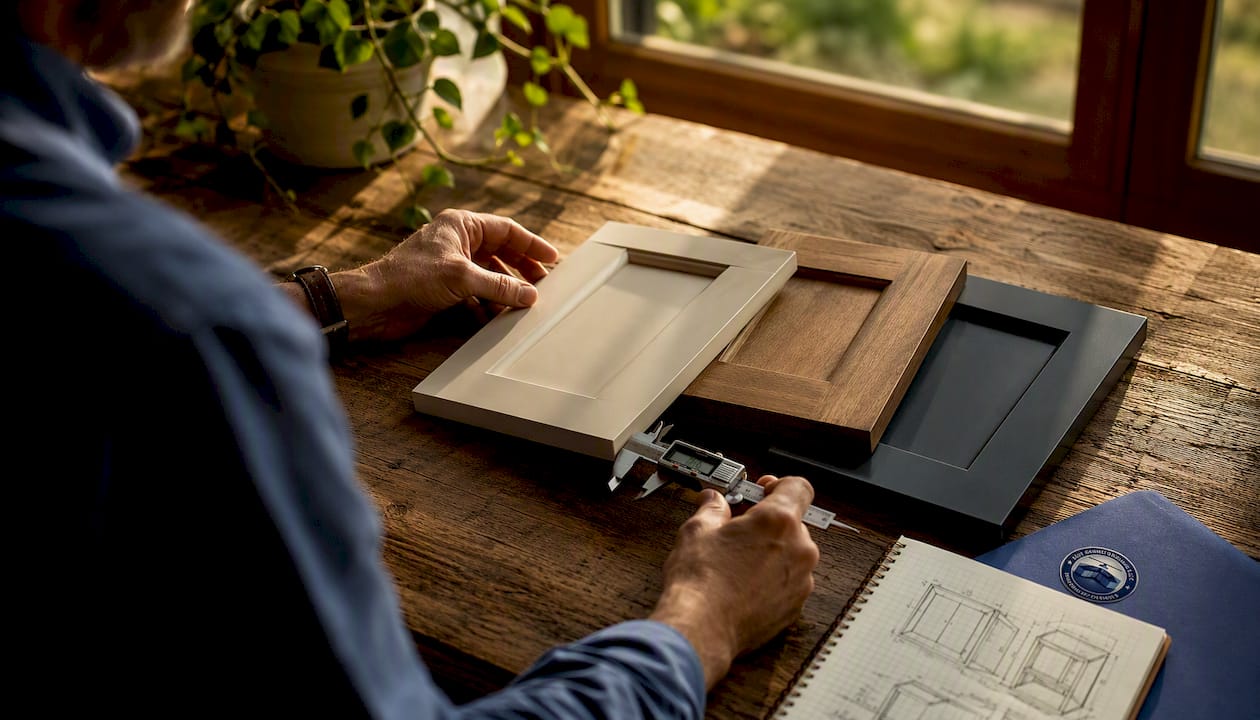
A Shaker door has five pieces: two vertical stiles, two horizontal rails, and a flat center panel recessed slightly inside the frame. The result is clean geometry with just enough visual interest to work in both traditional and modern kitchen designs. Shaker doors remain one of the most popular and versatile choices precisely because they read as transitional, making them a safe pick for resale.
Pros: Versatile across styles, easy to clean, widely available in RTA and assembled formats. Cons: So common it can feel generic; flat panel collects fingerprints on painted finishes. Best for: Most kitchens, especially those targeting resale neutrality. Cost cue: Medium.
Slab/Flat
A slab door is a single, uninterrupted panel with no frame and no detail. Slab doors are flat, smooth panels — often MDF or veneered plywood — and have become the go-to for low-maintenance, contemporary kitchens. Wiping them down takes seconds, and the continuous grain on a wood-veneer slab looks striking.
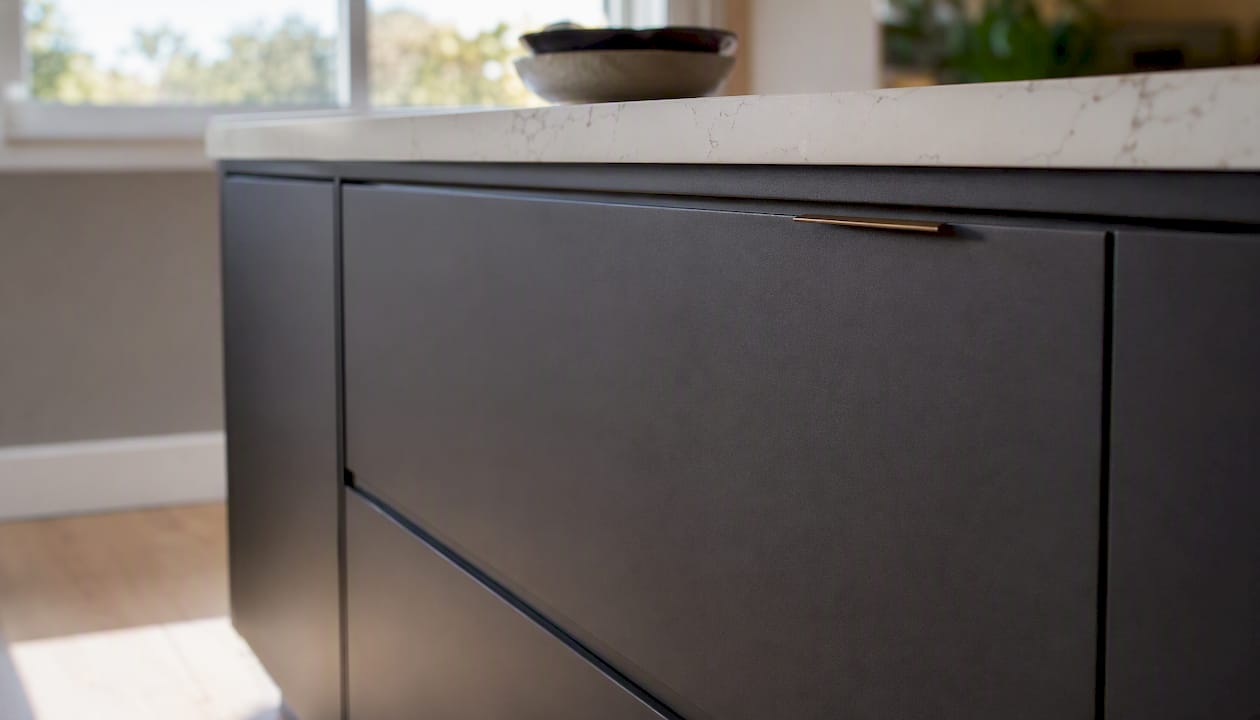
Pros: Easiest to clean, strong modern aesthetic, works well with integrated pulls. Cons: Any warping or dent is immediately visible; fewer finish options for staining. Best for: Modern and contemporary kitchens, small spaces where you want fewer visual breaks. Cost cue: Low to medium.
Raised panel
A raised-panel door features a center panel that sits above the surrounding frame, often with a contoured or routed edge that gives it a distinct profile. MasterBrand Cabinets describes it as a door where the center panel is raised from the rest of the door, many times with a contoured edge that gives it a specific style. The result is visually rich and unmistakably traditional.
Pros: Classic, formal look; hides minor wood movement well; suits large kitchens. Cons: Adds visual weight and requires more cleaning around the routed edges; higher cost. Best for: Traditional, formal, or colonial-style homes with generous square footage. Cost cue: Medium to high.
Recessed/Flat panel
Similar in construction to raised panel but inverted: the center panel sits below the frame rather than above it. The shadow line created by the recess adds subtle depth without the heaviness of a raised profile. It's a classic look that reads as slightly more restrained than raised panel.
Pros: More understated than raised panel, works in traditional and transitional kitchens. Cons: The recessed groove can trap grease in a busy kitchen. Best for: Transitional kitchens, bathrooms, and spaces where you want detail without formality. Cost cue: Medium.
Beadboard
Beadboard doors use vertical grooves (the "beads") running the height of the center panel, set inside a standard frame. Beadboard adds visual texture that suits cottage, farmhouse, and coastal kitchens, but those same grooves collect dust and grease more readily than a flat surface.
Pros: Strong character, cottage/farmhouse appeal, pairs well with open shelving. Cons: Higher maintenance, can feel busy in small kitchens. Best for: Larger traditional or farmhouse kitchens; island accent doors. Cost cue: Medium.
Glass/Mullion
Glass-front doors replace the solid center panel with a glass insert, sometimes divided by thin wood or metal mullions. Glass inserts are often placed in upper cabinets to break up solid doors, show curated dishware, and increase perceived light and space. The trade-off: your shelves need to look good all the time.
Pros: Opens up the kitchen visually, showcases dishware, adds light. Cons: Exposes contents, requires organized shelving, glass adds cost and fragility. Best for: Upper cabinets in traditional or transitional kitchens; display areas. Cost cue: Medium to high.
Louvered
Louvered doors feature horizontal angled slats across the door face, allowing airflow through the cabinet. Originally practical for pantry and laundry cabinets, they've found a niche in coastal, casual, and tropical-inspired kitchens.
Pros: Distinctive look, allows ventilation, suits casual coastal aesthetics. Cons: Slats are difficult to clean, limited style compatibility, less common in RTA formats. Best for: Pantry cabinets, coastal or casual kitchens, accent doors. Cost cue: Medium to high.
Barn/Plank
Barn-style or planked doors are built from horizontal boards (or a panel routed to look like them), giving a rustic, reclaimed-wood character. They suit farmhouse and industrial kitchens and work especially well as accent doors on a large island.
Pros: Strong rustic character, pairs well with open shelving and metal hardware. Cons: Can feel heavy in small kitchens, limited to specific aesthetics. Best for: Farmhouse, industrial, or rustic kitchens; island or pantry accents. Cost cue: Medium to high.
Comparison at a glance:
| Style | Visual character | Panel type | Typical overlay | Cost cue | Best for |
|---|---|---|---|---|---|
| Shaker | Transitional | Recessed frame | Full or partial overlay | Medium | Most kitchens, resale |
| Slab/Flat | Modern/contemporary | Slab | Full overlay | Low–medium | Small spaces, modern |
| Raised panel | Traditional/formal | Raised | Partial or inset | Medium–high | Large traditional kitchens |
| Recessed panel | Transitional/classic | Recessed | Partial or inset | Medium | Transitional, bathrooms |
| Beadboard | Cottage/farmhouse | Grooved panel | Partial overlay | Medium | Farmhouse, island accents |
| Glass/Mullion | Traditional/transitional | Glass insert | Full or partial | Medium–high | Upper display cabinets |
| Louvered | Coastal/casual | Slatted | Partial overlay | Medium–high | Pantry, coastal kitchens |
| Barn/Plank | Rustic/industrial | Planked | Full overlay | Medium–high | Farmhouse, island doors |
Pro Tip: Current trends favor slim Shaker and flat-panel profiles paired with natural wood tones or soft neutrals. Shaker remains the safest resale choice; slab is the fastest-growing profile in modern new builds.
2. How cabinet doors are built: frame-and-panel vs slab construction
Understanding how a door is constructed tells you how it will age, how it accepts paint or stain, and what happens when humidity shifts.
Frame-and-panel construction uses two vertical stiles and two horizontal rails that form the outer frame, with a separate center panel floating inside. "Floating" is the key word: the panel isn't glued in place, so it can expand and contract with seasonal humidity without cracking the door. Frame-and-panel doors allow the center panel to move slightly with humidity and provide a classic look. Shaker, raised panel, recessed panel, and beadboard doors all use this construction.
Slab construction is exactly what it sounds like: one continuous panel, no frame. Slabs are simpler to finish because there are no inside corners to cut into, and a wood-veneer slab can show a beautiful continuous grain. The downside is that a solid-wood slab is more vulnerable to warping across its full width, which is why most slab doors use MDF or veneered plywood cores rather than solid lumber.
How construction affects your decision:
- Refinishing: Frame-and-panel doors can be sanded and repainted section by section. Slab doors with MDF cores can be repainted but not stained, since MDF doesn't absorb stain evenly.
- Repairability: A damaged center panel on a frame-and-panel door can sometimes be replaced without replacing the whole door. A damaged slab is typically replaced entirely.
- Cost: Slab doors are generally less expensive to manufacture; complex raised-panel profiles with routed edges cost more.
- Sustainability: Plywood and MDF cores use less solid wood than all-solid-wood construction, but check for low-formaldehyde adhesives if indoor air quality matters to you.
Pro Tip: If you plan to repaint your kitchen in five to ten years, choose frame-and-panel construction with a solid wood or plywood core. It sands and accepts new paint far better than MDF-core slab doors, which can swell at the edges if sanded through the face veneer.
For a deeper look at wood species and door construction, the solid wood cabinet door buyer's guide covers maple, oak, cherry, and alder in practical detail.
3. Overlay vs inset: how installation type changes the look and cost
Door style and installation type are two separate choices, and confusing them is one of the most common ordering mistakes. Designers and cabinetmakers separate the door style from the installation type because that choice materially affects appearance, cost, and installation complexity.
Full overlay: The door covers nearly the entire cabinet face frame, leaving only a thin reveal between adjacent doors. This gives a clean, modern look with minimal visible frame. It's the most common choice for contemporary and transitional kitchens and works especially well with frameless (European-style) cabinet boxes.
Partial (standard) overlay: The door covers the opening but leaves a wider portion of the face frame visible. This is the traditional American standard and suits framed cabinet construction. It's less expensive to install because tolerances are more forgiving.
Inset: The door sits flush inside the cabinet frame, with a small, even gap all the way around. The result looks like built-in furniture — precise, refined, and expensive. Inset requires tight manufacturing tolerances and careful installation; any seasonal wood movement shows up as an uneven gap.
Key considerations at a glance:
- Frameless boxes pair naturally with full-overlay doors for the cleanest modern look. Frameless construction with full-overlay doors gives the cleanest modern appearance; framed construction pairs well with inset or partial overlay for traditional looks.
- Inset is premium: expect higher door costs, longer lead times, and more precise installation labor.
- Full overlay is the most cost-effective option for a modern aesthetic and is standard in most RTA cabinet systems.
- Partial overlay is the right choice when you're replacing doors on existing framed cabinets and want to keep the traditional reveal.
When to pick each:
- Choose inset when you want a furniture-quality, built-in look and have the budget for precise installation.
- Choose full overlay for a modern, seamless appearance on frameless boxes or new RTA cabinets.
- Choose partial overlay when replacing doors on existing framed cabinets to match the original reveal.
Accurate measurements are critical for all three types, but especially for inset. A reliable measuring guide for new cabinet doors reduces the risk of remakes and installation delays.
4. Materials and finishes: what actually changes look, durability, and cost
The door profile gets the attention, but the material and finish determine how the door performs over years of daily use.
| Material | Appearance | Humidity resistance | Typical cost | Sustainability note |
|---|---|---|---|---|
| Solid hardwood (maple, oak, cherry, alder) | Natural grain, warm | Moderate (moves with humidity) | High | Prefer FSC-certified species |
| Plywood core with wood veneer | Natural look, stable | Good | Medium–high | Uses less solid wood |
| MDF core | Smooth, paint-ready | Poor (swells if wet) | Low–medium | Check for low-formaldehyde adhesives |
| Thermofoil over MDF | Uniform color, no grain | Good (until edges peel) | Low | Difficult to repair or refinish |
| Laminate | Wide color/pattern range | Very good | Low–medium | Durable, low-VOC options available |
| Glass insert | Transparent/decorative | N/A (frame material matters) | Medium–high | Recyclable |
Painted vs stained vs natural oil vs glazed:
- Painted finishes work on any core material and offer the widest color range. They hide grain, which is ideal for MDF. Painted doors show chips and scratches more readily in high-traffic kitchens.
- Stained finishes require solid wood or a quality wood veneer. They highlight natural grain and age gracefully, but color consistency across a full kitchen can vary with natural wood.
- Natural oil/wax finishes suit solid hardwood doors and give a matte, tactile feel. They require periodic reapplication but are easy to spot-repair.
- Glazed finishes add a translucent color layer over a base coat, creating an antique or distressed effect. They suit traditional raised-panel and recessed-panel doors.
Maintenance tips by finish:
- Painted: wipe with a damp cloth; avoid abrasive cleaners that dull the sheen.
- Stained: use a wood-safe cleaner; re-oil or re-wax annually on oil-finished doors.
- Thermofoil: clean gently; avoid heat near edges, which can cause delamination.
- Laminate: highly durable and easy to clean; avoid sharp impacts at edges.
Pro Tip: If your kitchen faces high humidity (near a dishwasher or sink), avoid MDF-core doors without a sealed edge. Plywood-core doors with a solid wood edge band handle moisture far better and won't swell at the corners over time.
For a full breakdown of wood species and their properties, the solid wood cabinet door buyer's guide is a practical starting point.
5. How to choose the right door style for your kitchen
Style knowledge only helps if you can translate it into a decision. Work through this checklist before you contact a supplier.
Decision checklist:
- Room size and light: Small kitchens benefit from slab or Shaker doors in light colors; they keep the space from feeling crowded. Large kitchens can carry the visual weight of raised panel or beadboard.
- Home architecture: Match the door profile to your home's overall style. A craftsman bungalow suits Shaker or recessed panel; a colonial suits raised panel; a contemporary build suits slab or slim Shaker.
- Traffic and maintenance: High-traffic kitchens with kids or pets favor slab or Shaker in a painted or laminate finish. Beadboard and raised panel require more cleaning.
- Budget range: Set your per-door budget before you fall in love with a profile. Inset raised-panel doors in solid cherry cost significantly more than full-overlay Shaker doors in painted MDF.
- Resale neutrality: If you plan to sell within five years, Shaker in a neutral painted finish is the safest choice across buyer demographics.
Questions to ask your cabinet supplier or installer:
- What overlay type does this door ship as standard, and can I switch to inset?
- What is the core material: solid wood, plywood, or MDF?
- What finish options are available, and are they factory-applied or field-applied?
- What are your standard lead times for in-stock vs custom orders?
- What is your return or remake policy if the door doesn't fit?
- Do you offer sample doors I can take home to test against my lighting and hardware?
Hardware compatibility:
- Shaker and slab suit both knobs and bar pulls, and work especially well with integrated edge pulls for a handle-free modern look.
- Raised and recessed panel pair naturally with cup pulls, bin pulls, or traditional knobs that echo the door's period character.
- Beadboard and barn/plank suit black iron or antique brass hardware for a farmhouse feel.
- Glass/mullion doors often look best with minimal hardware — a small knob or no visible pull at all.
For hinge selection and soft-close compatibility across door styles, the soft-close cabinet hinge guide covers the technical details.
Pro Tip: Order one sample door and one hardware sample before committing to a full kitchen order. Hold the sample against your actual cabinets under your kitchen lighting at different times of day. Colors and grain patterns shift dramatically between showroom fluorescents and residential LED or natural light.
6. Typical U.S. cost ranges and lead times
Costs vary by material, finish, and whether you're replacing doors only, refacing, or buying complete cabinets. The ranges below reflect general U.S. market conditions and are not vendor-specific.
Door-only replacement (per door, supply only):
- Slab/flat, painted MDF: $30–$80
- Shaker, painted or stained wood: $60–$150
- Raised panel, solid wood: $100–$250+
- Glass/mullion insert doors: $120–$300+
- Inset doors (any profile): add 20–40% to the base door cost for tighter tolerances
Refacing vs full cabinet replacement:
- Door-only swap (keeping existing boxes): lowest cost, fastest turnaround; works when boxes are structurally sound.
- Cabinet refacing (new doors + veneer on box faces): mid-range cost; typically takes 3–5 days of installation.
- RTA cabinet replacement (new boxes + doors): competitive pricing, fast shipping, and you control the timeline. RTA cabinets are often the fastest and most budget-friendly route for a full kitchen refresh.
- Custom inset build: longest lead time (8–16 weeks is common for fully custom inset cabinetry) and highest cost.
Timeline estimates:
- In-stock RTA or assembled cabinets: ship in days to 2 weeks; installation typically 2–5 days for a standard kitchen.
- Semi-custom or modified stock: 4–8 weeks.
- Fully custom inset: 8–16 weeks.
Where to spend vs where to save:
- Invest in door material and finish quality — they're what you see and touch every day.
- Save on interior box material by choosing a quality plywood construction over solid wood boxes; plywood kitchen cabinets deliver durability at a fraction of all-solid-wood pricing.
- Avoid custom sizing where standard dimensions fit; standard sizes ship faster and cost less.
Measurement accuracy is the single biggest source of remake costs. Before ordering, follow a step-by-step cabinet door measuring guide to confirm overlay type, door dimensions, and hinge placement.
Key Takeaways
Shaker and slab doors cover the widest range of kitchens and budgets, but the installation type (overlay vs inset) and material core matter just as much as the profile you choose.
| Point | Details |
|---|---|
| Match style to architecture | Shaker suits most homes; raised panel fits traditional; slab fits modern. |
| Separate style from installation | Overlay vs inset changes cost and look independently of the door profile. |
| Material core drives durability | Plywood-core doors handle humidity better than MDF in high-moisture areas. |
| Sample before you commit | Test a door sample under your kitchen lighting before placing a full order. |
| Best Cabinet Specialist option | RTA and assembled cabinets with solid wood doors and plywood boxes ship fast at competitive prices. |
The detail most buyers overlook
Most kitchen renovation guides treat door style as the main decision and treat everything else as secondary. After working through hundreds of cabinet projects, the pattern is clear: buyers who regret their cabinets almost never chose the wrong profile. They chose the wrong installation type or the wrong material core for their kitchen's conditions.
A Shaker door in painted MDF looks identical to a Shaker door in solid maple on a showroom floor. In a kitchen next to a dishwasher, they perform very differently within three years. The MDF-core door swells at the bottom edge; the solid wood or plywood-core door holds its shape. That's a $200 difference per door that most buyers don't think about until they're replacing doors they just installed.
The same logic applies to overlay vs inset. Inset looks extraordinary. It also requires a level of installation precision that adds real cost and time. For most homeowners doing a practical kitchen refresh, full-overlay Shaker or slab doors on a frameless box give 90% of the visual payoff at a fraction of the complexity. Save inset for a kitchen where the furniture-quality look is the point of the whole project.
The other underrated factor is hardware scale. A bar pull that looks right on a 3D rendering can feel enormous on a 12-inch upper cabinet door in real life. Order the hardware sample alongside the door sample. Hold both against the actual cabinet in your kitchen. That 20-minute exercise prevents the most common buyer regret in the category.
Ready to find your cabinet doors at Best Cabinet Specialist
Choosing the right door profile is only half the work. Getting it at a fair price, with a short lead time and a material you can trust, is where most buyers hit friction.
Best Cabinet Specialist offers RTA and assembled cabinets with solid wood doors and plywood box construction, ready to ship to your project. Whether you're working through a full kitchen replacement or a door-only refresh, the catalog covers Shaker, slab, and transitional profiles in painted and stained finishes, with soft-close hardware included.

Trade professionals and contractors get bulk pricing and dedicated support. Homeowners get the same quality without the markup. Request a sample door to test finish and scale in your own kitchen before committing to a full order, or get a quick estimate for your project at Best Cabinet Specialist. Fast shipping means your project doesn't sit waiting on a 12-week lead time.
Useful sources and further reading
The research and references below support the claims in this article and offer deeper reading on specific topics.
| Source | What it covers |
|---|---|
| Eagle Woodworking: Types of Cabinet Doors | Overlay vs inset installation types, frame-and-panel construction, glass-front doors |
| Home Art Tile: Cabinet Door Styles Guide | Shaker and slab style definitions, trend commentary |
| Houzz: Popular Cabinet Door Styles | Beadboard and raised-panel maintenance, style-by-style overview |
| MasterBrand Cabinets | Raised panel and recessed panel definitions |
| Best Cabinet Specialist: Solid Wood Door Buyer's Guide | Wood species, construction, sample-first workflow |
| Best Cabinet Specialist: Modern Kitchen Cabinet Ideas | 2026 trend notes, slim Shaker and slab popularity |
| Best Cabinet Specialist: Face Frame vs Frameless | How box construction affects overlay choice |
| Best Cabinet Specialist: How to Measure for New Cabinet Doors | Step-by-step measuring guide to reduce ordering errors |
| Best Cabinet Specialist: Plywood Kitchen Cabinets | Plywood vs MDF cost and durability trade-offs |
| One Day Doors & Closets: How to Select the Right Pantry Door | Pantry door style selection and practical door-choice guidance |
For layout and storage planning alongside your door selection, the cabinet configuration layout guide covers practical decisions that affect which door profiles work best in your specific kitchen footprint.