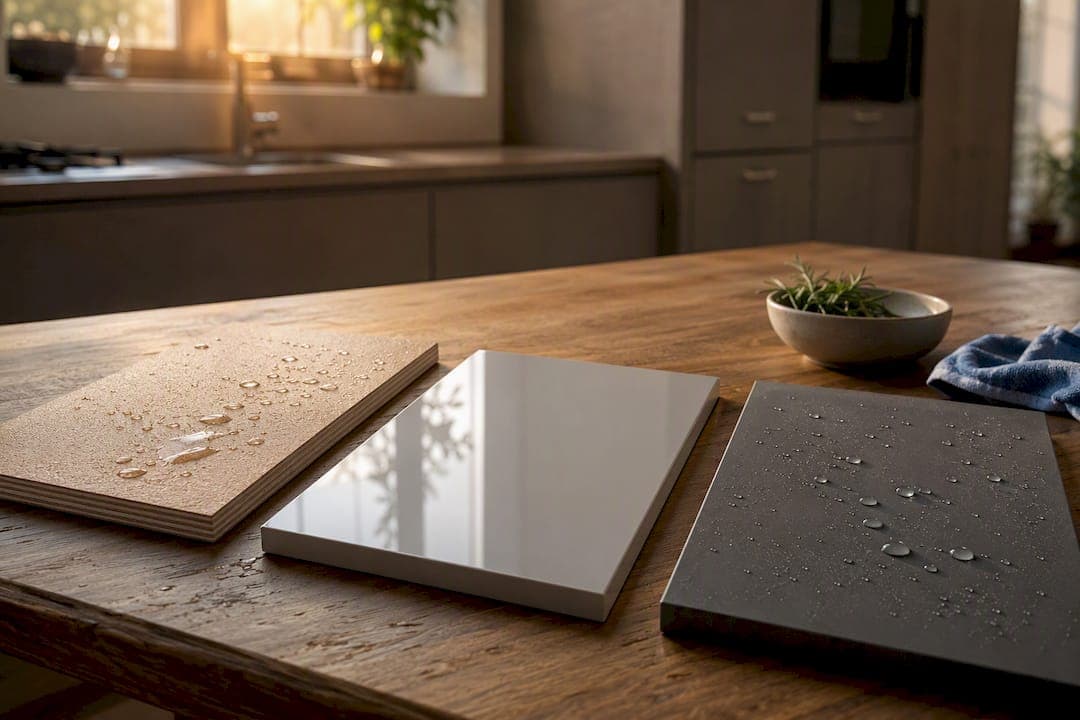
PVC and solid plastic panels, along with stainless steel, are effectively waterproof and hold up best around sinks and dishwashers. High-pressure laminate and acrylic run a close second, offering strong moisture resistance as long as edges stay sealed. Marine-grade plywood is the top wood-based choice, but only with professional edge sealing and a quality finish. Substrate matters, but sealing and finish quality decide whether a cabinet actually survives a humid kitchen.
TL;DR:
- Water-resistant cabinet materials like sealed high-pressure laminate and properly finished plywood can last 15 to 20 years in normal kitchens, but not in severe moisture zones.
- Proper sealing of edges, seams, and joints is as crucial as choosing the right material, especially near sinks, dishwashers, and plumbing penetrations.
- PVC and stainless steel provide the highest moisture resistance and longevity but come with higher costs and specific design considerations.
- Sealing practices, such as sealing end grain and seams before installation, can extend cabinet lifespan regardless of material quality.
- Substrate quality (plywood over MDF) and finish application are typically more important than the base material in preventing moisture damage.
Table of Contents
- Which materials hold up best against moisture?
- Do you need waterproof or just water-resistant cabinets?
- How much do finish and edge sealing actually matter?
- Installation and maintenance steps that prevent moisture damage
- How does Best Cabinet Specialist build for moisture resistance?
- Editorial perspective: why substrate gets more credit than it deserves
- Where to find more on cabinet material performance
- Ready to build a kitchen that handles moisture without compromise?
- Sources
Which materials hold up best against moisture?
Not all cabinet materials fail the same way when they meet steam, spray, or a slow leak under the sink. Some shed water entirely. Others tolerate it for a while, then swell, delaminate, or discolor once moisture finds a gap in the finish. Knowing which category a material falls into changes how you plan a kitchen remodel.
PVC and solid plastic panels are among the most water-shedding cabinet materials on the market, because the material itself does not absorb moisture the way wood-based products do. That makes PVC a smart pick near sinks, dishwashers, or laundry areas, according to ROBAM Living's cabinet material guide. The tradeoff is heat sensitivity near ranges and ovens, plus a more limited range of finish textures compared to painted wood.
Stainless steel is fully waterproof, hygienic, and built to outlast most kitchen renovations. Commercial kitchens use it for exactly that reason. Residential buyers usually reserve it for accent cabinets or wet-zone lowers, since the cost and industrial look don't suit every design.
High-pressure laminate (HPL) is made by compressing resin-saturated layers under heat and pressure, which creates a hard, scratch resistant cabinet finish that resists water well on the face of the panel, per ROBAM Living's breakdown of HPL construction. The vulnerable spot is the edge, where the laminate meets the substrate. Unsealed HPL edges are where moisture gets in.
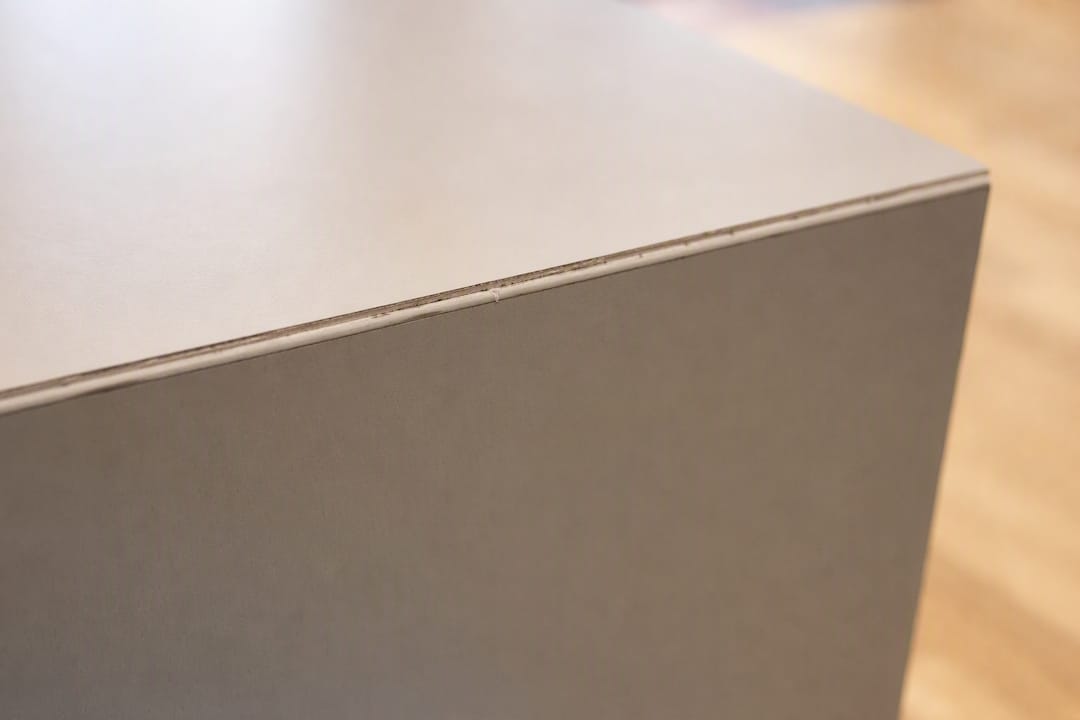
Acrylic panels deliver a glossy, premium look and strong humidity resistance, making them popular in modern kitchen designs. They need careful installation, since scratches show more visibly on high-gloss surfaces than on matte finishes.
Thermofoil over MDF performs fine until the foil edge is nicked, chipped, or exposed to standing water. Once that happens, the MDF core underneath swells fast, because MDF is far more porous than plywood.
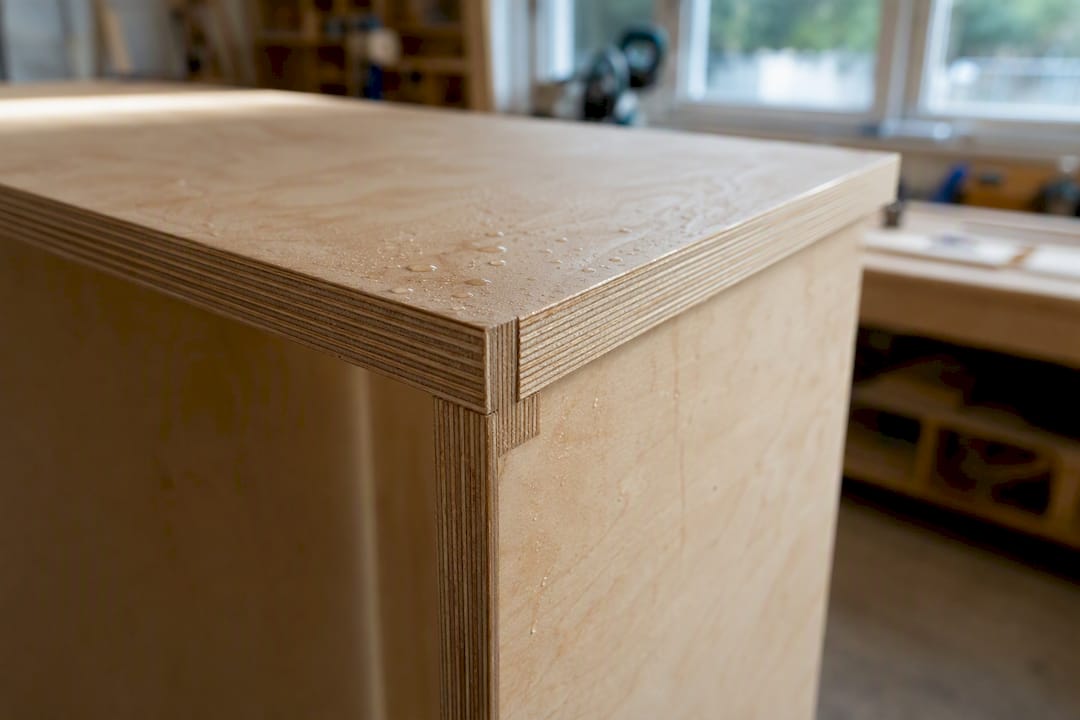
Marine-grade plywood is the strongest wood-based option for moisture exposure. Home-improvement guides consistently rank plywood above MDF for humid environments, since plywood's layered construction resists swelling better than MDF's compressed fiber core. Solid wood can still work in a kitchen, but it needs a real moisture-blocking finish and shouldn't sit directly against a sink basin or dishwasher without protection.
- PVC and plastic panels: non-porous, budget-friendly, heat-sensitive near cooktops
- Stainless steel: waterproof, hygienic, higher cost
- HPL: scratch resistant cabinet finish, weak point at unsealed edges
- Acrylic: glossy and humidity resistant, shows scratches easily
- Thermofoil/MDF: fine until the edge fails
- Marine-grade plywood: best wood option with proper sealing
Do you need waterproof or just water-resistant cabinets?
The terms get used loosely, but they describe two different levels of protection. Waterproof materials, like PVC and stainless steel, are non-porous and don't absorb moisture at all. Water-resistant materials, like sealed HPL or well-finished plywood, tolerate splashes, spills, and steam but will eventually fail under standing water or prolonged saturation. Industry explainers draw this line clearly: waterproof for direct exposure, water-resistant or weatherproof for occasional or covered exposure.
Matching the material to the zone matters more than picking one "best" material for the whole kitchen.
- Sink base cabinets should be waterproof or fully sealed. This is the zone most likely to see standing water from a slow drain leak or a splash that goes unnoticed for hours.
- Dishwasher surrounds need the same treatment, since steam and occasional water discharge hit this cabinet regularly.
- Wall cabinets and pantry units can reasonably use water-resistant materials, since they rarely face direct water contact.
- Coastal homes and outdoor kitchens call for waterproof, corrosion-resistant hardware in addition to waterproof panels, since salt air accelerates failure in ways inland kitchens never experience.
- Laundry rooms deserve the same waterproof standard as sink bases, given the frequency of hose connections and occasional overflow.
No cabinet material, however well-sealed, fixes a plumbing failure. A supply line that bursts overnight will damage even stainless steel cabinetry over time if water pools against seams and hardware. Material choice reduces risk. It doesn't replace a functioning P-trap or a dishwasher connection checked annually.
How much do finish and edge sealing actually matter?
Substrate gets most of the attention in cabinet shopping, but the finish is doing just as much work. A technical comparison of professional coating systems shows that catalyzed 2K finishes cure into a harder, more chemically cross-linked film than single-component 1K products, which translates directly into better water and chemical resistance over years of use. The tradeoff is application complexity; choosing an epoxy floor finish with high-performance coatings improves moisture resistance in finishes. 2K systems typically require spray equipment and controlled cure conditions, which is why most factory-finished cabinets use them and most DIY painters don't.
Products like INSL-X Cabinet Coat are formulated specifically to resist chipping, staining, and water damage on cabinetry, giving DIY painters a stronger option than standard trim paint. For those refinishing existing cabinets rather than buying new ones, our guide on evaluating cabinet finish durability walks through how to judge a coating before committing to it.
Sealing practice matters as much as the coating itself:
- Seal every cut edge and exposed end grain before installation, not after.
- Tape and seal seams where panels meet, especially around cutouts for plumbing or hardware.
- Use silicone at the joint between countertop and cabinet, backed by mechanical fasteners for structural hold.
- Seal toe-kicks near dishwashers, where splashback collects unnoticed for months.
Pro Tip: Ask your cabinet supplier whether doors are factory-finished with a spray-applied topcoat. Shop-sprayed finishes lay down thinner, more even coats than brush application, which means fewer pinholes for moisture to exploit.
Installation and maintenance steps that prevent moisture damage
The best material and the best finish still fail if installation cuts corners. A short checklist keeps that from happening.
- Before you buy: ask about substrate (plywood vs MDF), whether doors are factory-finished, how edges are sealed, and what the warranty actually covers for moisture damage.
- During installation: protect any field-cut edges with matching sealant immediately, keep ventilation running to let adhesives and finishes cure properly, and seal every plumbing penetration where a pipe passes through a cabinet back or bottom.
- Near wet zones: install drawer boxes with sealed, coated bottoms under sinks and dishwashers, since these areas take the most incidental water exposure.
- Ongoing maintenance: re-seal edges every few years, replace silicone seals after any leak, and refinish sooner rather than later once you spot dulling or lifting at a seam.
Properly finished and installed, plywood cabinets with a quality topcoat commonly last 15 to 20 years in a normal kitchen. PVC and stainless steel units tend to outlast that timeline, since there's no wood core to eventually give way.
How does Best Cabinet Specialist build for moisture resistance?
Best Cabinet Specialist builds every cabinet on a plywood box, not particleboard or thin MDF, because plywood tolerates humidity better and holds screws and hardware more reliably over time. Solid wood doors pair with a range of finish options, so you get the look you want without sacrificing the sealing quality that keeps moisture out at the seams.
Nathan, a contributing author on cabinet construction and finish durability, has covered this tradeoff in depth in our breakdown of plywood versus MDF performance and in our budget-focused plywood buyer's guide. Both pieces reflect the same principle guiding this article: substrate and finish decisions matter more once you know exactly how they'll be used in your kitchen.
As a women-owned and veteran-owned business, Best Cabinet Specialist ships project-ready cabinets fast, which matters most when a leak or renovation timeline leaves you without a working kitchen. Faster shipping means less time cooking off a folding table.
Editorial perspective: why substrate gets more credit than it deserves
Most cabinet shopping advice treats material selection as the whole decision. Pick PVC, pick stainless, pick marine plywood, and you're covered. That's backwards. The material sets a ceiling on how water-resistant a cabinet can be, but installation and finish quality decide whether the cabinet ever reaches that ceiling.
I've seen the reasoning play out the same way in every material comparison guide: PVC beats HPL, HPL beats thermofoil, thermofoil beats raw MDF. All true. But a poorly sealed piece of HPL will outlast a beautifully finished sheet of PVC installed with unsealed seams and no silicone at the countertop joint, because water doesn't care which material wins the lab test. It cares where the gaps are.
The uncomfortable point for a lot of buyers is that fabrication discipline (sealed end grain, encapsulated box bottoms, sealed cutouts around plumbing) often matters more than the marginal difference between two moisture-resistant finishes. A mid-tier laminate with obsessive edge sealing will beat a premium acrylic panel with a sloppy install every time. That's not an argument against choosing good materials. It's an argument against stopping there. Ask your supplier how doors are finished and how edges are sealed before you ask which material they use, and you'll get a much clearer picture of what you're actually buying.
— Nathan
Where to find more on cabinet material performance
- ROBAM Living's waterproof materials guide covers material-by-material water resistance comparisons.
- Benjamin Moore's INSL-X Cabinet Coat page details a professional-grade cabinet topcoat built for water and stain resistance.
- General Finishes' Enduro product line explains 2K systems used by cabinet professionals.
- The Spruce's kitchen cabinet materials guide compares plywood and MDF performance in detail.
- EXT Cabinets' waterproof vs. weatherproof breakdown clarifies exposure categories for outdoor and high-humidity settings.
Ready to build a kitchen that handles moisture without compromise?
Best Cabinet Specialist builds every cabinet on a real plywood box with solid wood doors, so you're not gambling on whether a particleboard core will hold up near your sink or dishwasher. That's the difference between reading about moisture-resistant construction and actually installing it: plywood boxes, finish options built for durability, and soft-close hardware, all shipped fast enough to keep your remodel timeline intact.

Whether you're outfitting a full kitchen or replacing a single sink base cabinet that took water damage, browse cabinet styles and finish options built for the exact zone guidance covered above. Bulk pricing is available for contractors and builders managing multiple units, and every order ships as project-ready cabinetry, not a stack of parts waiting on a lead time. Start your order today and get a kitchen that's built to handle real humidity, not just look good on install day.
Sources
- Best Waterproof Materials for Kitchen Cabinets: Complete Guide – ROBAM Living
- Enduro professional finishes — General Finishes
- The Spruce — kitchen cabinet materials
- Weatherproof Cabinetry vs Waterproof Cabinetry - EXT Cabinets