
For kitchen cabinet boxes, plywood is the stronger, more durable choice. For painted doors and drawer fronts, MDF delivers a smoother, more paint-ready surface. The best kitchen cabinetry in 2026 uses both: plywood for structure, MDF for finish. Here is a quick breakdown before we go deeper:
- Moisture resistance: Plywood handles humidity and spills far better than MDF
- Screw holding: Plywood grips hardware more reliably over time
- Weight: A 3/4-inch 4x8 sheet of MDF weighs 90–100 lbs, versus 60–70 lbs for plywood
- Surface finish: MDF wins for smooth, grain-free painted surfaces
- Cost: MDF costs less upfront; plywood typically delivers better long-term value due to fewer repairs
Professional cabinet makers and builders consistently recommend a hybrid approach: plywood boxes with MDF doors. That combination covers every performance demand a kitchen throws at a cabinet.
What makes plywood a strong choice for kitchen cabinets?
Plywood is built from thin layers of wood veneer glued together with alternating grain directions. That cross-laminated structure is what gives it superior resistance to sagging under load, which matters most on wide shelves and base cabinet boxes. It also holds screws tightly, so hinges and drawer slides stay put even after years of daily use.
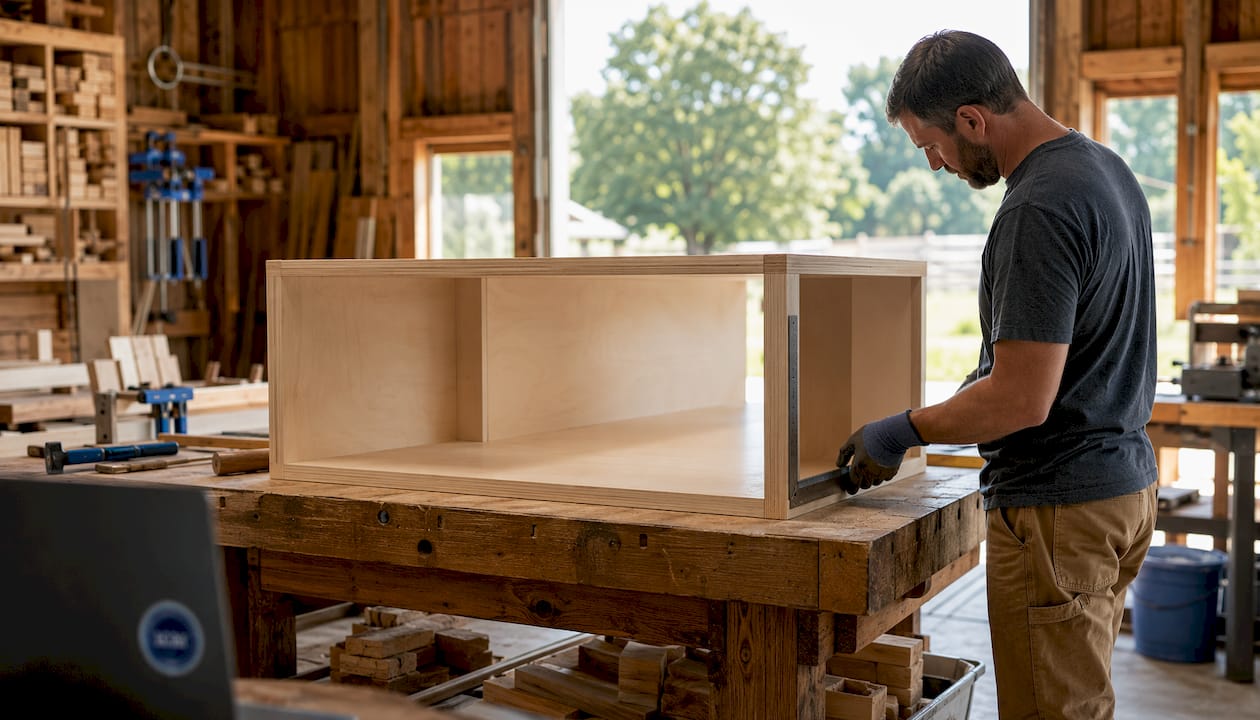
For kitchen cabinetry, plywood's moisture tolerance is its biggest advantage. It handles steam from dishwashers, humidity swings, and the occasional under-sink drip without swelling permanently. Plywood cabinets have a reputation for lasting many years with normal use, which is why builders specify it for sink bases, base cabinet boxes, and any structural component.
Plywood pros:
- High structural strength and load-bearing capacity
- Superior screw holding for hinges, drawer slides, and hardware
- Better moisture and humidity resistance
- Lighter weight makes installation faster and easier
- Long lifespan with typically fewer repairs
Plywood cons:
- Higher upfront material cost than MDF
- Exposed edges require edge banding or veneer for a finished look
- Lower-grade panels can contain internal voids
- Surface needs grain filling before painting for a smooth result
Pro Tip: When buying plywood for cabinet boxes, look for panels with HPVA grading. Avoid big-box store veneer-core sheets with unknown void counts, especially for sink bases where moisture exposure is highest.
What makes MDF a good fit for cabinet doors and panels?
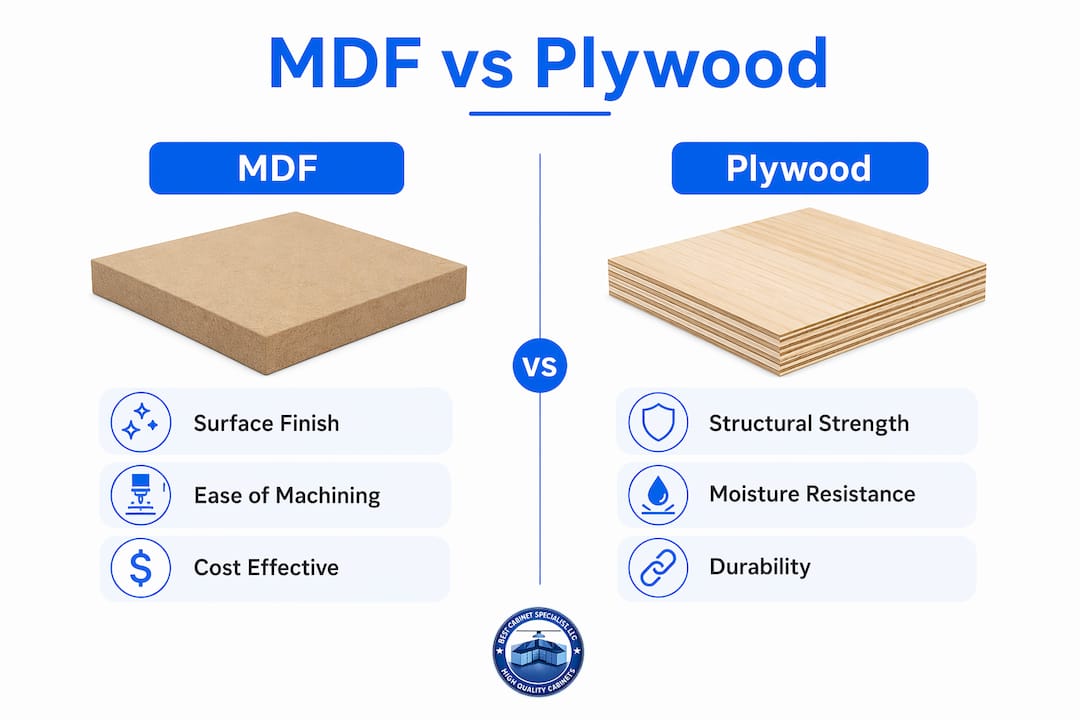
MDF (medium-density fiberboard) is made from wood fibers compressed with resin under heat and pressure. The result is a dense, uniform panel with no grain direction and no voids. That consistency is exactly what makes it ideal for painted cabinet doors and decorative profiles like shaker-style edges.
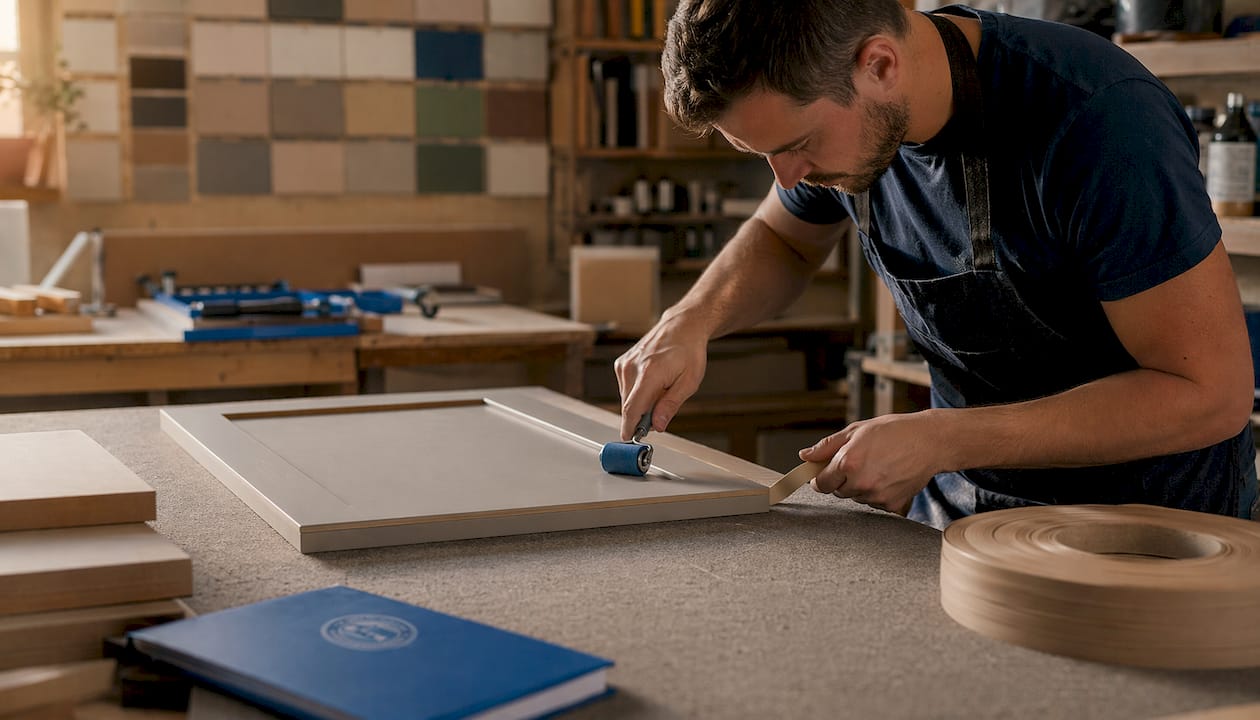
Because MDF machines so cleanly, CNC routers cut crisp profiles without chipping or tear-out. Paint goes on flat and even, with no grain telegraphing through the finish. For homeowners who want a modern, painted kitchen, MDF doors often look noticeably cleaner than painted plywood doors without extra prep work.
MDF pros:
- Dead-flat, grain-free surface ideal for painted finishes
- Excellent for routed profiles, shaker doors, and decorative edge details
- Lower upfront cost than plywood
- Consistent density with no voids
MDF cons:
- Heavier than plywood at 90–100 lbs per 3/4-inch 4x8 sheet
- Poor moisture resistance; edges swell permanently if exposed to water
- Screw holes can strip under stress or repeated hardware adjustments
- Produces fine airborne dust when cut, requiring respiratory protection
- Lower impact resistance than plywood
How do MDF and plywood compare side by side?
Plywood outperforms MDF in every structural and moisture-related category. MDF leads only where surface finish and machining quality matter most.
| Factor | MDF | Plywood |
|---|---|---|
| Moisture resistance | Poor; edges swell with water exposure | Good; handles humidity and occasional spills |
| Durability | Moderate; prone to denting and edge chipping | High; resists impact and long-term sag |
| Screw holding (face) | Good | Excellent |
| Screw holding (edge) | Fair; strips under repeated stress | Good |
| Weight (3/4" 4x8 sheet) | 90–100 lbs | 60–70 lbs |
| Surface finish quality | Excellent for paint; no grain | Moderate; needs prep for smooth paint |
| Typical cabinet use | Doors, drawer fronts, decorative panels | Boxes, shelves, sink bases, drawers |
| Upfront cost | Lower | Higher |
| Long-term value | Shorter lifespan, more repairs | Long lifespan with typically fewer repairs |
One detail worth noting on hardware: European hinges and drawer slides depend on consistent screw bite over years of use. Plywood keeps that bite reliably. MDF can fail if a screw is over-tightened once or adjusted too many times, which is a real concern in busy family kitchens where cabinet doors get opened hundreds of times a week.
Moisture damage is also cumulative. Even plywood requires edge banding and sealing to protect cabinet longevity, but MDF is far less forgiving when that protection fails. A swollen MDF sink base is typically a replacement job, not a repair.
How to choose the right material for your kitchen cabinet project
The right material depends on where the panel lives in the cabinet and what your kitchen demands. Here is how to think through the decision:
Choose plywood when:
- Building cabinet boxes, especially base cabinets and sink bases
- Installing shelves with long spans or heavy loads like cookware and appliances
- Working in high-humidity kitchens or near dishwashers
- Prioritizing long-term durability and hardware reliability
- Running a commercial or premium residential project where longevity matters
Choose MDF when:
- Fabricating painted cabinet doors or drawer fronts
- Creating shaker-style profiles or decorative routed edges
- Working in dry, low-moisture areas of the kitchen
- Managing a tighter budget and prioritizing a clean painted finish
Use both together when:
- You want the best of both materials: plywood boxes for strength, MDF doors for a flawless painted finish
- Building a full kitchen where some areas face moisture and others do not
- Matching professional cabinet-maker standards for 2026 residential builds
The hybrid approach is what professional cabinet makers use because it solves the core trade-off directly. You get structural integrity where it counts and a premium painted appearance where it shows.
Pro Tip: Regardless of which material you choose, always seal exposed edges before installation. MDF edges are especially vulnerable to moisture infiltration, and even a small gap near a sink base can cause permanent swelling over time. Edge banding with PVC or solid wood tape adds only minutes to the job and protects the cabinet for years.
For a budget-focused plywood guide covering structural benefits and pricing, or to compare ready-to-assemble cabinet options that use plywood construction, those resources break down the cost side in detail.
Ready to put the right materials to work in your kitchen? Best Cabinet Specialist builds every cabinet box with plywood construction and solid wood doors, so you get the durability and craftsmanship your project deserves. Fast shipping, competitive pricing, and project-ready solutions for homeowners, contractors, and builders across the United States.

Shop our full cabinet collection and find the right fit for your kitchen today.
Key Takeaways
Plywood is the better structural material for kitchen cabinet boxes, while MDF is the better finishing material for painted doors. Using both together produces the most durable and attractive kitchen cabinetry.
| Point | Details |
|---|---|
| Plywood for cabinet boxes | Plywood's cross-laminated structure resists moisture, holds screws reliably, and lasts 20–30 years. |
| MDF for painted doors | MDF's grain-free surface produces cleaner paint finishes with less prep work than plywood. |
| Weight difference matters | MDF weighs 90–100 lbs per sheet versus 60–70 lbs for plywood, affecting installation effort. |
| Hybrid approach wins | Professional builders use plywood boxes with MDF doors to balance durability and finish quality. |
| Seal all edges | Both materials require edge banding and sealing to prevent moisture damage, especially near sinks. |