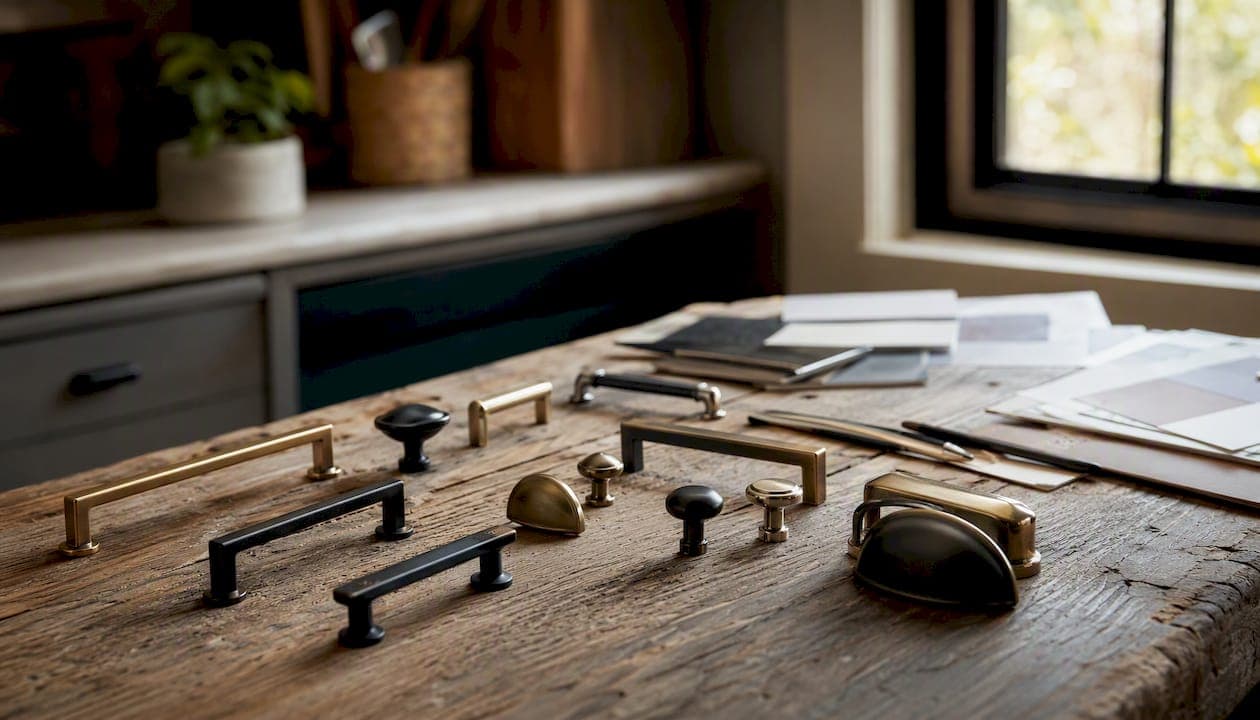
The best cabinet hardware finishes for most kitchens are brushed/satin nickel, matte black, warm brass, oil-rubbed bronze, and polished chrome — and the simplest rule is this: pick one dominant finish and add at most one accent. Knobs confirms brushed nickel as the most widely used finish in whole-home remodels today, largely because it reads as neutral across both warm and cool palettes. Brands like Top Knobs, Amerock, and Emtek each offer these finishes across dozens of profiles, so you have real options regardless of your style direction. At Best Cabinet Specialist, cabinet lines are designed to pair cleanly with all of these finishes, which makes the selection process more straightforward than it might first appear.
The finishes you'll encounter most when shopping:
- Brushed/satin nickel — cool-neutral, hides fingerprints well, works with almost any style
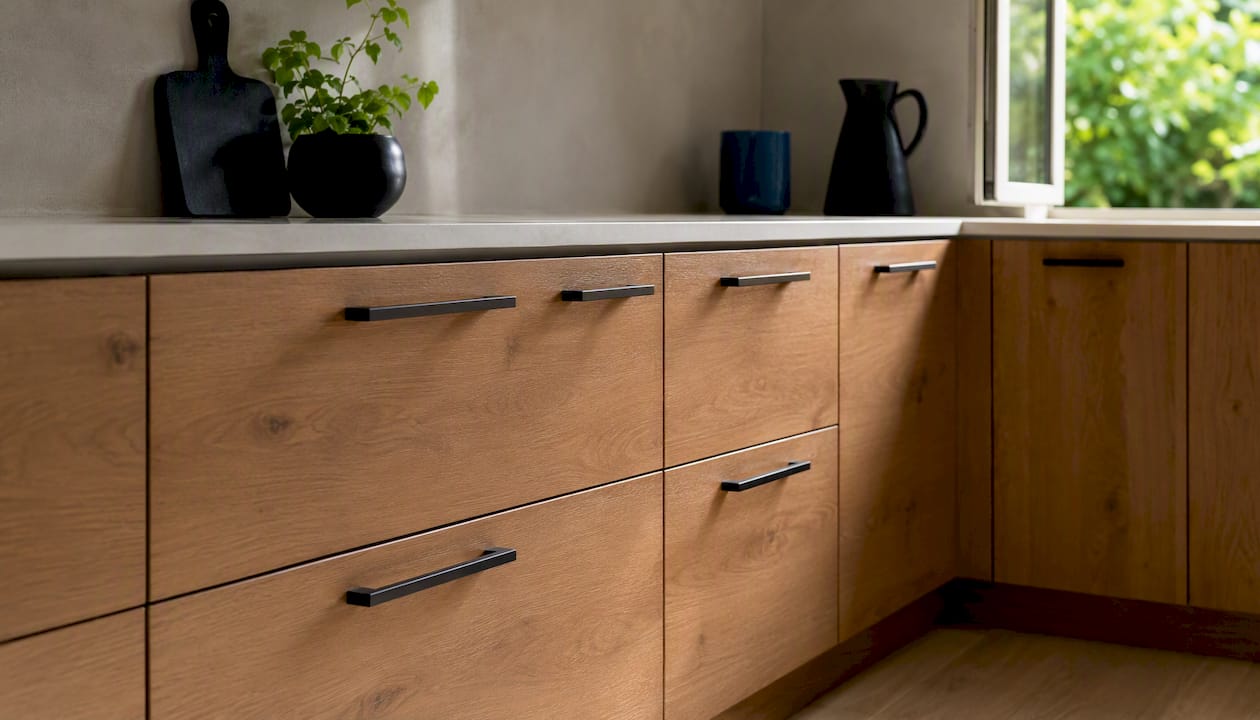
- Matte black — bold, crisp contrast on light cabinets, increasingly standard in new construction
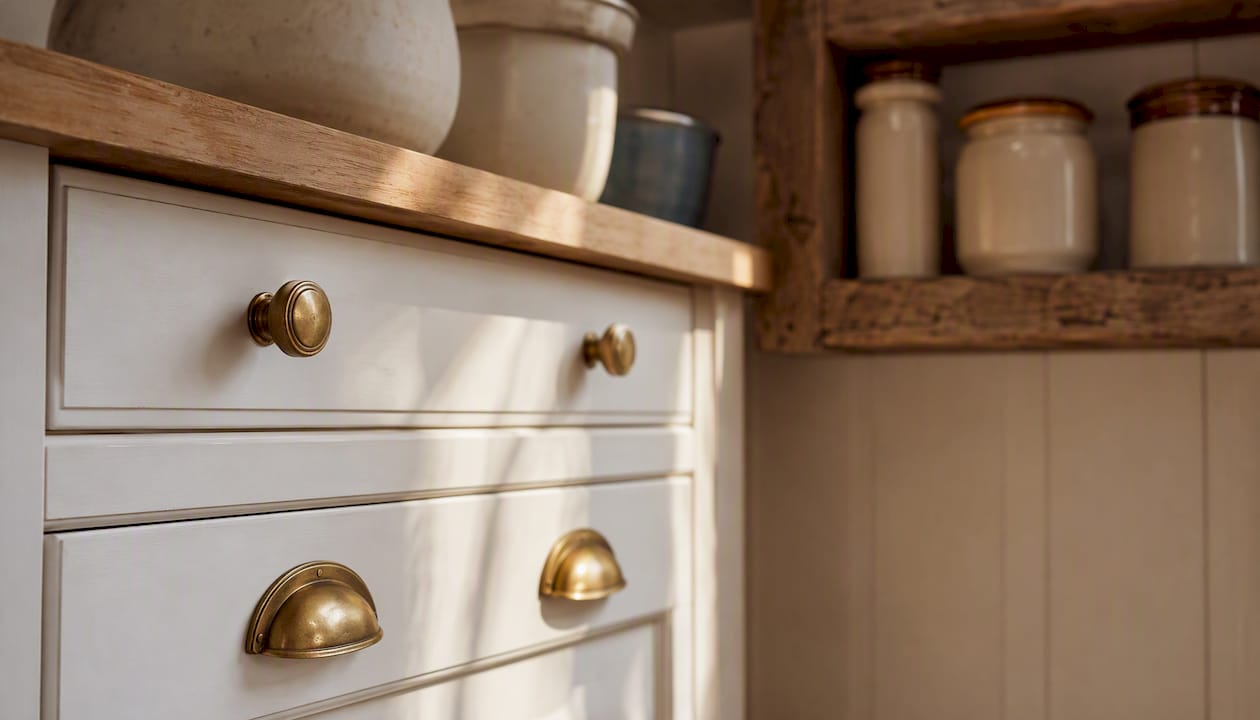
- Warm brass/unlacquered brass — golden, develops a patina over time, suits farmhouse and luxe kitchens
- Oil-rubbed bronze — dark, warm, slightly rustic, strong in traditional and transitional spaces
- Polished chrome — bright, cool, reflective, a classic for modern and coastal kitchens
- Pewter/antique finishes — muted, aged, best for traditional or cottage styles
Key Takeaways
The single most important rule for cabinet hardware finishes: choose one dominant finish anchored to a fixed element like your faucet or appliances, then add at most one accent finish from a matching undertone family.
| Point | Details |
|---|---|
| Dominant finish first | Pick one finish tied to your faucet or appliances; it goes on most of your pulls and knobs. |
| Repeat each finish twice | Every finish in the room should appear at least twice to read as intentional, not accidental. |
| Test samples in real lighting | Order one knob and one pull; view them in morning, midday, and evening light before committing. |
| Match undertones, not brands | Warm metals (brass, bronze) mix with warm; cool metals (nickel, chrome) mix with cool. |
| Order spares upfront | Special finishes like unlacquered brass can take 4–8 weeks to restock; buy 10–15% extra. |
Table of Contents
- What do the most common cabinet hardware finishes actually look like?
- How do textures and surface treatments change the way hardware looks and lasts?
- How do you mix metals in a kitchen without it looking accidental?
- How do you choose a cabinet hardware finish step by step?
- What do cabinet hardware finishes typically cost, and where should you shop?
- How do you clean and maintain each cabinet hardware finish?
- How do specific finishes pair with different kitchen styles?
- When is it worth swapping your cabinet hardware?
- Sources
What do the most common cabinet hardware finishes actually look like?
Understanding each finish before you order samples saves real time and money. Here is a finish-by-finish breakdown covering appearance, undertone, style fit, and maintenance.
Brushed/satin nickel
Brushed nickel has a soft, matte-silver look with fine linear texture across the surface. Its undertone is cool-neutral, which means it pairs cleanly with white, gray, and greige cabinets without competing with stainless appliances. It hides fingerprints better than polished alternatives, and most brushed nickel hardware from Amerock or Top Knobs requires only a damp cloth to clean. It is one of the most resale-friendly choices you can make.
Matte black
Matte black creates sharp contrast on light cabinets and reads as modern, industrial, or even farmhouse depending on the pull profile. It photographs exceptionally well, which partly explains why it became a mainstream default in new construction through 2026, according to hardware design guides. Flat matte surfaces can show oily fingerprints more than brushed finishes, so wipe them down with a soft, dry cloth regularly. Powder-coated matte black is the most durable version of this finish.
Warm brass and unlacquered brass
Satin brass has a soft gold tone with a slight sheen. Unlacquered brass is the same color but left uncoated, so it develops a natural patina over months and years. That living finish appeals to homeowners who want character, but it requires more hands-on care — no harsh cleaners, no abrasive pads. Lacquered brass resists tarnish and stays consistent in color, making it lower maintenance. Both versions suit farmhouse, transitional, and luxe kitchen styles. Emtek offers both lacquered and unlacquered brass options across its pull and knob lines.
Polished chrome
Polished chrome is bright, mirror-like, and cool in undertone. It suits modern, coastal, and minimalist kitchens and pairs naturally with chrome faucets and stainless appliances. The trade-off is fingerprints: polished surfaces show smudges immediately, so they need more frequent wiping. A microfiber cloth works best. Top Knobs carries polished chrome across bar pulls and cup pulls for a clean, consistent look.
Oil-rubbed bronze
Oil-rubbed bronze is a dark, warm finish with subtle highlights that emerge where the finish wears at edges and high-contact points. That intentional variation gives it an aged, handcrafted quality that suits traditional, Tuscan, and transitional kitchens. It pairs well with warm wood tones and cream or off-white cabinets. Avoid acidic cleaners, which strip the finish's protective coating.
Antique brass and pewter
Antique brass sits between warm gold and bronze, with a slightly dulled, aged appearance. Pewter is cooler and darker, closer to a muted silver-gray. Both finishes work in cottage, traditional, and period-style kitchens. They tend to be less common in modern or contemporary spaces. Amerock offers both in its heritage-style collections.
Copper and specialty colored finishes
Copper hardware has a warm, reddish-orange tone that suits farmhouse and eclectic kitchens. Powder-coated colored finishes (navy, sage, terracotta) are a growing niche for homeowners who want a statement piece. These specialty options typically cost more and carry longer lead times.
Finish comparison at a glance
Pro Tip: Pull size affects how a finish reads. A large bar pull in brushed nickel looks sleek and modern; the same finish on a small knob reads more traditional. Scale your hardware to your door size before committing to a finish.
How do textures and surface treatments change the way hardware looks and lasts?
The finish name (nickel, brass, black) tells you the color. The surface treatment tells you how that color actually reads in your kitchen — and how long it holds up.
Common texture terms and what they mean:
- Polished — mirror-bright surface, maximizes reflectivity, shows fingerprints and water spots immediately, reads as cool and formal
- Satin — semi-gloss, softer than polished, slightly warm, hides fingerprints better, the most versatile texture across styles
- Brushed — fine directional lines across the surface, reduces glare, hides wear and scratches well, reads as casual or transitional
- Matte — no sheen at all, absorbs light, reads as modern or industrial, can show oily prints on flat areas
- Hammered/knurled — textured surface with deliberate pattern, adds visual interest, suits artisan and farmhouse styles, hides wear naturally
The same metal color reads differently depending on texture. Brushed nickel looks casual and approachable; polished nickel looks formal and high-end. Satin brass feels softer and more livable than polished brass, which can read as dated in the wrong context.
Coating and finish processes that affect durability:
- Lacquered brass — a clear protective coat seals the brass, preventing tarnish and patina; easier to maintain but the lacquer can chip over time
- Unlacquered brass — no protective coat; develops a natural patina as it oxidizes, which Livingetc notes changes both appearance and maintenance demands significantly
- PVD (Physical Vapor Deposition) — a vacuum-bonded metallic coating that is harder and more scratch-resistant than standard electroplating; common on premium brushed gold and matte black hardware
- Electroplating — a thin metal layer deposited over a base metal; standard for most mid-range hardware; durable when the base is solid brass or zinc alloy, less so on pot metal
- Powder coating — a dry paint process baked onto the surface; Paint recent advances that have made powder-coated finishes significantly more durable, especially for matte black and specialty colored hardware
PVD and powder-coated finishes outperform standard electroplating in high-traffic kitchens. If you are choosing matte black or a specialty color for a busy household, look for hardware that specifies one of these two processes.
How do you mix metals in a kitchen without it looking accidental?
The short answer: pick one dominant finish tied to a fixed element in the room, then add at most one accent finish. The Spruce's designer guidance is clear on this — anchor to a dominant finish, repeat each finish at least twice, and limit the palette to two or three metal tones. That structure is what separates an intentional mixed-metal kitchen from one that just looks unfinished.
Start with your fixed elements. Appliances and faucets are permanent, so they set the tone. If your faucet is brushed gold and your appliances are stainless, your dominant finish is already decided. Your cabinet hardware should echo one of those two tones, not introduce a third.
Good Housekeeping's 2026 trend coverage confirms that mixed metals are a leading design direction this year, with designers specifically advising two-metal palettes and close attention to undertones and textures. Warm metals (brass, bronze, copper) mix well together. Cool metals (nickel, chrome, stainless) also mix well. Crossing warm and cool is harder to pull off and requires a deliberate bridge, usually through a shared texture like brushed.
Concrete pairing examples:
- Island vs. perimeter: Use matte black pulls on perimeter cabinets and brushed brass on the island for a grounded, two-tone look. Both finishes should appear at least twice each.
- Faucet vs. hardware vs. lighting: If your faucet is brushed nickel, use brushed nickel cabinet pulls and carry the finish into your pendant lights or bar hardware. One warm accent (a brass knob on a pantry door, for example) adds depth without chaos.
- Common pitfall: Mixing polished chrome hardware with brushed nickel faucets and matte black appliances pulls creates three competing finishes with no clear anchor. Pick two and repeat them.
The Kitchn emphasizes that mixing metals adds depth when balanced, and that anchoring to a dominant finish — often appliances or the faucet — is the key to making the scheme read as designed rather than random.
Pro Tip: Before ordering hardware, photograph your faucet, appliances, and any existing light fixtures under your kitchen's actual lighting. Group them into warm-toned and cool-toned categories. Your dominant finish should belong to the larger group.
How do you choose a cabinet hardware finish step by step?
Follow this checklist in order. Skipping steps is where most homeowners end up with hardware they regret.
- Audit your fixed elements. List every metal already in the kitchen: appliances, faucet, sink, range hood, light fixtures. Note whether each reads warm or cool.
- Decide your dominant finish. Choose the finish that matches or complements the most prominent fixed element (usually the faucet or appliances). This finish will go on the majority of your cabinet pulls and knobs.
- Choose one accent finish (optional). If you want depth, pick a second finish from the same undertone family. Assign it to a specific zone — the island, a pantry, or open shelving — so it reads intentional.
- Order samples before you commit. Knobs.co recommends ordering at least one knob and one pull in your chosen finish and viewing them against your cabinet color in morning, midday, and evening light. Finish appearance shifts noticeably between warm incandescent and cool LED lighting.
- Confirm scale and pull size. Measure your door and drawer widths. A standard rule: pulls on drawers should span roughly one-third the drawer width. Check center-to-center (CTC) spacing — the distance between the two screw holes — before ordering. Common CTC measurements are 3 inches, 3.75 inches, and 5 inches. Confirm the screw length matches your door thickness, typically 1 inch for standard cabinet doors.
- Check your cabinet door style and profile. Flat-front doors suit bar pulls and simple knobs. Raised-panel doors can carry more ornate hardware. The door profile affects which finish reads as proportional.
- Calculate quantities and order spares. Count every door and drawer. Order 10–15% extra to account for damage during installation and future replacements. Special finishes like unlacquered brass or custom PVD can take 4–8 weeks to restock, so having spares on hand matters.
- Confirm your kitchen layout and sight lines. Stand at the kitchen entry and look across the space. Hardware should create a visual rhythm, not draw the eye to one corner.
What do cabinet hardware finishes typically cost, and where should you shop?
Hardware pricing in the U.S. breaks into three clear tiers, and the finish you choose has a direct effect on where you land.
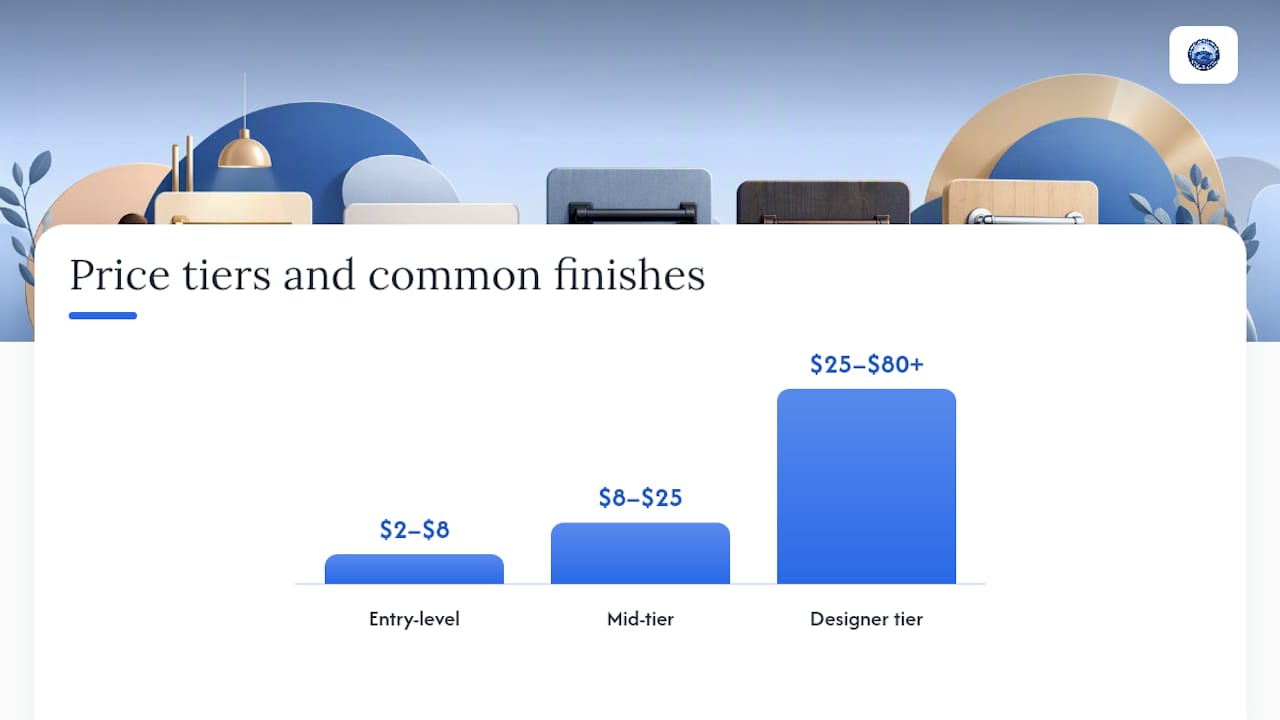
Entry-level ($2–$8 per piece): Powder-coated matte black and basic brushed nickel dominate this tier. You'll find these at Home Depot in brands like Amerock and Liberty Hardware. Quality is functional, and durability is acceptable for low-traffic areas. Electroplated finishes at this price point can show wear within a few years in busy kitchens.
Mid-tier ($8–$25 per piece): Satin brass, oil-rubbed bronze, and better-quality brushed nickel and matte black hardware live here. Top Knobs and Amerock both offer strong mid-tier lines with solid brass or zinc alloy bases. PVD-coated finishes start appearing at this level, which meaningfully improves longevity.
Designer tier ($25–$80+ per piece): Unlacquered brass, specialty PVD finishes, hand-forged bronze, and custom powder-coat colors. Emtek is a reliable name at this level, with solid brass construction and a wide finish library. Lead times for special finishes can run 4–8 weeks, so plan accordingly.
Sourcing tips that save headaches:
- Always order samples before a full purchase. Most retailers, including Home Depot and specialty hardware brands, offer sample programs or low-cost single-piece orders.
- Check the return policy before buying in bulk. Some specialty finishes are final sale.
- Match center-to-center lengths carefully when replacing existing hardware. A 3-inch CTC pull will not fit a 3.75-inch CTC hole pattern without filling and redrilling.
- Confirm the finish family rather than chasing an exact brand match. "Brushed nickel" from Top Knobs and "brushed nickel" from Amerock will be close but not identical. Order both samples and compare them side by side in your kitchen.
- For unlacquered brass or custom PVD finishes, add 6–8 weeks to your project timeline and order 20% extra pieces upfront.
| Finish type | Appearance/style | Durability/maintenance | Cost tier |
|---|---|---|---|
| Powder-coated matte black | Bold, matte, modern | Good — advances in powder coating improve longevity | Entry to mid |
| Brushed/satin nickel | Soft silver, neutral | Very good — hides wear, easy to clean | Entry to mid |
| Satin brass (lacquered) | Warm gold, consistent | Good — resists tarnish, wipe clean | Mid |
| Unlacquered brass | Warm gold, living patina | Moderate — requires regular care | Designer |
| PVD specialty finishes | Varies — metallic, durable sheen | Excellent — hardest coating available | Mid to designer |
| Oil-rubbed bronze | Dark, warm, aged | Good — avoid acid cleaners | Mid |
How do you clean and maintain each cabinet hardware finish?
Cleaning the wrong way damages finishes faster than daily use does. Here are the rules that matter by finish type.
Matte black (powder-coated): Use a soft, dry cloth for daily wipe-downs. For grease or buildup, a damp cloth with a drop of mild dish soap works well. Avoid abrasive scrubbers and citrus-based cleaners, which can break down the powder-coat surface over time.
Brushed and satin nickel: A damp microfiber cloth handles most cleaning. Mild soap is fine for heavier buildup. Avoid steel wool and harsh chemical cleaners. Brushed finishes hide fingerprints and wear better than polished alternatives, which is one reason they stay looking good longer between cleanings.
Lacquered brass: Wipe with a soft, damp cloth. No abrasives, no acidic cleaners (vinegar, lemon juice), and no ammonia-based products. The lacquer coat is what keeps the brass from tarnishing, and harsh cleaners strip it.
Unlacquered brass: Expect and embrace the patina. If you want to slow the aging process, wipe with a dry cloth regularly and apply a thin coat of paste wax every few months. To restore brightness, a brass-specific polish works, but it will also remove some of the natural patina you've built up.
Polished chrome: Wipe frequently with a microfiber cloth to manage fingerprints and water spots. A small amount of glass cleaner on a cloth (not sprayed directly) removes smudges without streaking.
Oil-rubbed bronze: Dry cloth only for regular cleaning. Water and soap are fine occasionally, but avoid prolonged moisture contact and never use acidic or abrasive cleaners. The finish's dark highlights can wear away at high-contact edges over time, which is part of its character.
PVD-coated finishes: These are the most durable option available. A damp cloth with mild soap handles almost anything. PVD resists scratching, tarnishing, and most household chemicals better than any other coating process.
Seasonal maintenance checklist:
- Inspect all hardware for loose screws every six months and tighten with a hand screwdriver (not a power drill, which can strip soft brass or zinc)
- Check for finish wear at high-contact edges on pulls and knobs
- Clean behind and around hardware where grease accumulates near the stove
- Avoid: bleach, ammonia, abrasive pads, steel wool, citrus cleaners, and prolonged moisture on any non-PVD finish
When to replace vs. refinish: If finish wear is limited to one or two pieces, replacement is almost always cheaper than refinishing. If the hardware style no longer matches a cabinet color change or a full kitchen update, a full swap makes more sense than trying to refinish dozens of pieces. Refinishing is only cost-effective for large, high-value pieces like a custom range hood or a statement light fixture.
How do specific finishes pair with different kitchen styles?
Finish choices work best when they reinforce the overall design direction of the kitchen. Here are five mood pairings that designers use consistently.
Modern and monochrome kitchens
Matte black pulls on flat-front white or charcoal cabinets is the defining look of contemporary new construction. The contrast is clean and graphic. Add brushed stainless or polished chrome as an accent on the faucet and appliances, and the palette stays cohesive. Repeat the matte black in light fixtures or cabinet interiors for depth.
Farmhouse kitchens
Warm brass or unlacquered brass on cream, white, or sage cabinets creates the warmth that defines farmhouse style. Oil-rubbed bronze works as an alternative for a darker, more rustic feel. Repeat the brass in pendant lighting and faucet hardware. Avoid cool metals like polished chrome, which read as too sleek for this style.
Transitional kitchens
Brushed nickel is the workhorse of transitional design because it bridges modern and traditional without committing to either. Pair it with a warm brass accent on the island or pantry for a layered look. This is also where satin brass shines — warm enough to feel inviting, restrained enough to stay versatile.
Luxe and traditional kitchens
Unlacquered brass, antique brass, or satin gold on white or navy cabinets signals quality and intention. These finishes pair well with marble countertops and statement lighting. Emtek's solid brass collections are a strong fit here. Repeat the finish in cabinet hinges and decorative hardware for a pulled-together look.
Moody and dark kitchens
Dark cabinets (navy, forest green, charcoal) pair well with brushed gold, polished brass, or even polished nickel for contrast. Matte black on dark cabinets tends to disappear, so a finish with some sheen works better. Pewter or antique silver can also work in this palette for a more understated result.
When is it worth swapping your cabinet hardware?
Hardware replacement is one of the highest-return updates you can make in a kitchen, and it costs a fraction of new cabinets. That said, it is not always the right move.
Swap your hardware when: the finish is visibly worn or peeling, you've repainted or restained your cabinets and the existing hardware no longer reads as intentional, or you're updating the kitchen's overall style direction. A set of matte black pulls on freshly painted white cabinets can transform a dated kitchen without touching a single cabinet box.
Keep your hardware when: the finish is in good condition, the style still fits, and the budget is better spent elsewhere. Polishing lacquered brass or deep-cleaning oil-rubbed bronze can restore a lot of life to hardware that just looks tired.
My recommendation: if you're already ordering new cabinets from Best Cabinet Specialist, match your hardware finish to the cabinet color family at the same time. Ordering matching appliance pulls and door hardware together eliminates the guesswork of chasing finish matches later, and Best Cabinet Specialist's cabinet lines are designed to work with standard hardware profiles across all the major finish families.
Ready to put your finish choice into action? Best Cabinet Specialist offers affordable, project-ready cabinets with fast shipping across the U.S., built with plywood boxes and solid wood doors that pair cleanly with every finish covered in this guide. Whether you're going matte black on white shakers or warm brass on navy uppers, the cabinet construction is there to support the look. Browse the full line, check finish compatibility, and order your hardware samples alongside your cabinet selection.
Sources
- Knobs
- Mixing metals in the kitchen — The Spruce
- Design trend 2026: mixed metals — Good Housekeeping
- Mixed metals hardware trend — The Kitchn
- Mixed-metal kitchens trend — Livingetc
- Paint