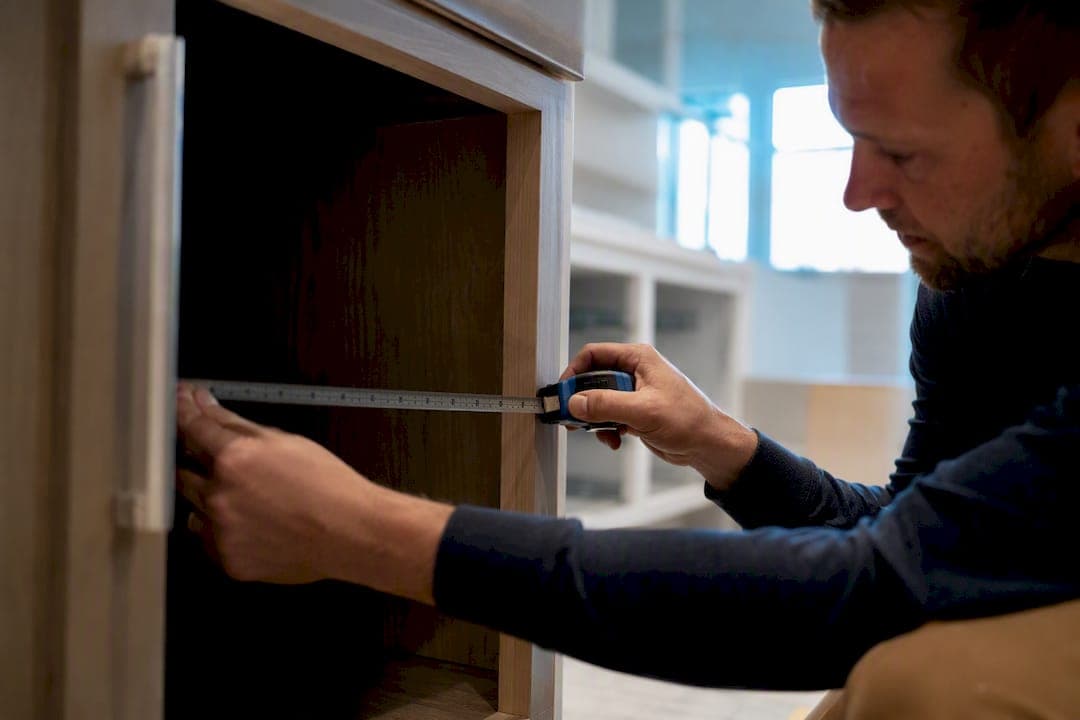
Standard pull-out trash cabinets run 12 to 24 inches wide, and each width supports a specific bin setup: 12 inches fits a slim single 27 to 35 quart bin, 15 inches handles a single 35 to 50 quart bin, 18 inches is the sweet spot for double 27 quart bins or one 50 quart bin, and 21 to 24 inches opens up double large-bin systems. Interior measurements, not the door's nominal size, decide what actually fits.
TL;DR:
- Cabinets narrower than 15 inches generally cannot accommodate standard pull-out trash systems; measure interior width carefully before ordering.
- Double-bin setups require at least 18 inches of interior width to prevent binding and allow smooth operation.
- Vertical clearance must be verified, especially for larger 50 quart bins that need more than 19 inches of height to fit properly.
- Face-frame structures and hinge placement can reduce usable interior width by up to 3 inches, impacting bin size choice.
- Proper measurement of interior width, depth, height, and door swing is essential to ensure compatibility and avoid costly misfits.
Table of Contents
- Standard Pull-Out Trash Sizes and What Fits Where
- How to Measure Your Cabinet Interior the Right Way
- Bin Capacity Explained: Quarts, Gallons, and Household Fit
- Single vs. Double Bins: Which One Actually Fits Your Cabinet
- Hardware and Clearance Rules That Determine Long-Term Fit
- Installation Tips and the Pitfalls That Catch DIYers Off Guard
- How Cabinet Construction Affects Pull-Out Trash Fit
- What I'd Tell a Homeowner Standing in Front of an Empty Cabinet
- Where to Verify Exact Kit Dimensions
- Sources
- FAQ
Standard Pull-Out Trash Sizes and What Fits Where
Cabinet manufacturers build pull-out trash cabinets in a handful of widths, and each one has settled into a predictable role in the kitchen. Knowing where your cabinet falls on this scale tells you almost everything about which bin kit you should be shopping for.
The width-to-bin mapping most builders rely on breaks down like this:
- 12 inches: A slim single bin, usually 27 to 35 quarts. Good for small kitchens, laundry rooms, or a secondary waste station away from the main prep zone.
- 15 inches: The most common single-bin width, holding 35 to 50 quarts. This is where most homeowners land when they want real capacity without sacrificing cabinet real estate.
- 18 inches: The most flexible size on the list. You can run double 27 to 35 quart bins for waste and recycling, or a single 50 quart bin if separation isn't a priority.
- 21 inches: Comfortably fits a double bin setup with larger 50 quart pairs, or one oversized single bin.
- 24 inches and up: Room for large double-bin systems or specialized multi-container setups, though this width is often more than a typical single-family kitchen needs.
Here's the detail that trips up a lot of DIY remodels: nominal cabinet width and usable interior width are not the same number. Face-frame stiles, the vertical strips of wood running along the cabinet opening, can eat 1.5 to 3 inches of usable space before you even account for hinges. A "15 inch" cabinet with a heavy face frame might only offer 13 inches of real clearance, which is enough to knock you out of a 15 inch bin kit entirely.
How to Measure Your Cabinet Interior the Right Way
Skipping a proper measurement is the single most common reason a pull-out trash kit arrives and doesn't fit. Interior cabinet width, depth, and door swing determine compatibility, and measuring the interior opening rather than the door itself is the rule to build every other decision around.
Work through this checklist before you order anything:
- Measure interior width at the narrowest point. Check near the top and bottom of the opening, since face-frame lips or hinge hardware often intrude more in one spot than another.
- Measure usable depth from the inside face of the frame to the back panel. Subtract space lost to plumbing lines, disposal units, or fixed shelving.
- Measure interior height to the underside of the countertop, and separately to the underside of any drawer sitting above the cabinet. Tall 50 quart bins need more vertical clearance than you'd expect.
- Test the door swing. Open the door all the way and check whether it reaches 100 to 110 degrees, since most pull-out kits require that range to clear the bins fully. If your hinges won't allow it, a frame-mounted kit may work better than a door-mounted one.
Bring a tape measure and, if you suspect an obstruction like a P-trap or a shutoff valve, a thin ruler or feeler gauge to check exact clearance around it. Our interior cabinet measurement guide walks through the same process for full cabinet planning if you're sizing a whole kitchen at once.
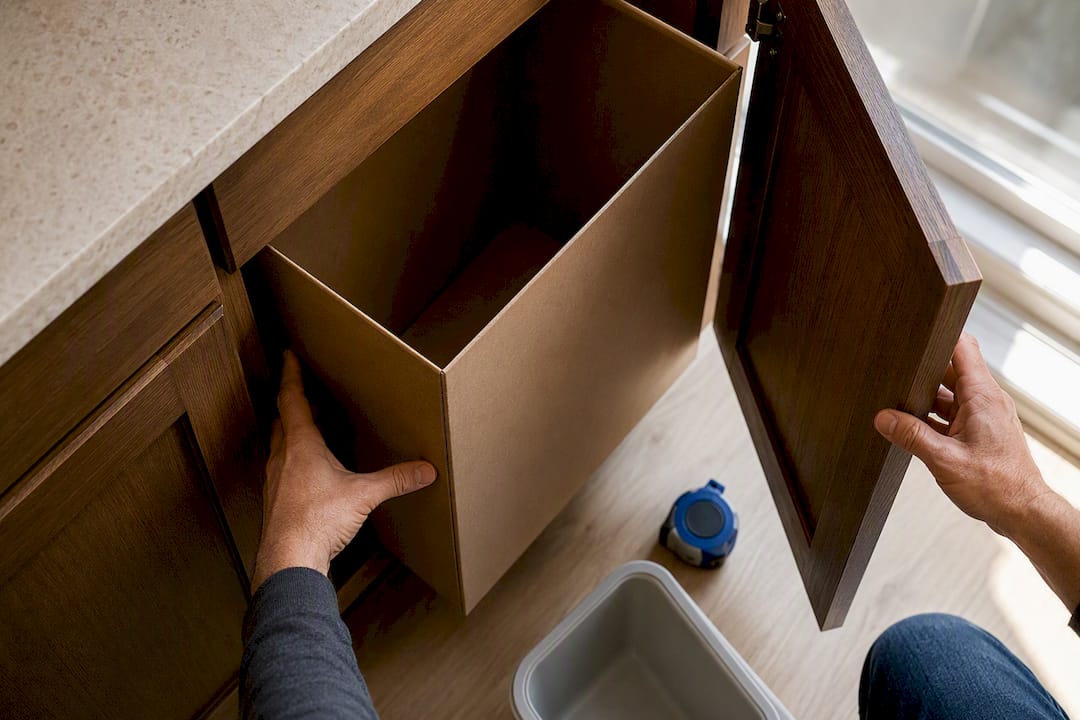
Pro Tip: Measure with the cabinet door open and a bin (or a box the same size) actually inside before you order hardware. A tape measure tells you the opening is big enough; a physical mockup tells you the door will still close.
Bin Capacity Explained: Quarts, Gallons, and Household Fit
Most pull-out trash kits are labeled in quarts, which throws off homeowners used to thinking in gallon-sized kitchen trash bags. The conversion is simple: 4 quarts equal 1 gallon, so a 35 quart bin holds roughly 8.75 gallons, and a 50 quart bin holds about 12.5 gallons, putting it close to a standard 13-gallon tall kitchen can.
| Cabinet width | Typical bin configuration | Household fit |
|---|---|---|
| 12 in | Single 27–35 qt | Apartments, small kitchens, secondary bins |
| 15 in | Single 35–50 qt | Most single-family households |
| 18 in | Double 27–35 qt or single 50 qt | Households separating recycling |
| 21 in | Double 50 qt | Larger families, heavy cooking households |
| 24 in+ | Large double or multi-container | High-volume kitchens, multi-generational homes |
Vertical clearance matters as much as width here. A 50 quart bin stands noticeably taller than a 27 quart one, so before you commit to the bigger capacity, confirm the minimum opening height listed on the manufacturer's spec sheet. One widely sold 12 inch single 35 quart kit lists a minimum opening height around 19-3/4 inches, which is a useful benchmark if your cabinet sits under a low countertop overhang.
Single vs. Double Bins: Which One Actually Fits Your Cabinet
Double-bin systems need real width to work without the bins rubbing against each other or the slide mechanism. As a rule, 18 inches of interior width is the practical minimum for a reliable double setup. Go narrower and you risk binding, uneven extension, or bins that simply won't clear the frame.
- Single large bin: Maximizes capacity in a given footprint, but offers no built-in separation between trash and recycling.
- Double bin: Lets you split waste streams cleanly, though each bin holds less than a comparable single bin and the hardware is slightly more complex to install and align.
- Placement matters as much as width. Under-sink cabinets often lose depth to plumbing, island installs need to account for door swing into open floor space, and a cabinet next to the sink is the most ergonomic spot for wet waste and food scraps.
If your cabinet interior comes in under 18 inches, don't force a double system. A single bin sized to the full width will hold more and slide smoother than two undersized bins squeezed into a tight opening.
Hardware and Clearance Rules That Determine Long-Term Fit
The trash cabinet door in most kitchens opens and closes more often than any other door in the house, which is exactly why full-extension slides and high-cycle soft-close hinges matter more here than almost anywhere else in the kitchen.
- Aim for 22 to 24 inches of interior depth to give full-extension slides room to work; shallower cabinets may need a specialized short-depth kit instead.
- Door-mounted systems attach the bin rack directly to the cabinet door and pull out together, which suits full-overlay cabinet doors well.
- Frame-mounted systems anchor to the cabinet floor or side panels independently of the door, a better fit for inset doors or limited swing angles.
- Face frames, hinge cups, and overlay styles all shave inches off your usable opening. Adjust your bin-size shopping list accordingly rather than trusting the cabinet's nominal width.
Full-extension drawer slide hardware comes in several load ratings, and pairing the right one with your bin weight keeps the whole system running smoothly for years instead of sagging within a season.
Installation Tips and the Pitfalls That Catch DIYers Off Guard
Most failed pull-out installs trace back to one of three problems: an unseen obstruction, the wrong mounting style, or skipped maintenance once the kit is in.
- Check for plumbing and disposal conflicts first. A garbage disposal, P-trap, or shutoff valve can steal several inches of usable depth. Measure around these obstructions, not just to the back panel.
- Choose your mounting method deliberately. Door-mounted racks are faster to install but transfer the bin's weight to the door hinges, so confirm your hinges are rated for it. Rack-mounted kits carry the weight independently and tend to hold up better under heavy daily use.
- Maintain the system. Pull the bins out periodically to wipe down the frame, check slides for debris buildup, and inspect for wear if the door has started sagging or the bin no longer glides smoothly.
Retrofitting an existing cabinet is entirely doable, but always dry-fit the bin and rack before drilling a single hole. It's far easier to return an oversized kit than to patch a mounting hole you didn't need.
How Cabinet Construction Affects Pull-Out Trash Fit
Cabinet construction quality determines whether your pull-out trash setup fits smoothly or fights you for years. Best Cabinet Specialist builds cabinets with plywood boxes and solid wood doors, and that construction detail matters more for pull-out trash systems than most homeowners realize: plywood holds screws and slide hardware more reliably than particleboard, and properly proportioned face-frame stiles preserve the interior width you actually measured.
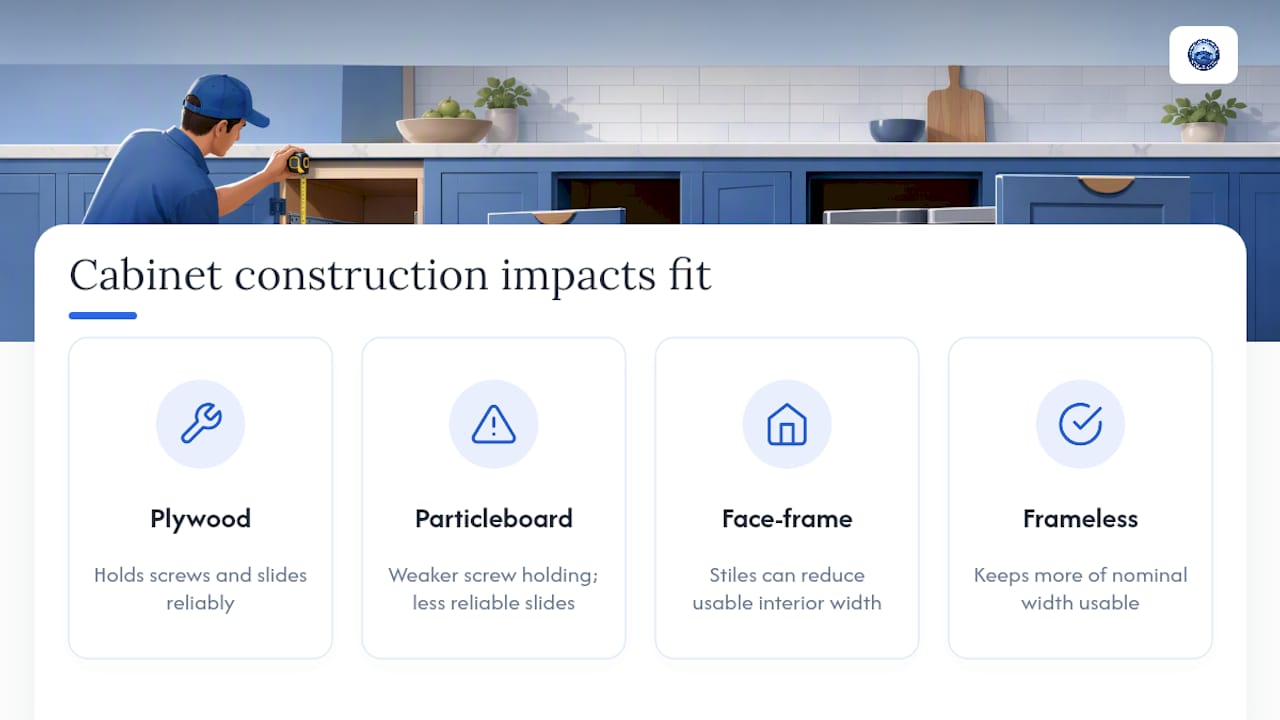
If you're planning new cabinetry around a pull-out trash system, look for reduced face-frame projection or frameless construction, since either option keeps more of the nominal width usable. Our cabinet configuration and layout guide covers how to plan widths across an entire kitchen so your trash cabinet isn't an afterthought squeezed in at the end.
What I'd Tell a Homeowner Standing in Front of an Empty Cabinet
If you're choosing a width from scratch, pick 18 inches. It gives you double-bin flexibility for recycling without demanding a cabinet remodel, and it's forgiving enough to handle a single 50 quart bin later if your household needs change. Fifteen inches is the right call when floor space is tight and you're not splitting waste streams.
Skip the built-in pull-out entirely if your interior width measures under 12 inches. A freestanding can will serve you better than fighting a kit into a space it was never designed for. Measure first, then shop. Our measurement guide walks through the exact process before you commit to a kit or a new cabinet order.
— Nathan
Where to Verify Exact Kit Dimensions
For exact minimum opening widths and depths, check manufacturer product pages like the Rev-A-Shelf 12 inch single 35 quart system and installation documents such as this soft-close pullout bin install PDF, which lists hole-spread and mounting dimensions for multiple bin sizes. If your interior width is genuinely too narrow for a built-in system, space-saving organization alternatives are worth a look before you order custom hardware.
Ready to build cabinetry around the right pull-out dimensions from the start? Best Cabinet Specialist's plywood-box cabinets with solid wood doors ship fast and are built to hold their interior width, so your trash pull-out fits the first time, not after a return and a remeasure.
Sources
- Brainvoyage
- Knobs
- Rev-A-Shelf 4WCSC-1535DM-1 Wood Classics 12" Single 35 Qt Pull Out Trash Can System | Ferguson Home
FAQ
What size trash bag fits a pull-out trash can?
Match the bag size to the bin's quart capacity: a 35 quart bin typically takes a 13-gallon kitchen bag, while a 50 quart bin needs a 13-gallon kitchen bag.
What is the standard trash cabinet size?
Most kitchens use a 15 or 18 inch wide cabinet for pull-out trash, since these widths balance single or double bin capacity with reasonable floor space.
What size pull handle works for an 18 inch trash cabinet?
Pull hardware isn't tied to cabinet width the way bins are; a standard 3 inch cabinet pull works fine on an 18 inch pull-out door as long as it's centered and doesn't interfere with the bin rack behind it.
Are pull-out trash bins worth the cost?
For most kitchens, yes: they hide waste behind a cabinet door, keep bins contained during full-extension use, and make recycling separation easier with double-bin setups, though narrow cabinets under 12 inches are usually better served by a freestanding can.