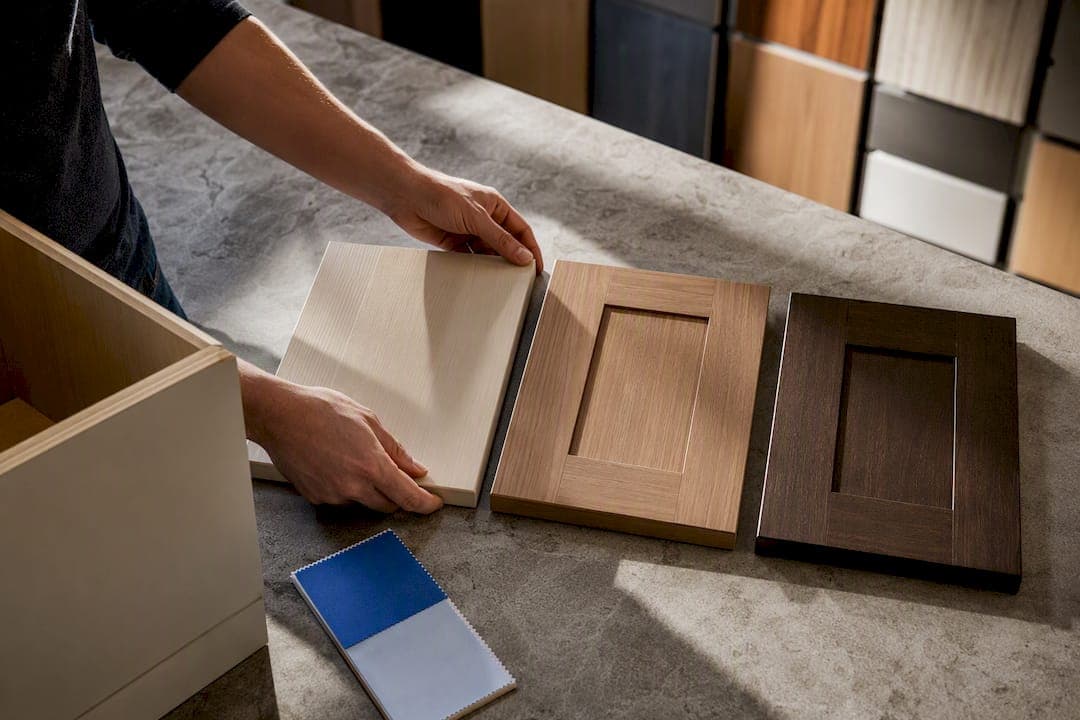
The most reliable approach to spec home cabinets is a fixed Good/Better/Best selection sheet paired with project-ready plywood-box cabinets, ordered on a construction milestone rather than a whim. Release your order once drywall is scheduled, not after. That single timing decision controls cost variance and lead time more than any material choice you'll make.
TL;DR:
- Ordering cabinets on a construction milestone, such as drywall scheduling, minimizes cost variance and prevents delays more effectively than material choices.
- Using a fixed Good/Better/Best selection sheet with set allowances and upgrade costs streamlines procurement and reduces change-order disputes.
- Locking in cabinet specifications, hardware, and finish choices early with detailed spec sheets and physical samples ensures quality and on-time delivery.
- Prioritizing project-ready plywood box cabinets for quick shipping and staged release can save up to 4 weeks of lead time on multi-unit projects.
- Standardized coordination of cabinet dimensions with countertops and appliances prevents costly rework and installation conflicts later in the build.
Table of Contents
- What Are Spec Home Cabinets and Why Standardize Them?
- Good, Better, Best: Spec Packages You Can Drop Into a Selection Sheet
- What Belongs in a Cabinet Spec Sheet You Hand to Suppliers?
- How Should You Order Cabinets for a Multi-Unit Spec Project?
- How Do You Set Cabinet Allowances That Actually Hold?
- How Do You Build a Spec Sheet That Prevents Selection Delays?
- A Practical Example: Tier Choices and Timeline for a Representative Spec Home
- How Should You Handle Cabinet Warranties After Closing?
- What Cabinet Styles Are Trending in Spec Homes Right Now?
- How Do You Evaluate a Cabinet Supplier or Manufacturer?
- How Do Cabinets Need to Coordinate With Countertops and Appliances?
- Which Cabinet Customizations Are Worth the Cost and Time?
- How Sustainable Are Plywood-Box and Solid-Wood Cabinets?
- What I've Seen Stall Closings, and What Fixes It Fast
- How Best Cabinet Specialist Supports Spec-Home Builders
- Sources
- FAQ
What Are Spec Home Cabinets and Why Standardize Them?
Spec home cabinets are the cabinetry a builder specifies and orders before a buyer exists, standardized across a floor plan so procurement, budgeting, and installation stay predictable from one house to the next. Custom home cabinetry gets designed around one client's preferences. Spec home cabinets get designed around a plan set, a budget tier, and a schedule that has to hold across multiple units.
The problem most builders run into isn't finding cabinets. It's letting cabinet selection turn into a moving target that stalls closings. Developer procurement guidance treats cabinets the same way it treats trusses or windows: a long-lead item that gets standardized per floor plan with a tiered upgrade menu, so buyers pick from a fixed list instead of renegotiating your contract.
That's the shift this article walks through: a standard spec package, a technical checklist to hand suppliers, an ordering timeline, allowance math, and a spec sheet template you can reuse on the next ten houses.
Good, Better, Best: Spec Packages You Can Drop Into a Selection Sheet
Three tiers cover nearly every spec home budget, and each one needs a firm feature list before you ever put it in front of a buyer.
Good (entry tier). Framed or frameless plywood box, 1/2-inch plywood sides and back, laminate or thermofoil doors, standard side-mount drawer slides, and builder-grade hinges. This tier sells the house, not the kitchen. Keep finish choices to two or three colors.
Better (popular tier). This is where most spec buyers land, and it's where builder-grade catalogs typically add differentiation. Look for features like a durable factory finish, dovetail drawer boxes, full-overlay doors, and soft-close hinges, all of which large-volume builder spec sheets commonly list as tier separators. Undermount soft-close slides belong here too.
Best (semi-custom tier). Full plywood box construction throughout, solid wood doors, dovetail drawers, soft-close hardware standard, and a wider finish and door-style selection. Manufacturer catalogs pair this tier with production lead-time data, which matters when you're staging a whole subdivision.
Typical allowance ranges (per-kitchen, cabinets only, not counting installation):
- Good: budget allowance sized for a compact kitchen with minimal upgrades
- Better: a moderate step up, usually the default in your base contract price
- Best: the largest allowance band, reserved as an upgrade option rather than the base spec
Pro Tip: Cap finish choices at three per tier. A curated, limited palette keeps orders on schedule without buyers feeling shortchanged on perceived value.
Write the itemized upgrade delta directly on the selection sheet. If Better to Best adds a fixed cost per linear foot, print that number. Buyers who see the math upfront cause far fewer change-order disputes later.
What Belongs in a Cabinet Spec Sheet You Hand to Suppliers?
A cabinet spec that leaves out even one of these fields will come back wrong, late, or both. Here's what has to be locked before you send a purchase order:
- Box material and thickness. Specify plywood versus particleboard, and state the thickness (commonly 1/2 inch for sides and backs on quality boxes). This single line does more to predict long-term durability than any other spec field.
- Back and bottom construction. Full plywood backs with a nailer strip outperform stapled hardboard backs in wall-mount stability. Say which one you're getting.
- Drawer construction. Dovetail joinery with a solid plywood bottom is the durability benchmark; stapled butt-joint drawers are the corner suppliers cut to hit a lower price.
- Hardware baseline. Undermount soft-close slides, soft-close hinges, and the weight rating each is tested to.
- Door core and finish. Solid wood, MDF with a paint finish, or thermofoil, plus the finish warranty term.
- Edge-banding standard. PVC or wood veneer edge-banding thickness, since this is where moisture intrusion usually starts.
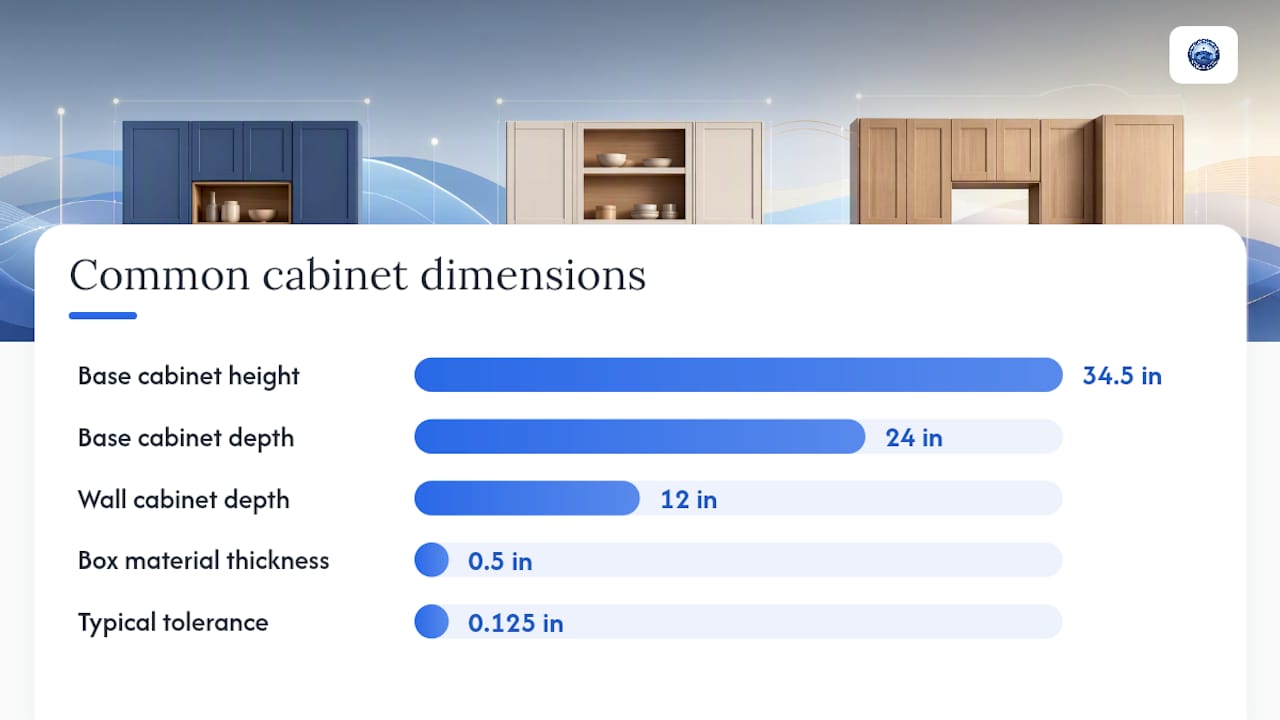
- Dimensions and tolerances. Standard cabinet lines run on 3-inch width increments, with base cabinets commonly 34.5 inches high and 24 inches deep, and wall cabinets around 12 inches deep. Confirm the acceptable tolerance, typically an eighth of an inch.
- Framed versus frameless. Framed construction gives more structural rigidity and traditional styling; frameless (full-access) gives roughly an extra inch of usable interior width per cabinet and reads as more contemporary. Pick one per floor plan and stay consistent.
- Deliverables. Require a cabinet schedule, elevation tags matching your floor plan, and full shop drawings before production release.
A useful shortcut when a supplier's spec sheet lands on your desk: read it in four passes, covering box material, joinery, back and nailer construction, and hardware, in that order. Those four fields decide how the cabinets hold up in year five, not year one.
Pro Tip: Ask for one physical corner sample per tier before your first bulk order. A spec sheet can hide a weak drawer joint; a sample corner can't.
How Should You Order Cabinets for a Multi-Unit Spec Project?
Three procurement paths exist, and each trades speed against flexibility.
- Preassembled cabinets arrive box-built and ready to set. Fastest install labor, least on-site flexibility, and the best fit for repeat floor plans.
- RTA (ready-to-assemble) ships flat, costs less to freight, and needs assembly labor on-site or in a staging area before install.
- Semi-custom allows dimension and finish adjustments per unit but adds real time to the production queue.
Lead times vary by category. Some suppliers keep quick-ship or in-stock SKUs on hand alongside 2 to 4 week custom production runs, which matters when a framing delay compresses your whole schedule. As a working rule, release your order once drywall is on the calendar, not once it's hung. That buffer absorbs normal production variance without pushing your trim schedule.
For multi-unit builds, three tactics reduce risk:
- Bulk order at a fixed spec across identical floor plans to lock pricing and simplify tracking.
- Stagger releases by two to three units so a single supplier delay doesn't stall the whole subdivision.
- Warehouse partial deliveries when your build schedule runs faster than the supplier's staggered shipping.
On arrival, inspect every box for racking, moisture damage, and hardware completeness before signing the delivery acceptance sheet. A five-minute inspection at the curb beats a punch-list fight after drywall is closed up around a damaged box.
How Do You Set Cabinet Allowances That Actually Hold?
Set your base contract allowance at the Better tier, not the Good tier. Building the allowance too low guarantees buyer upgrades on nearly every unit, which turns your clean selection sheet into a stream of change orders.
Realistic allowance bands, per kitchen, cabinets only:
- Good tier: the lowest allowance band, appropriate only for entry-price product lines
- Better tier: a moderate allowance, sized to match what most buyers actually select
- Best tier: the top allowance band, positioned as an upgrade rather than a base inclusion
Print the upgrade delta on the sheet itself. If moving from Better to Best adds a fixed amount per linear foot, that number needs to be visible before the buyer signs anything.
Value-engineering keeps costs predictable without cutting quality: standardize cabinet widths to stock sizing (those 3-inch increments again), limit door styles to two per tier, and hold finish choices to three colors. Every option you remove from the sheet is one less variable your supplier has to reprice.
Contract language matters just as much as the numbers. Include a clause stating that any selection exceeding the tier allowance triggers a signed change order at a fixed markup, due before production release, not before closing. That single sentence prevents the most common allowance dispute: a buyer assuming an upgrade is "included" because nobody wrote down that it wasn't.
How Do You Build a Spec Sheet That Prevents Selection Delays?
A cabinet spec sheet earns its place in your project binder only if it stops selection decisions from stalling your schedule. Build it once, per floor plan, and reuse it.
- List the tier options (Good/Better/Best) with the SKU or catalog code for every cabinet in the run, not just a general description.
- Attach the finish code for each tier, capped at three choices per tier.
- Print the hardware spec for slides and hinges directly on the sheet, not buried in a footnote.
- Mark the delivery milestone tied to your build schedule, such as "release order at drywall start."
- Include a buyer sign-off line with a date, so any tier change after that date is documented, not assumed.
- Show itemized upgrade costs next to each tier jump, in dollars per linear foot or per kitchen, so nobody has to ask.
Tie your order-release policy to a construction milestone, not a calendar date. Homes run ahead or behind schedule constantly; a milestone trigger keeps cabinet delivery synced to the actual build instead of a static date that framing delays can blow past. This is the same logic that governs how developers coordinate long-lead trades generally: standardize, then release on a trigger.
For change orders, set a hard cutoff, typically 48 to 72 hours after the buyer's walk-through, past which no further cabinet changes are accepted without a documented delay to the closing date. Buyers need to know that window exists before they walk the model.
Pro Tip: Coordinate your cabinet elevation tags with your CAD kitchen layout before shop drawings go final. Catching an appliance clearance conflict on paper costs nothing; catching it after install costs a callback.
A Practical Example: Tier Choices and Timeline for a Representative Spec Home
Picture a builder running six identical 1,800 square foot units on the same floor plan. Setting the Better tier as base contract spec, with a Best tier upgrade available at a fixed per-linear-foot delta, kept every buyer conversation to a single sheet instead of six separate negotiations.
Ordering plywood-box cabinets from project-ready inventory, rather than a fully custom production run, meant the supplier's quick-ship SKUs covered four of the six units outright. The remaining two, where buyers upgraded to a different door profile, moved into the 2 to 4 week custom lane without disrupting the other four.
The single biggest lead-time saver on a multi-unit spec project isn't a faster factory. It's ordering plywood-box, project-ready cabinets that don't need a custom production slot in the first place. Every unit that ships from stock is one less thing that can push your closing date.
Punch-list items dropped too. Preassembled plywood boxes with factory-installed soft-close hardware arrived square, with none of the on-site adjustment that RTA units sometimes need when a job site crew is rushing between six units at once. When you're evaluating a trade supplier for a run like this, ask directly about quick-ship inventory and trade pricing tiers before you commit to a production schedule.
How Should You Handle Cabinet Warranties After Closing?
Warranty terms need to be settled before you ever sign a purchase order, not after a buyer calls with a sagging drawer six months post-close. Most quality cabinet lines carry warranty coverage on the box structure and finish separately, often with a shorter window on hardware wear items like drawer slides and hinges than on the box itself. Get that split in writing from your supplier.
Set clear internal responsibility before closing: who fields the buyer's warranty call, you or the cabinet supplier directly. Many builders route the first 12 months through their own punch-list process, then hand off to the manufacturer's warranty desk after that, since most early defects (a misaligned door, a loose hinge) are installation issues, not product defects.
Document cabinet SKUs and finish codes per unit at time of install, not from memory later. A buyer calling two years post-close about a discontinued finish color is a much easier conversation when you have the exact code on file instead of guessing from a photo.
The most common post-close cabinet complaints are minor: door alignment drift, a slide that needs a depth adjustment, or a hinge that's loosened from normal use. All three are five-minute fixes for a trained tech and expensive, reputation-damaging problems when a buyer feels ignored. Build a 30-day and a 12-month post-close cabinet check into your standard walk-through schedule, and most warranty claims never escalate past a quick service call.
What Cabinet Styles Are Trending in Spec Homes Right Now?
Modern spec home designs have moved decisively toward flat-panel, full-overlay doors in a mix of matte finishes and warm wood tones. Frameless (full-access) box construction dominates this look, since the absence of a face frame gives cabinets the clean, gapless appearance buyers associate with a modern finish.
Two-tone kitchens, a lighter perimeter paired with a darker or wood-tone island, have become a standard upgrade offer rather than a rare custom request. It's a relatively low-cost way to make a Better-tier kitchen photograph like a Best-tier one for listing photos.
Shaker-style doors remain the safest default for the Good and Better tiers. They read as timeless rather than dated, which matters on a spec home you need to appeal to a buyer you haven't met yet. Reserve slab and flat-panel doors for your Best tier or as a paid upgrade, since they show every fingerprint and require a more consistent factory finish to look right.
Hardware finish trends run toward matte black and brushed brass, both of which photograph well in the listing photos that sell spec homes before a buyer ever walks through the door. Keep hardware finish on the same selection sheet as your cabinet tier, since a mismatched hardware finish is one of the most common last-minute change requests you'll field. A quick reference on current cabinet door style options can help you standardize that choice per tier before you're fielding one-off requests mid-build.
How Do You Evaluate a Cabinet Supplier or Manufacturer?
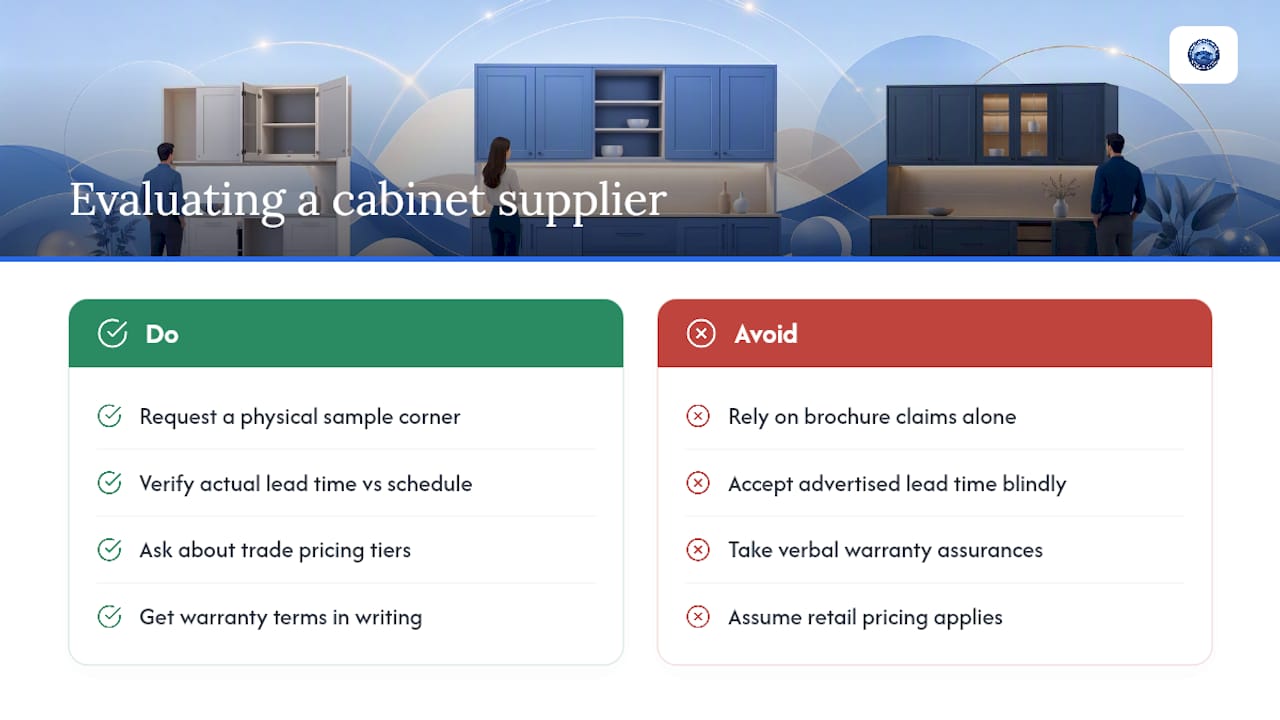
Three criteria matter more than any brochure: construction quality, lead-time reliability, and trade-pricing structure. Ask for a physical sample corner before committing to a bulk order. A spec sheet can claim plywood construction; a sample tells you the thickness and joinery quality directly.
Confirm the supplier's actual lead time against your build schedule, not their advertised lead time against an ideal one. A supplier quoting "2 to 4 weeks" for custom runs needs a track record of holding that window during their own busy season, since spring and early summer production queues run longer at nearly every cabinet manufacturer.
Ask specifically about trade or builder pricing tiers. Suppliers who serve contractors and developers regularly typically offer volume pricing structured around linear footage or unit count, which matters far more on a six-unit or sixty-unit project than a single-kitchen retail price would suggest.
Check warranty terms in writing, not verbally from a sales rep. Get the box-structure warranty term and the hardware warranty term as separate line items, since those two commonly differ.
Finally, ask how the supplier handles damage claims and reorders. A supplier who can turn around a damaged-box replacement in days, rather than weeks, protects your closing date far better than one offering a marginally lower price with no clear damage-claim process. Reviewing options for wholesale kitchen cabinets built for contractor volume is a reasonable starting point for comparing how different suppliers structure their trade offering.
How Do Cabinets Need to Coordinate With Countertops and Appliances?
Cabinet dimensions drive nearly every other kitchen decision, which means cabinets have to get specified first, not adjusted after the fact. Standard base cabinet height of 34.5 inches assumes a specific countertop thickness on top; changing your countertop material without checking that math can push your finished counter height out of code-comfortable range.
Appliance clearances are the most common coordination failure on spec homes. A 36-inch range opening spec'd against an outdated appliance cut sheet, or a refrigerator cabinet surround built before confirming the actual model's depth, both produce expensive on-site rework. Confirm exact appliance dimensions before shop drawings go final, not after cabinets arrive.
Countertop overhang and cabinet door swing clearance need to be checked together, especially at inside corners where a wide door swing can conflict with an adjacent appliance handle. This is exactly the kind of conflict a CAD-based kitchen layout catches before production, and exactly the kind that turns into a change order after.
Cabinet finish and hardware also need to read as a set with your interior door hardware and trim package, not as an isolated kitchen decision. Coordinating interior door style choices alongside your cabinet finish selection early avoids the mismatched-hardware complaints that surface most often at final walk-through, when a buyer notices brushed nickel cabinet pulls next to oil-rubbed bronze door hardware for the first time.
Which Cabinet Customizations Are Worth the Cost and Time?
Not every upgrade costs the same in schedule risk. Some customizations add real production time; others are nearly free to offer.
- Soft-close upgrade (hinges and slides): minimal cost delta, no lead-time impact if the supplier stocks it as a standard option.
- Door style change within the same tier: low cost, but confirm it doesn't push the order into a different production queue.
- Finish color change outside your standard three-per-tier palette: moderate cost, and frequently a real lead-time hit since custom finishes often require a separate production run.
- Cabinet accessory additions (pull-out trash bins, roll-out shelving, lazy Susans): low cost, easy to itemize, and a strong upgrade-revenue opportunity that rarely delays the schedule. A cabinet accessories reference list is useful for pricing these as standalone selection-sheet line items.
- Full custom dimension changes: highest cost and the biggest lead-time risk, since it typically exits your standard SKU catalog entirely.
The general rule: anything that stays within the supplier's standard SKU catalog is a cheap upgrade to offer. Anything that requires a custom production run needs its own line-item price and its own lead-time disclosure on the selection sheet, so buyers understand an upgrade might also push their closing date.
How Sustainable Are Plywood-Box and Solid-Wood Cabinets?
Plywood box construction generally outperforms particleboard on lifespan, which matters for sustainability in a way that's easy to overlook: a cabinet that lasts twice as long displaces half the manufacturing and landfill impact over a home's ownership life. Particleboard boxes that swell and fail from moisture exposure get replaced far sooner.
Solid wood doors, sourced from responsibly managed forestry, generally hold finish and structural integrity longer than thermofoil doors, which tend to peel or bubble at heat and moisture exposure points near ranges and dishwashers. That durability gap is a genuine sustainability consideration, not just a cosmetic one.
Ask suppliers directly about formaldehyde-free or low-VOC adhesive and finish options, since indoor air quality in a newly built home is a growing buyer concern, particularly in tightly sealed, energy-efficient construction where off-gassing has less natural ventilation to dissipate into. Some cabinet lines now offer this as a standard spec rather than a premium upgrade, worth confirming during supplier evaluation.
Reviewing available cabinet finish types and their durability profiles helps you weigh the environmental tradeoff between a lower upfront cost finish and one that holds up long enough to avoid an early replacement cycle. On a spec home, the greenest cabinet is often simply the one that doesn't need replacing in year seven.
What I've Seen Stall Closings, and What Fixes It Fast
The mismatch that stalls the most closings isn't a bad cabinet. It's a buyer allowance set at the Good tier while every model home upgrade points them toward Best. Fix that gap on paper before you ever open a model to a buyer.
The second-biggest problem is offering too many choices per tier. Six door styles and eight finish colors feels generous; it actually just slows every buyer meeting and every production release.
The third is ordering late, hoping framing delays will buy you time they never actually deliver. Release cabinet orders at drywall start, every time, and consider trade resources built specifically for cabinet configuration on a spec-home selection sheet before you finalize your next floor plan's spec.
— Nathan
How Best Cabinet Specialist Supports Spec-Home Builders
Some cabinet suppliers offer plywood boxes, solid wood doors, soft-close hardware standard, and rapid shipping that fits a construction milestone instead of fighting it. Where a fully custom shop leaves you guessing at a production queue, project-ready inventory gets your cabinets moving as soon as drywall closes.
Getting started is straightforward. Have your floor plan, unit count, tier selections, and target delivery milestone ready before you reach out, and the trade team can quote pricing structured around your actual volume rather than a single-kitchen retail rate. Some cabinet suppliers provide warranty support and trade-focused service built for repeat builder relationships, not one-off retail sales.
Browse the full cabinet catalog and trade pricing options to build your next Good/Better/Best selection sheet, or reach out directly to discuss volume pricing for your next multi-unit release.
Sources
- A Guide to Standard Cabinet Specifications for Custom Projects
- How to Read a Kitchen Cabinet Spec: Box Construction
- MRH cabinet spec book (catalog)
- Cabinets for Developers Building Spec Homes
FAQ
What Are the Disadvantages of Spec Homes?
Spec homes limit buyer customization since finishes, layouts, and cabinet tiers get locked in before a buyer exists, and builders carry the carrying cost of unsold inventory until closing. The tradeoff is faster move-in timelines and pricing predictability, which is exactly why a fixed Good/Better/Best cabinet spec matters: it keeps that limited customization from turning into schedule risk.
Is It Cheaper to Build or Buy a Cabinet?
Buying preassembled or RTA cabinets from a project-ready supplier is almost always cheaper and faster than custom on-site cabinet building for a spec home, since factory production controls material waste and labor cost far better than field carpentry. Custom-built cabinets only make sense for a one-off design feature a catalog can't match.
What Are the Three Grades of Cabinets?
Most builder and manufacturer catalogs use a Good, Better, Best structure: entry-level stock cabinets with basic hardware, a mid-tier "Better" option with upgraded finishes and soft-close hardware, and a semi-custom "Best" tier with full plywood construction and solid wood doors. Best Cabinet Specialist's plywood-box, soft-close product line fits naturally into the Better-to-Best range on that scale.
Is It a Good Idea to Buy a Spec Home?
A spec home can be a strong option for buyers who want a faster closing and a home built to already-vetted standard specifications, though it offers less customization than a fully custom build. For builders, the same logic applies to cabinetry: a standardized spec sheet reduces both cost variance and buyer selection delays.