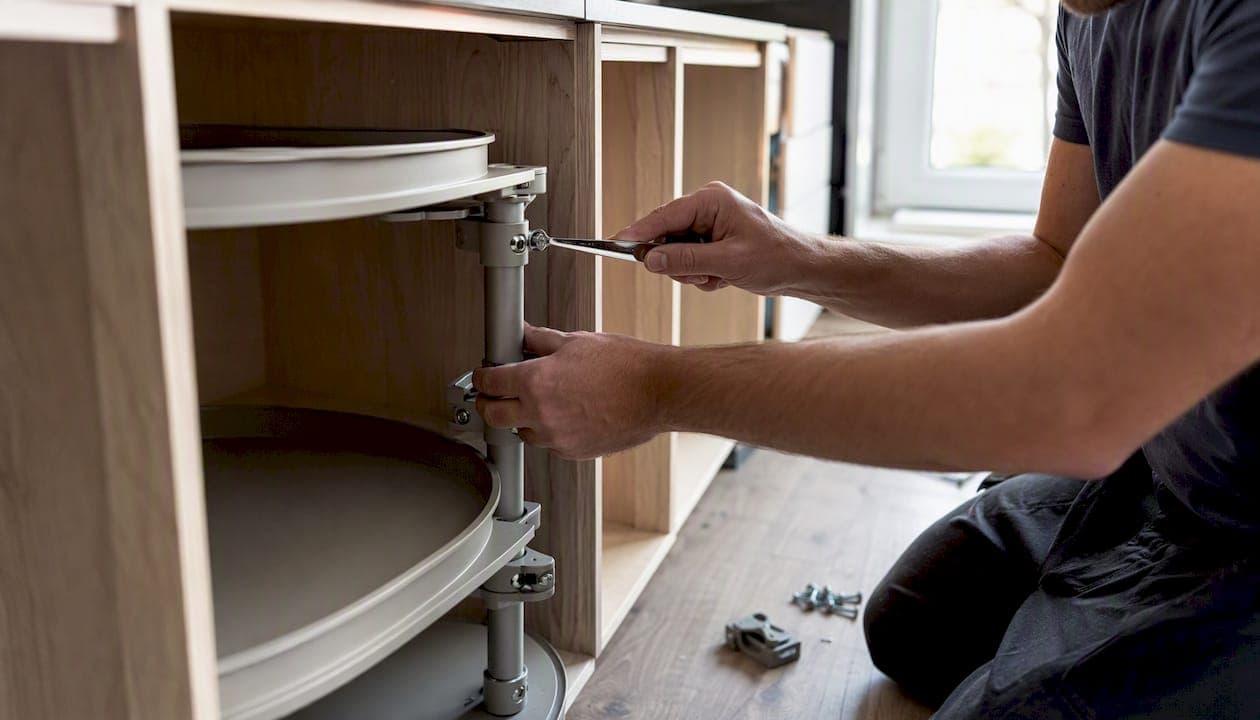
The cabinet accessories that make the biggest difference are full-extension pull-out shelves, deep drawers, corner organizers like a Lazy Susan or LeMans swing-out, integrated waste and recycling pull-outs, in-cabinet charging drawers or appliance garages, and soft-close hinges and slides. Each one solves a specific frustration: digging through a dark base cabinet, wasting a corner's dead space, or hunting for a charger buried under mail on the counter. Specialized gadgets like charging drawers and pull-down baskets reduce countertop clutter and speed up everyday kitchen tasks, which is really the whole point of a cabinet accessories list in the first place.
- Full-extension pull-out shelves for deep base cabinets
- Deep drawers with dividers for pots, pans, and utensils
- Corner solutions: Lazy Susan, LeMans swing-out, or blind-corner pull-outs
- Built-in waste and recycling pull-outs
- In-cabinet charging drawers and appliance garages
- Soft-close hinges and drawer slides
Pro Tip: Start with the cabinets you open most often. A single well-placed pull-out shelf in your busiest base cabinet often delivers more everyday value than three accessories in cabinets you rarely touch.
Key Takeaways
The right cabinet accessories list prioritizes full-extension pull-outs, deep drawers, corner organizers, and soft-close hardware because these solve the storage problems homeowners actually face every day.
| Point | Details |
|---|---|
| Start with high-use cabinets | Add pull-out shelves and deep drawers where you reach most often before upgrading rarely used cabinets. |
| Match accessory to corner type | Choose a Lazy Susan for true corners and a LeMans unit for blind corners for the best fit. |
| Specify full-extension, soft-close | These slide and hinge features extend hardware life and improve everyday access to stored items. |
| Measure before you order | Confirm clear opening width, depth, toe-kick clearance, and plumbing or electrical obstacles first. |
| Choose cabinets built for accessories | Best Cabinet Specialist's face-frame and frameless cabinet lines accept common pull-outs and ship with soft-close hardware options and fast delivery. |
Table of Contents
- Top Cabinet Accessories at a Glance
- Cabinet Accessories By Zone: What Fits Where
- Hardware, Slides, and Finishes: What to Specify
- How to Choose the Right Cabinet Accessory
- High-Impact Accessories Worth Researching Further
- Keeping Cabinet Accessories Working Like New
- Why Homeowners Weigh Access Against Cost
- How Best Cabinet Specialist Makes These Upgrades Easier
- Sources
Top Cabinet Accessories at a Glance
Before you commit to a full cabinet organizing plan, it helps to see the whole lineup in one place. Here's what each accessory actually does for your kitchen:
- Pull-out shelves: bring items stored in the back of deep cabinets within easy reach.
- Deep drawers: replace stacked pots and pans with a single-layer, see-it-all system.
- Built-in trash/recycling pull-outs: hide bins behind a door instead of under the sink or in a corner.
- Spice pull-outs: turn a narrow filler strip into vertical, labeled storage.
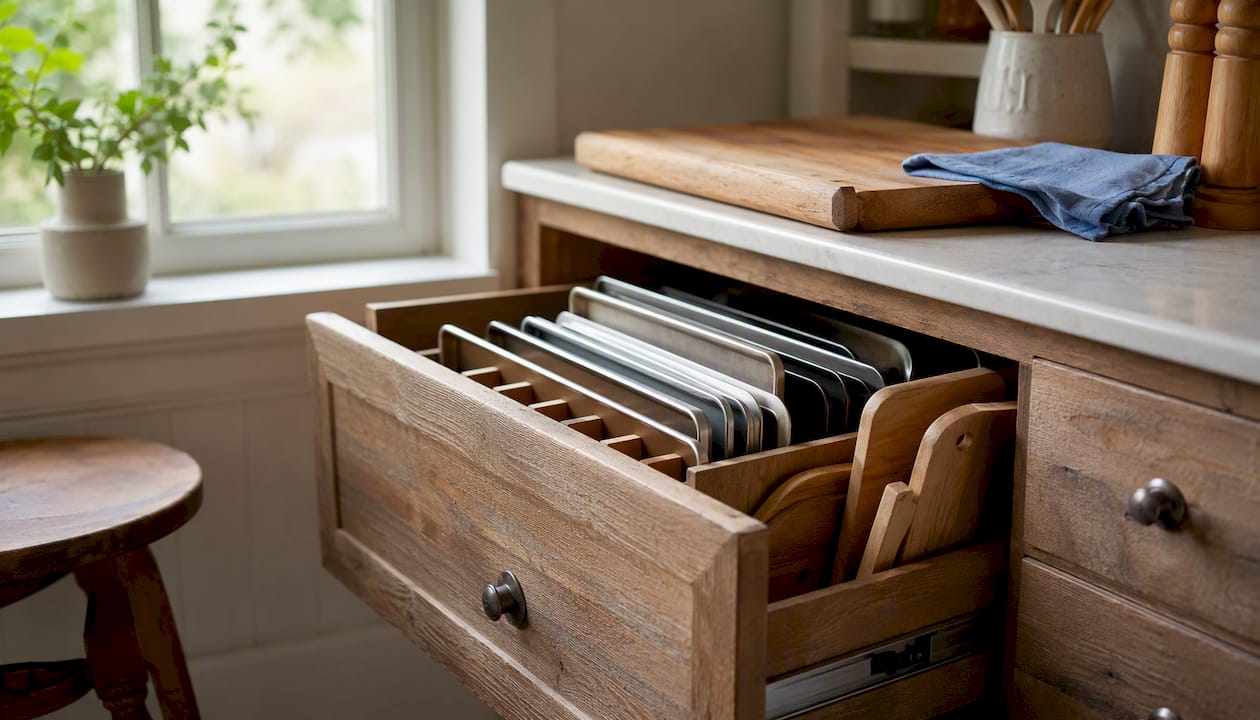
- Tray dividers: keep baking sheets and cutting boards upright instead of stacked and stuck.
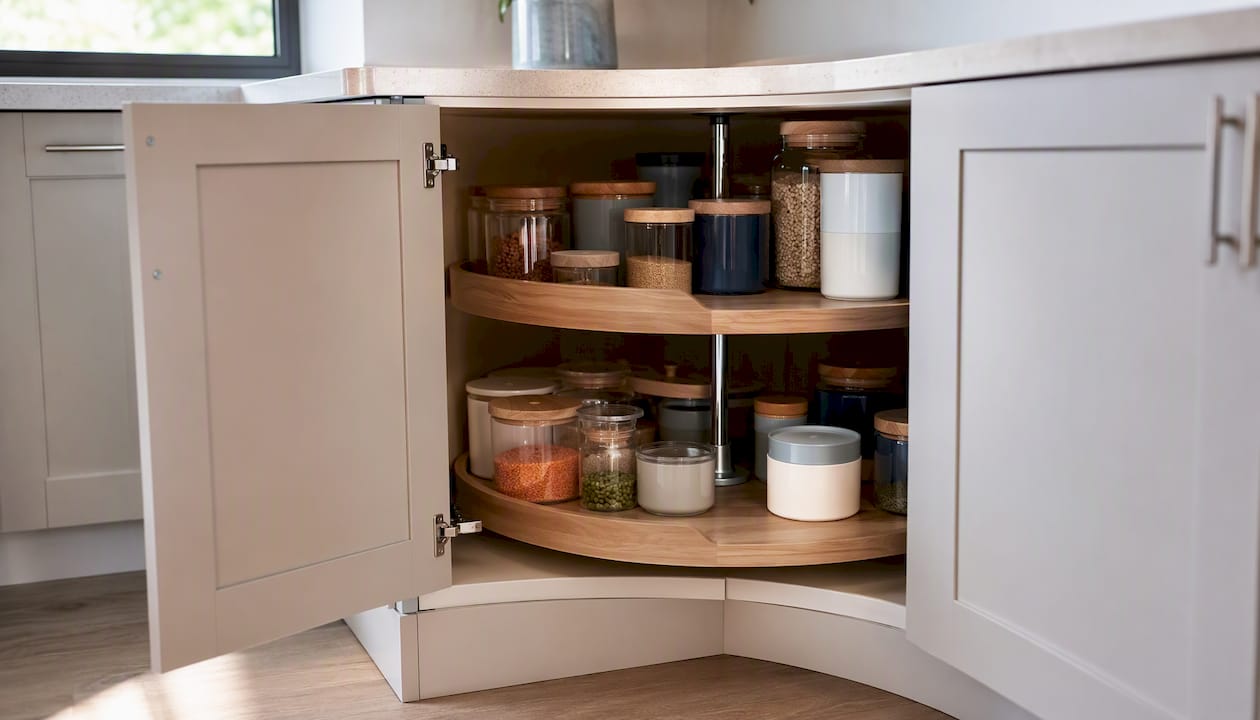
- Lazy Susan: rotates items in a corner cabinet so nothing gets lost in the back.
- LeMans unit: swings blind-corner contents out into the room instead of requiring a crawl.
- Appliance garage: hides countertop appliances behind a door, flush with the backsplash.
- Charging drawer: clears cords and devices off the counter entirely.
- Under-sink caddies: organize cleaning supplies around plumbing obstacles.
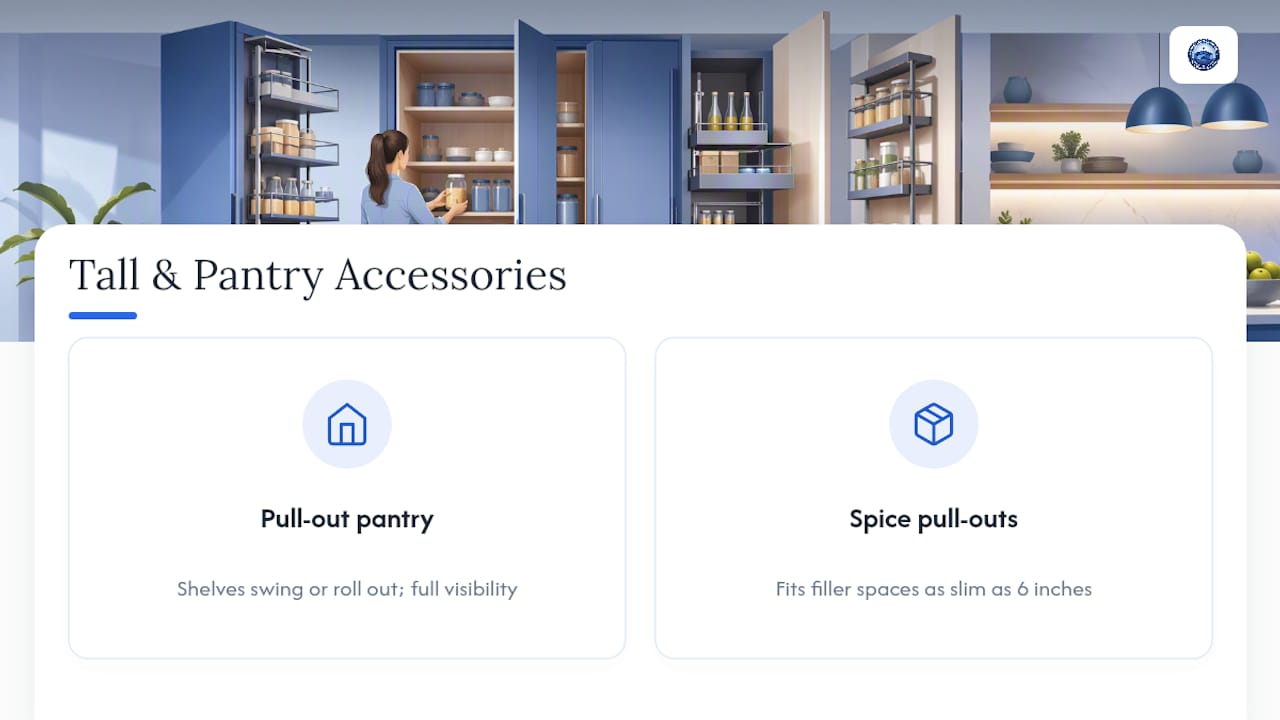
- Pull-out pantry: turns a narrow tall cabinet into full-depth, full-height storage.
Cabinet Accessories By Zone: What Fits Where
Matching the accessory to the cabinet zone is where most kitchen upgrades succeed or fail. A drawer insert that works beautifully in a 30 inch base cabinet won't do anything for a blind corner, and a Lazy Susan doesn't belong in a sink base.
Base cabinets
Base cabinets are the workhorses of the kitchen, and they're also where clutter piles up fastest. Full-extension pull-out shelves let you see and reach everything in a single motion instead of kneeling and reaching blind. Deep drawers, often 10 to 12 inches tall, replace stacked cookware with a single organized layer, and tray dividers keep sheet pans and cutting boards from toppling every time you grab one. Utensil and knife pull-outs work well near the stove, and appliance lifts help heavy stand mixers rise to counter height without a shoulder injury.
Corner cabinets
Corners waste more usable square footage than any other part of a kitchen. A Lazy Susan rotates shelves so items in the back spin into reach, and it works best in true corner cabinets with a door on one or two faces. A LeMans unit swings out on a pivoting arm, which tends to suit blind corners better because it pulls contents fully into the room rather than just rotating them in place. Blind-corner pull-outs slide out and then sideways, reaching deep into the dead space behind an adjacent cabinet. Fit depends on your corner cabinet's exact door opening, so measure before assuming any one solution will work.
Drawers
Drawer inserts for cutlery and knives turn a junk drawer into an organized station in an afternoon. Drawer-in-drawer systems, meanwhile, stack a shallow tray above a deeper drawer for double the storage in the same footprint. For hardware, undermount slides rated full-extension with soft-close damping hold up best under daily use, and heavier drawers (loaded with pots or small appliances) need slides rated for higher weight capacity, not the standard-duty hardware that ships with entry-level cabinet lines.
Sink cabinets
The sink base is the trickiest zone because plumbing eats into usable space. Pull-out caddies and tiered under-sink organizers work around the pipes rather than through them, and integrated pull-out trash and recycling bins tuck neatly beside the plumbing when measured correctly. Always confirm water-line and drain clearances before ordering a pull-out system for this zone. A guide to under-sink storage systems can help you plan around common plumbing configurations.
Tall and pantry cabinets
Full-height pull-out pantry systems turn a narrow tall cabinet into a genuinely useful pantry, with shelves that swing or roll out for full visibility. Narrow spice and condiment pull-outs work well in filler spaces as slim as 6 inches.
Wall cabinets and under-cabinet space
Pull-down baskets bring high wall cabinet shelves within reach without a step stool, which matters most in taller kitchens or for accessibility. Under-cabinet hooks and racks put mugs or utensils in reach without using shelf space, and built-in LED lighting under wall cabinets makes countertops usable after dark.
Pro Tip: Face-frame cabinets have a lip around each opening that reduces usable width, so pull-out accessories need to be sized specifically for face-frame construction. Frameless (full-access) cabinets offer a wider clear opening, which usually means more accessory options fit without modification. Before you buy anything, measure the clear opening width, depth, internal height, and toe-kick clearance, and check for any plumbing or electrical obstacles.
Hardware, Slides, and Finishes: What to Specify
Full-extension slides pull a drawer completely out of the cabinet box, while 3/4 extension slides leave a few inches inaccessible in back. For pots, pans, or pull-out trash, full-extension is worth the small price difference. Undermount slides hide beneath the drawer for a cleaner look, while side-mount slides are more visible but often cheaper and easier to replace.
Soft-close hinges and slides use a hydraulic or spring-loaded damper to slow the last few inches of travel, preventing slams that stress the cabinet joints over time. Some commercial-grade soft-close hinges are rated for more than 80,000 closing cycles, which translates to decades of daily use before hardware fatigue sets in.
- Match accessory finish (stainless, pewter, nickel) to your existing pulls and appliances.
- Choose inset hinges for a flush, furniture-like look; overlay hinges for easier installation and adjustment.
- Confirm door thickness and hinge cup diameter before ordering replacement hinges.
- Frameless cabinets typically accept a wider range of full-access accessories than face-frame boxes.
Finish and fitting options are wide. Marketplace listings for cabinet fittings span thousands of SKUs across finishes and price points, which is useful context when you're deciding how much to spend on hardware versus the cabinets themselves.
How to Choose the Right Cabinet Accessory
- Measure the clear opening width, depth, and internal height of the target cabinet, plus toe-kick clearance for base units.
- Check for obstacles like plumbing, electrical outlets, or HVAC ducts that could block a pull-out track.
- Confirm door swing and overlay style (face-frame versus frameless) before ordering, since a mismatch is the most common return reason.
- Verify weight and load capacity on any slide or shelf you plan to load with cast iron or small appliances.
- Budget realistically: simple pull-out shelves often run in the low hundreds of dollars per cabinet, while a full pull-out pantry system or charging drawer costs more due to materials and, in the case of charging drawers, electrical work.
- Plan the timeline: a DIY pull-out shelf can go in over a weekend, while professional installation of multiple accessories across a kitchen typically takes a few days once cabinets are on site.
For measurement help specific to common base cabinet widths, see our guides to 30 inch base cabinets and 42 inch base cabinets.
High-Impact Accessories Worth Researching Further
Charging drawers deserve special attention because they solve a problem that didn't exist a decade ago: countertops buried under phones, tablets, and charging cables. Installed correctly, an in-drawer charging outlet clears that clutter permanently, though it typically requires an electrician to run power safely to the drawer box. Appliance garages and pull-out trash bins rank just as high for daily impact, since they change how a kitchen actually functions rather than just how it looks.
Pro Tip: If your household runs a high-cycle kitchen (large family, frequent cooking, rental turnover), prioritize commercial-grade hinges and heavy-duty slides over standard residential hardware. The cycle-rating difference matters more than most homeowners expect. When searching, look for product names like "soft-close pull-out," "charging drawer," and "full-extension undermount slide" to find compatible options.
Keeping Cabinet Accessories Working Like New
Pull-out shelves and drawer slides collect grime faster than fixed shelving because they move constantly. Wipe slide tracks every few months with a dry cloth or a small brush to clear crumbs and dust that cause sticking, and avoid spraying cleaner directly onto metal slides since moisture can lead to corrosion over time.
For Lazy Susans and LeMans units, check the mounting hardware twice a year. Constant rotation puts stress on the center pole or pivot arm, and a loose fitting is easier to tighten early than after it's caused a shelf to tilt. Wood shelving inside a Lazy Susan should be wiped with a mild soap solution rather than harsh chemicals, which can dull the finish.
Soft-close hinges and slides rarely need maintenance, but if a door or drawer starts closing with a bang again, the damper may need adjustment or replacement rather than a full hardware swap. Most manufacturers sell replacement dampers separately.
Under-sink caddies and pull-out trash bins need the most frequent attention simply because they hold moisture and waste. Wipe them down weekly, and check that the pull-out track hasn't collected spilled liquid, which speeds up rust on metal slides. A quick monthly inspection of all moving accessories, corners, drawers, and pull-outs alike, catches small issues before they turn into a stuck drawer or a broken bracket.
Why Homeowners Weigh Access Against Cost
Most homeowners I've seen prioritize daily accessibility first, durability second, and looks last, even though showrooms sell it in reverse order. Deep drawers almost always win for pots and pans, but they cost more than a standard pull-out shelf, so budget and daily habits should drive the decision, not the showroom display.
How Best Cabinet Specialist Makes These Upgrades Easier
Once you know which accessories you want, the next question is whether your cabinets can actually accept them. Best Cabinet Specialist builds both face-frame and frameless (full-access) cabinet lines with plywood boxes and solid wood doors, so common pull-outs, corner units, and drawer inserts mount without the workarounds that cheaper stock cabinets often require.

Every line includes soft-close hardware options standard, which means you're not choosing between good-looking cabinets and hardware that lasts. Best Cabinet Specialist ships fast, whether you're outfitting one kitchen or a multi-unit rental property, and offers trade-friendly pricing for contractors and builders ordering in bulk. If you're still working out cabinet widths and configurations before adding accessories, our cabinet configuration layout guide walks through the measurements first. When you're ready to see cabinet and accessory options built for exactly this kind of upgrade, visit Best Cabinet Specialist to browse styles and get a quote for your project.
Sources
- Kitchen storage solutions — the best cabinet accessories to maximize space
- Soft-close vs regular cabinet hinges: Is the upgrade worth it?
- Amazon: Kitchen Cabinet Fittings search results