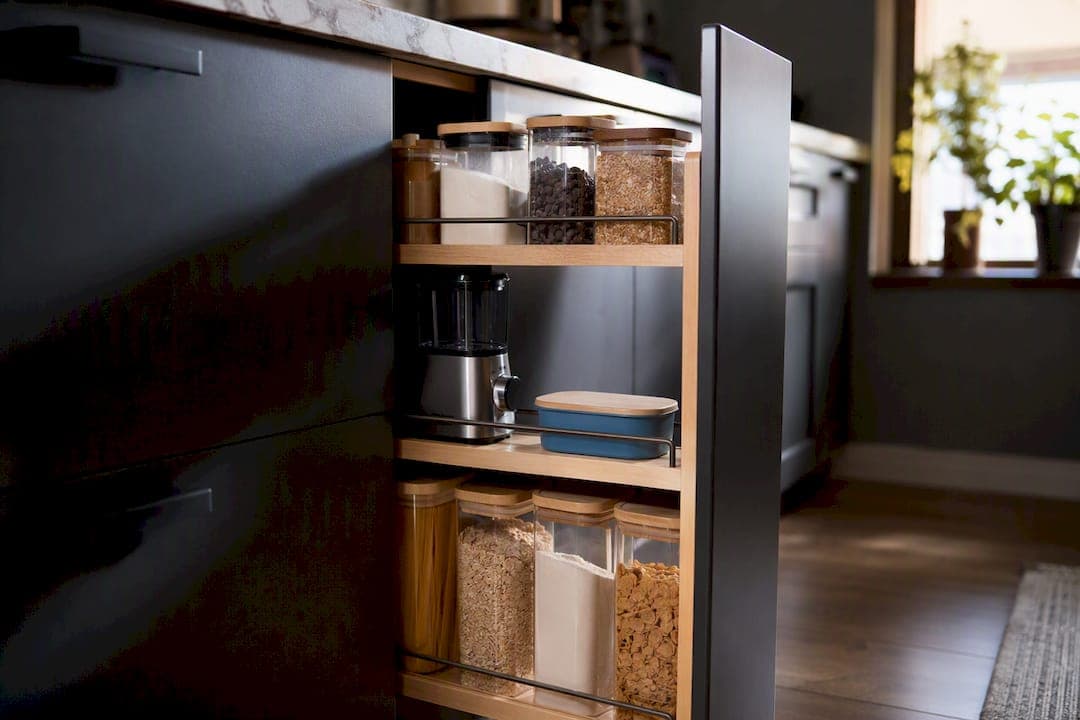
The single best move for a small kitchen is optimizing what's already inside your cabinets and carving out one dedicated pantry zone, whether that's a slim pull-out or a freestanding unit. This multiplies your usable storage without a full remodel, and it works whether you own your kitchen or rent it. Homeowners get the most from interior upgrades; renters benefit most from the pantry-zone trick.
TL;DR:
- Small kitchens benefit most from adding pull-out pantries and vertical dividers to maximize existing cabinet space without extensive remodeling.
- Measuring cabinet interiors and photographing them before shopping helps ensure organizers fit, especially for renters seeking non-invasive solutions.
- Optimal layouts like one-wall, galley, or L-shaped configurations influence storage gains and aisle clearance, with specific recommendations for each setup.
- Upgrading the interior with shelves, drawers, and organizers generally offers significant storage improvements faster and more cost-effectively than replacing cabinets.
- When cabinet boxes are structurally unsound or outdated, replacing them with plywood or semi-custom options may be necessary for a lasting upgrade.
Table of Contents
- Small Kitchen Cabinet Ideas Worth Copying First
- Optimizing Cabinet Interiors: Pull-Outs, Drawers, and Dividers
- Picking the Right Layout and Getting the Sizing Right
- Renter-Friendly Storage That Skips the Drill
- Colors and Finishes That Make a Small Kitchen Feel Bigger
- Appliance and Pantry Zones That Keep Counters Clear
- Choosing Cabinet Materials: Plywood Boxes, RTA, and Custom
- A Quick Checklist Before You Buy or Modify Anything
- What I'd Actually Do With a Cramped Kitchen
- When It's Time to Just Replace the Cabinets
- Sources
Small Kitchen Cabinet Ideas Worth Copying First
Not every idea deserves equal attention. Some solve real problems fast; others are nice extras. Here's what to prioritize, in order of impact.
- Slim pull-out pantry. A 6 to 10 inch pull-out tucked beside your fridge or stove turns dead space into spice and can storage. Best for renters using freestanding versions and homeowners retrofitting a spare cabinet bay.
- Deep pot drawers. Full-extension drawers under the cooktop replace stacked pot lids you have to dig through. Best for homeowners during a cabinet swap.
- Toe-kick drawers. The 3 to 4 inch gap under your lower cabinets can hold baking sheets or step stools. Best for homeowners with a contractor on hand.
- Appliance garage. A tambour door hides the coffee maker and toaster while keeping them plugged in and ready. Best for homeowners with counter space to spare.
- Floor-to-ceiling uppers. Extending cabinets to the ceiling reclaims storage most kitchens waste above eye level. Best for homeowners in a full renovation.
- Two-tone cabinets with light uppers. Light-colored top cabinets keep the room feeling open while darker lowers hide daily wear. Best for anyone doing a refacing project.
- Glass-front uppers. Swapping one or two solid doors for glass adds visual depth. Best for homeowners who want an easy style refresh.
- Floating shelves over a closed base. Open shelving up top and closed storage below balances display with mess control. Best for renters who can't drill into upper cabinets.
- Corner lazy Susan. A rotating shelf turns a notoriously wasted corner into real storage. Best for homeowners with a blind or L-shaped corner cabinet.
- Vertical pan dividers. Slotted dividers keep baking sheets and cutting boards upright instead of stacked. Best for anyone with a cabinet insert budget.
- Flipper doors. These fold up and slide back to reveal an appliance shelf. Best for homeowners building an appliance garage.
- Under-cabinet hooks. Mugs and utensils hang below cabinets to free drawer space. Best for renters using adhesive-mount versions.
- Rolling utility cart. A cart adds counter space and storage that moves out of the way when not needed. Best for renters and anyone without room for a fixed island.
Optimizing Cabinet Interiors: Pull-Outs, Drawers, and Dividers
A cabinet that shipped with one adjustable shelf is wasting vertical space. Practitioners who retrofit small kitchens find that adding a second shelf, or swapping fixed shelves for pull-out inserts, typically reclaims one full storage tier per cabinet bay. That's a meaningful gain from a change that takes an afternoon, not a demolition crew.
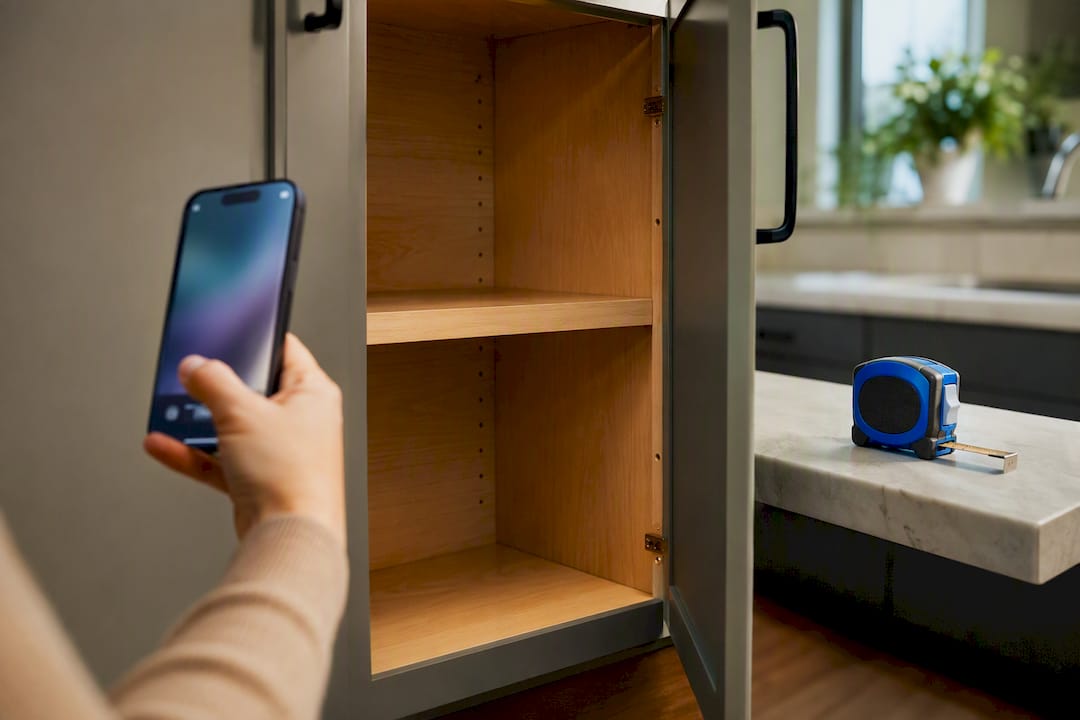
Start by measuring the interior height and depth of each cabinet before buying anything. Then match the fix to the cabinet:
- Use pull-out shelves for anything you reach for daily, since they eliminate the need to dig blind.
- Choose full-extension drawers over doors for pots, pans, and mixing bowls.
- Add vertical dividers for trays, cutting boards, and lids that otherwise get stacked.
- Install a lazy Susan in corner cabinets rather than leaving that space half-usable.
- Add toe-kick drawers wherever your base cabinets sit above the floor.
If you rent, look for tension-mounted or drop-in organizers that sit inside the cabinet without hardware, so nothing gets left behind when you move.
Pro Tip: Photograph each cabinet's interior before you shop for inserts. It's the fastest way to avoid buying an organizer that's an inch too tall for your shelf.
Picking the Right Layout and Getting the Sizing Right
Your layout decides how much storage and counter space you actually have to work with, and each option makes a different trade-off.
- One-wall layouts maximize open floor space but limit total cabinet linear footage, so interior optimization matters more here than anywhere else.
- Galley layouts offer the most storage per square foot but need careful aisle planning, since two rows of cabinets face off across a narrow walkway.
- L-shaped layouts balance storage and movement well, and they're the easiest configuration for adding a corner lazy Susan.
Aisle clearance is where most small-kitchen plans go wrong. A common rule keeps at least 42 inches of clearance around any island, and rolling islands between 24 and 30 inches wide tend to fit kitchens under roughly 100 square feet without crowding the room. Stack uppers to the ceiling for extra storage, but keep everyday items on the lower shelves. Corner cabinets are worth a specialized organizer only when the blind space is deep enough to justify the hardware cost. For deeper layout planning, our practical layout guide walks through configuration choices in more detail.
Renter-Friendly Storage That Skips the Drill
You don't need to own your kitchen to upgrade it. Tension-mounted shelves fit inside cabinets or between counter and upper cabinets, adding a shelf where none existed. Over-door organizers hang on cabinet or pantry doors and hold spices, foil, or cleaning supplies.
- Adhesive hooks work for light items like mugs and towels, but they have real load limits and generally shouldn't hold heavy cookware.
- Freestanding slim pantry units act as a movable pantry zone you can take with you when you move.
- Rolling carts add both storage and counter space without touching a wall.
- Under-shelf wire baskets stack storage in cabinets that already have fixed shelves.
To simulate a real pantry in a rental, clear out one upper cabinet entirely and dedicate it to dry goods, or use the space above your fridge for canned goods and bulk items you don't need daily.
Colors and Finishes That Make a Small Kitchen Feel Bigger
Light-reflecting cabinet colors bounce more light around a room than dark, matte finishes do. Two-tone kitchens, with light-colored uppers and a darker lower cabinet run, create depth without making the whole room feel small and boxy.
- Open shelving reads as more spacious than closed cabinets, but it demands a daily reset, since every item on it is visible dust and clutter.
- A mixed approach, open shelving for a few pieces plus closed cabinets for everything else, gives you the visual benefit without the full maintenance load.
- Slim, integrated cabinet pulls keep sightlines clean compared to bulky hardware.
- Reflective backsplash tile bounces additional light and makes the wall feel less closed in.
For more finish combinations and budget tiers, see our guide to modern kitchen cabinet ideas.
Appliance and Pantry Zones That Keep Counters Clear
Assigning every countertop appliance a dedicated home, rather than letting it live permanently on the counter, is the primary way small kitchens stay usable. An appliance garage handles the coffee maker and toaster. Deep drawers sized for a stand mixer or air fryer keep bulkier items off the counter entirely, and a dedicated shelf behind a cabinet door works for anything used only a few times a week.
When your kitchen lacks a real pantry, three fixes restore that capacity:
- A slim pull-out pantry installed in a spare cabinet bay.
- A freestanding pantry cabinet or baker's rack placed against an open wall.
- One upper cabinet converted entirely into a dry-goods zone.
For pots and pans, wall rail systems keep frequently used cookware off cabinet shelves, vertical dividers keep lids and trays upright, and door-mounted lid organizers use space that would otherwise sit empty. If your dedicated pantry zone will hold fresh produce alongside dry goods, it helps to know how to store fruit properly so it doesn't spoil faster in a closed cabinet than it would on the counter.
Choosing Cabinet Materials: Plywood Boxes, RTA, and Custom
Plywood cabinet boxes paired with solid wood doors strike the right balance of durability and cost for most small-kitchen projects, holding up to daily use better than particleboard without the price tag of a fully custom build. Ready-to-assemble (RTA) cabinets make sense for budget-conscious remodels since they ship faster and cost less than custom cabinetry, though they take some assembly time upfront.
- Choose RTA when your timeline is tight and your layout is fairly standard.
- Choose a custom or semi-custom build when your kitchen has odd angles or you need exact corner-cabinet dimensions.
- Choose interior upgrades over full replacement when your existing boxes are structurally sound and only the internals are failing you.
Our guide to corner cabinet solutions covers the organizer types that make the most of awkward blind corners, and our cabinet accessories list breaks down which inserts pair best with which cabinet types.
A Quick Checklist Before You Buy or Modify Anything
Before you spend a dollar, work through this in order:
- Measure every cabinet's interior height and depth, plus your appliance footprints and door-swing clearances.
- Photograph each cabinet interior so you have exact reference points while shopping.
- Decide your priority: storage density, an open aesthetic, or a renter-friendly setup with no permanent changes.
- Set separate budget buckets for interior upgrades versus full cabinet replacement.
- Ask any vendor about lead time, return policy, drawer slide weight rating, hardware finish options, and whether installation is included.
What I'd Actually Do With a Cramped Kitchen
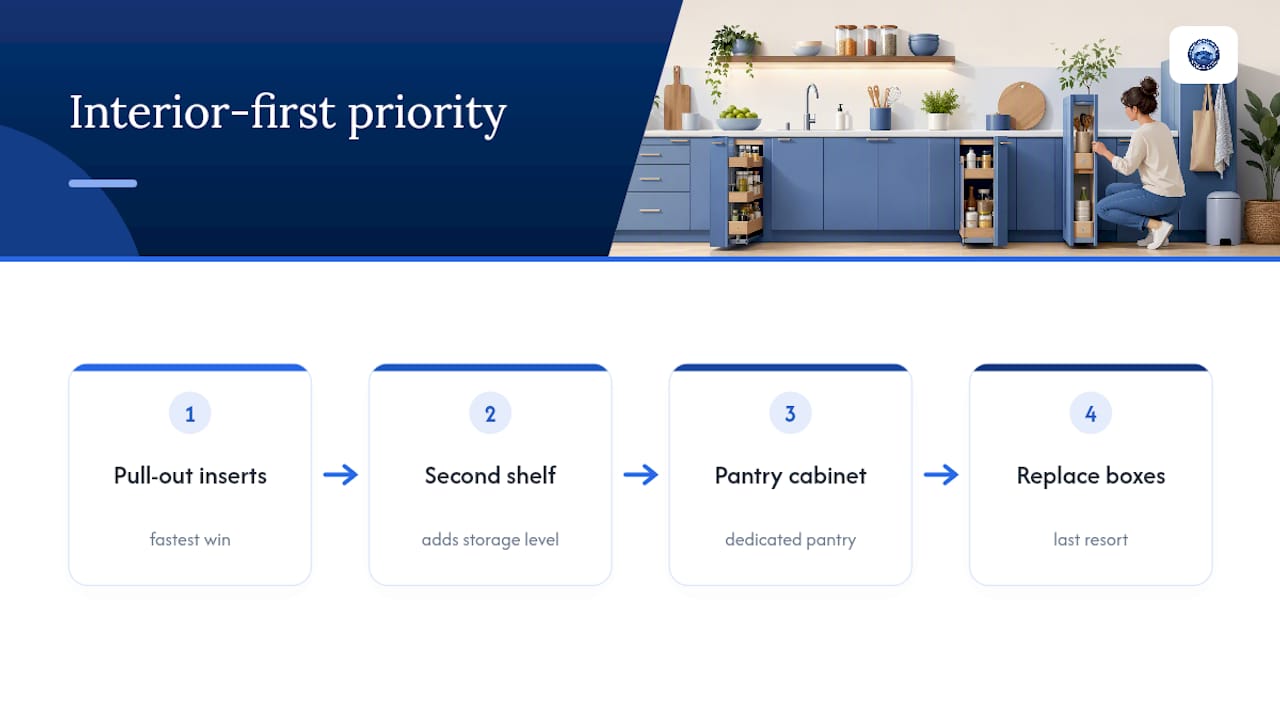
I've watched people spend thousands on a remodel when the real problem was a single wasted cabinet shelf. The fastest win is almost always interior first: pull-out inserts, a second shelf, one dedicated pantry cabinet. Only after that should you consider replacing boxes entirely.
The lesson that sticks with me is that a zone-based approach beats a piecemeal one. Assign every item a home before you buy a single organizer, and the organizer you need becomes obvious.
Pro Tip: Fix your worst cabinet first, not your easiest one. That's where the storage gap actually is.
— Nathan
When It's Time to Just Replace the Cabinets
Interior upgrades solve a lot, but sometimes the boxes themselves are the problem: swollen particleboard, sagging shelves, or hinges that won't hold a soft-close door anymore. That's when replacement beats another round of organizers.
Some cabinet suppliers build plywood cabinet boxes with solid wood doors and soft-close hardware, often shipping quickly to avoid project delays. Available styles often include modern, traditional, and transitional options, covering common trends like two-tone and glass-front looks; bulk pricing may be offered for trade professionals.

If your current boxes are sound, upgrade the interiors first and save the budget. If they're not, or you're planning a full kitchen refresh, browse Best Cabinet Specialist's cabinet collection and get a quote before your next project timeline locks in.