
For most budget-focused homeowners, plywood-built assembled cabinets from a direct-to-consumer supplier like Best Cabinet Specialist deliver the best combination of durability, price, and fast shipping. You get solid construction without the custom price tag, and you skip the assembly headaches that come with flat-pack options.
Three practical alternatives worth knowing:
- IKEA SEKTION / KNOXHULT — Best when you want the lowest possible upfront cost and can handle a weekend of assembly; construction is MDF/particleboard, so pair with third-party door fronts for better longevity.
- High-quality RTA lines — Best for skilled DIYers who want plywood box construction at a lower price point than pre-assembled; expect a few hours of assembly per cabinet.
- Box-store stock (Home Depot Hampton Bay / Lowe's ProjectSource) — Best when you need cabinets this week; limited sizes and styles, but in-store pickup is hard to beat for speed.
Quick takeaways:
- Best for DIY assembly: high-quality RTA with plywood boxes and dovetail drawer joinery
- Best for fastest install: pre-assembled direct-to-consumer (ready to hang on delivery)
- Best for lowest upfront cost: IKEA SEKTION or box-store stock lines
- Watch out for: particleboard boxes with thin melamine wrap, missing soft-close hardware, and vague warranty language
Table of Contents
- What types of budget kitchen cabinets are there?
- Which budget cabinet option is right for your kitchen?
- How do you choose the best budget cabinets for your project?
- What does a budget kitchen cabinet project actually cost?
- Why do plywood construction and quality hardware matter so much?
- Should you install budget cabinets yourself or hire a pro?
- Key Takeaways
- Why plywood-built assembled cabinets are the smarter budget choice
- Get project-ready cabinets without the wait or the markup
- Useful sources and further reading
What types of budget kitchen cabinets are there?
Budget cabinets come in five practical forms, and the right one depends on your timeline, skill level, and how long you plan to stay in the home.
Stock / box-store cabinets (Home Depot, Lowe's) are pre-built in standard sizes, usually 3-inch increments, and available for same-day pickup. Stock cabinets deliver short lead times and lower prices but often use engineered materials like MDF or particleboard, and style choices are limited. They work well for rental properties or tight timelines where longevity is less of a priority.
IKEA modular systems (SEKTION and KNOXHULT) use a flat-pack format with standardized box sizes. The boxes themselves are particleboard, but the system's strength is flexibility: you can upgrade the look significantly by swapping in third-party door fronts from suppliers like Semihandmade, which improves aesthetics at a fraction of full-custom cost. Assembly takes a full weekend for most kitchens.
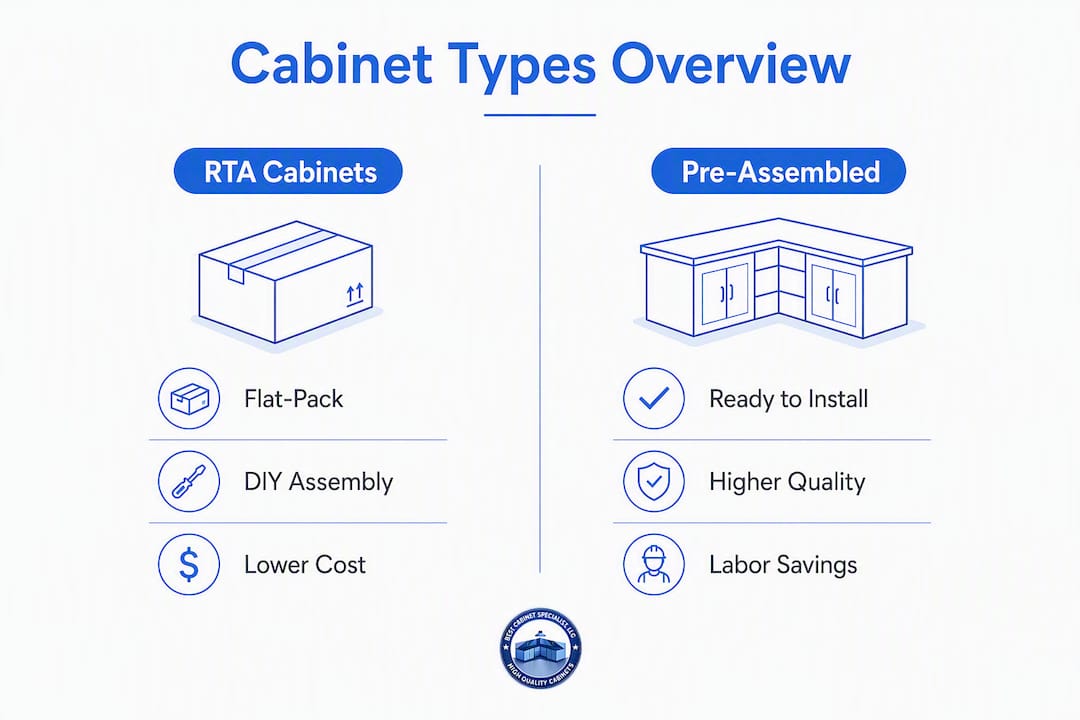
Ready-to-assemble (RTA) / flat-pack cabinets ship in flat boxes and require home assembly. Quality varies widely. Lower-end RTA lines use particleboard boxes; better lines use plywood construction and decent hardware. RTA is genuinely cheaper than pre-assembled when you have the time and tools to do the work yourself.
Pre-assembled direct-to-consumer cabinets arrive fully built and ready to install. You pay a bit more upfront, but you save on installation labor and avoid the risk of assembly errors. For homeowners hiring a contractor, pre-assembled units often reduce the overall project cost when you factor in the installer's hourly rate.
Lower-cost semi-custom options sit between stock and full custom. You get more size and finish choices, but lead times stretch to 4–8 weeks and prices climb. Worth considering when your kitchen has non-standard dimensions that stock sizes can't fill cleanly.
- Stock/box-store: fastest availability, limited sizes, often particleboard
- IKEA modular: low upfront cost, upgradeable with third-party fronts, requires assembly
- RTA: widest price range, quality depends on box material
- Pre-assembled direct: higher upfront, lower labor cost, project-ready
- Semi-custom: more flexibility, longer lead times, higher price
Pro Tip: If you're hiring an installer, compare the total cost of RTA (cabinet price + assembly labor) against pre-assembled direct pricing. In many markets, the labor savings on pre-assembled close the price gap entirely.
Warranty and return policies vary significantly across these categories. Box-store lines typically offer limited warranties tied to manufacturer defects. RTA sellers vary widely, so always confirm coverage for finishes, hardware, and shipping damage before placing an order.
Which budget cabinet option is right for your kitchen?
Best Cabinet Specialist (recommended pick)
Best Cabinet Specialist offers both RTA and pre-assembled cabinets built with plywood boxes, solid wood doors, and soft-close hardware. The direct-to-consumer model keeps prices competitive, and fast shipping means your project timeline doesn't stall waiting on a 10-week lead time. This is the strongest pick for homeowners who want durable construction without paying semi-custom prices, and for contractors who need reliable, project-ready stock.
- Best for: Homeowners wanting long-lasting construction on a budget; contractors and builders needing fast, reliable delivery
- Price shape: Competitive direct-to-consumer pricing; bulk and trade pricing available
- Lead time: Fast shipping compared to semi-custom alternatives
IKEA SEKTION / KNOXHULT
IKEA's kitchen systems are hard to beat on upfront cost, and the modular format works well in standard-sized kitchens. The particleboard boxes are the main limitation for high-moisture environments or heavy daily use. Pairing IKEA boxes with upgraded door fronts is a proven way to get a custom look at a budget price. Best for first-time homeowners or renters doing a cosmetic refresh.
High-quality RTA lines
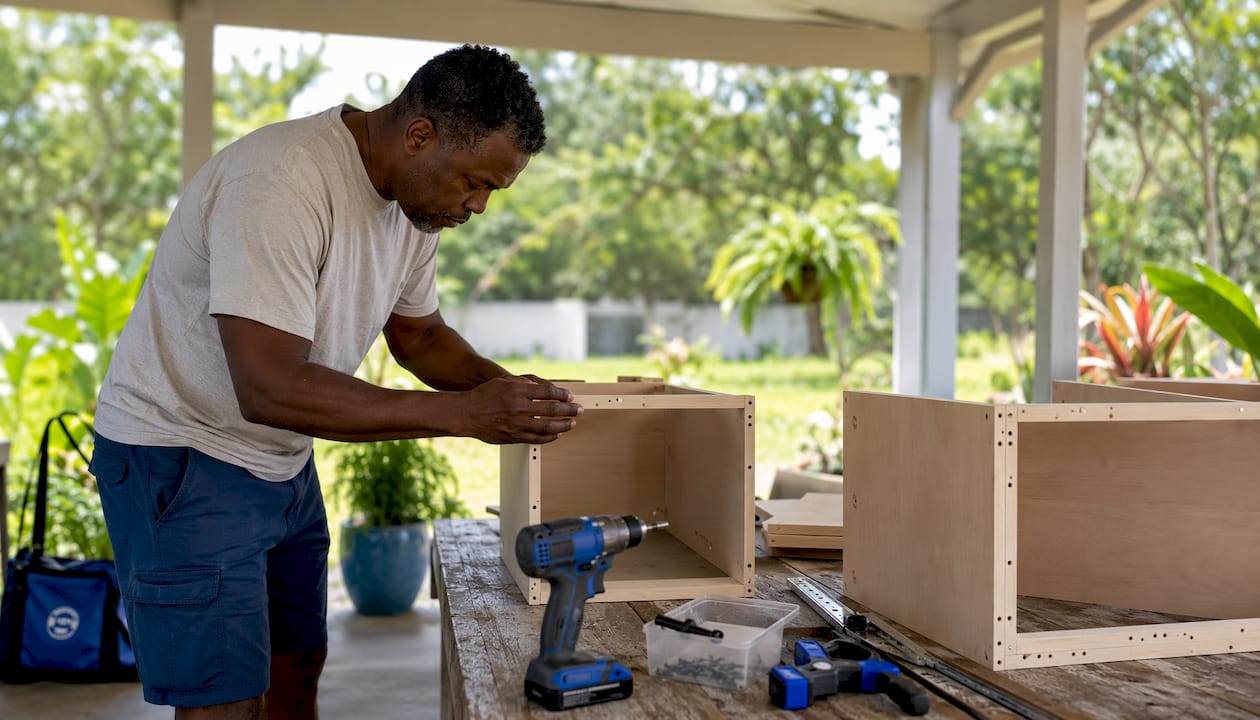
High-quality RTA options that use plywood boxes and full-extension glides give skilled DIYers a real middle ground: better construction than box-store stock, lower price than pre-assembled. The tradeoff is time. Budget a full weekend per kitchen's worth of assembly, and make sure you have the right tools before the boxes arrive.
Pre-assembled direct and semi-custom bargains
Pre-assembled direct sellers reduce project complexity, especially when you're coordinating contractors. Semi-custom bargain lines offer more finish and size options but come with longer lead times and higher prices. If your kitchen has unusual dimensions or you want a specific door profile, semi-custom is worth the premium. Otherwise, a well-built pre-assembled line covers most standard kitchens cleanly.
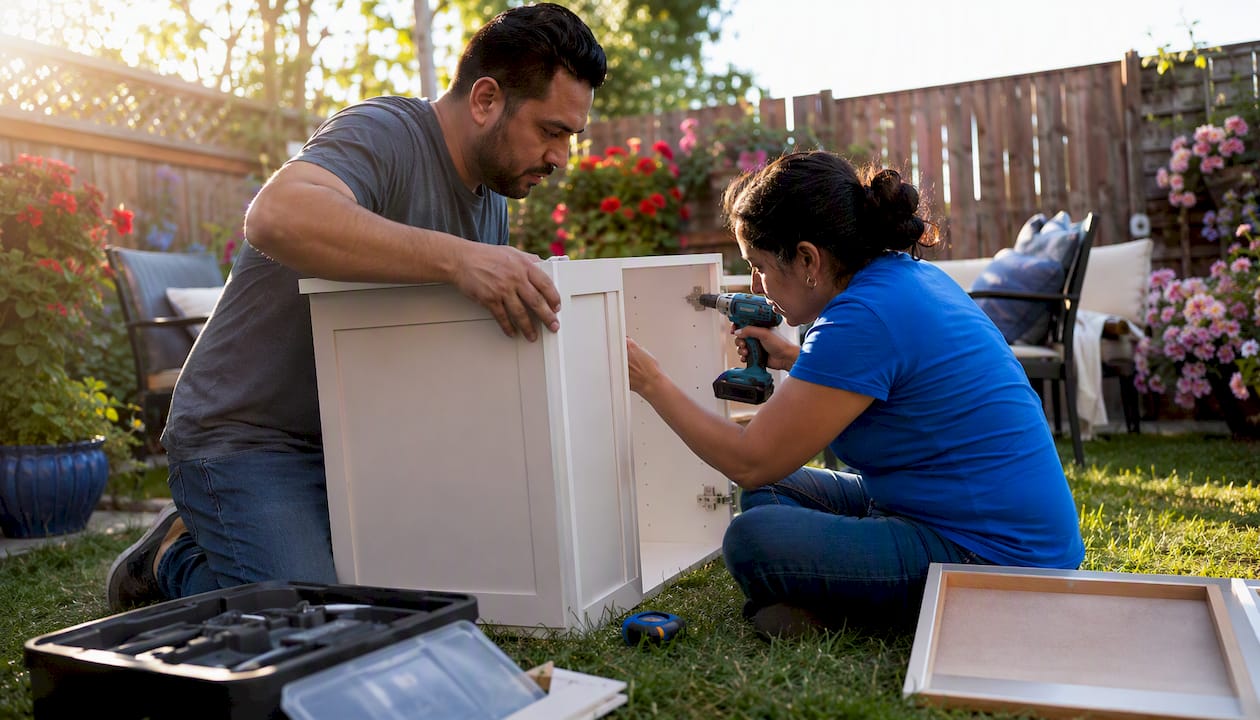
Pro Tip: Before finalizing your finish choice, check that your cabinet door color works with your appliance handles and countertop edge profile. Order a sample door front first. Standard cabinet heights (34.5 inches base, 84 or 96 inches upper) fit most kitchens, but always verify appliance clearances before ordering.
How do you choose the best budget cabinets for your project?
A clear buying checklist prevents the most common and costly mistakes.
- Set your total budget first. Cabinets account for roughly 40% of a typical kitchen remodel budget. Know your number before you start browsing.
- Decide on your install plan. Will you self-install, hire a handyman, or use a licensed contractor? Your answer changes which cabinet type makes financial sense.
- Measure accurately. Record wall lengths, ceiling height, base cabinet height (standard is 34.5 inches), appliance clearances, and the exact locations of your sink drain, water lines, and any vent or electrical boxes.
- Pick your category. Stock for speed, RTA for DIY savings, pre-assembled direct for project-ready convenience, semi-custom for non-standard dimensions.
- Check construction details. Confirm box material (plywood vs. particleboard), drawer joinery (dovetail is stronger), hardware type (soft-close vs. standard), and door material before committing.
- Factor in hidden costs. Shipping, filler panels, trim pieces, custom cutouts, and installation labor all add to the final number.
Questions to ask any seller before ordering:
- Are the boxes plywood or particleboard?
- Do drawers use dovetail joinery and full-extension glides?
- What does the warranty cover, and for how long?
- What is the lead time from order to delivery?
- Who pays for shipping damage, and what is the return/restocking policy?
- Are soft-close hinges and drawer glides included or add-ons?
Red flags when a price looks too good:
- Particleboard boxes with thin melamine wrap (swells and delaminates near moisture)
- No mention of soft-close hardware in the product specs
- Warranty language that excludes finish wear or hardware
- No sample program or rub test available before a full order
- Vague or missing lead-time information
Measurement mistakes are one of the most common causes of costly returns. Measure every wall twice, note the exact location of windows, doors, and appliances, and account for any out-of-square corners before placing your order.
What does a budget kitchen cabinet project actually cost?
Cabinets typically represent about 40% of a full kitchen remodel budget, so getting the category right matters. Installed price ranges vary significantly by type.
| Category | Typical installed cost | Typical lead time | Assembled or RTA |
|---|---|---|---|
| Stock / box-store | Lower price per linear foot | Same day to 1 week | Both (varies by line) |
| IKEA modular | Low end of stock range | 1–2 weeks (in-store) | RTA (flat-pack) |
| High-quality RTA | Mid-range; varies by line | 1–3 weeks shipped | RTA |
| Pre-assembled direct | Mid to upper-mid range | Days to 2 weeks | Assembled |
| Semi-custom | Moderate price per linear foot | 4–8 weeks | Assembled |
| Custom | Higher price per linear foot | 8 weeks | Assembled |
For a more detailed breakdown of cabinet pricing per linear foot, the ranges above are a reliable starting point for budgeting.
Hidden costs to plan for:
- Shipping fees (can be significant for heavy assembled units)
- Filler panels and trim pieces for non-standard wall widths
- Custom cutouts for appliances or plumbing
- Installation labor (typically charged by the hour or per cabinet)
- Return or restocking fees if dimensions are wrong
- Hardware upgrades if soft-close is not included
Direct-to-consumer sellers can offer lower prices by cutting out the middleman markup, and pre-assembled options can save on installation labor even when the cabinet price is slightly higher than RTA. Factor both sides of the equation before deciding.
Why do plywood construction and quality hardware matter so much?
The box material is the single most important construction decision you'll make on a budget build. Plywood and blockboard shelves are preferred for load-bearing applications; MDF and particleboard are less moisture-resistant and more prone to sagging over time, especially under a sink or near a dishwasher.
The features most strongly linked to long-term satisfaction on budget builds are solid wood doors and quality hardware, specifically soft-close hinges and full-extension drawer glides. These components get touched hundreds of times a year. Cheap hinges loosen; cheap glides stick and wear. Spending a bit more on these two items outperforms almost any decorative upgrade you could make instead.
Construction features that predict longevity:
- All-plywood box construction (sides, top, bottom, back)
- Dovetail drawer joinery (resists racking under load)
- Full-extension drawer glides (access the full drawer depth)
- Soft-close hinges and drawer glides (reduce wear and noise)
- Solid wood or veneered plywood doors (stable, refinishable)
- Adjustable shelving with metal clips (not plastic)
For a detailed side-by-side on MDF vs. plywood performance, the core takeaway is consistent: plywood holds screws better, handles moisture better, and lasts longer in a working kitchen.
Pro Tip: Skip the ornate door style upgrade if it means settling for a particleboard box. A simple Shaker door on a plywood box will outlast a raised-panel door on particleboard by years. Prioritize the box, then the hardware, then the door profile.
Should you install budget cabinets yourself or hire a pro?
RTA assembly outline
- Unbox and inventory all parts before starting.
- Assemble on a clean, flat surface using the manufacturer's instructions.
- Install drawer glides and hinges before mounting boxes to the wall.
- Mark wall studs and snap a level line at the base cabinet height.
- Hang upper cabinets first, then set base cabinets.
- Shim for level and plumb; secure to studs with cabinet screws.
- Install doors, adjust hinges, and attach hardware last.
Pre-assembled install outline
- Confirm all boxes are undamaged on delivery.
- Mark studs and snap level lines for uppers and bases.
- Hang uppers first using a ledger board for support.
- Set base cabinets, shim level, and screw to studs and to each other.
- Install filler panels, trim, and toe kicks.
- Hang doors and adjust hinges; install drawer fronts and hardware.
When to hire a professional:
- Floors are significantly out of level (more than 1/2 inch across the run)
- The project involves moving plumbing, electrical, or gas lines
- You're doing a full demo with wall removal
- The cabinet manufacturer's warranty requires professional installation
- You've never installed cabinets before and the kitchen is large or complex
Common DIY pitfalls:
- Measuring wall length without accounting for out-of-square corners
- Forgetting filler panels at walls and between appliances
- Over-tightening screws in particleboard (strips the material)
- Not pre-drilling pilot holes before driving cabinet screws
- Skipping the ledger board when hanging uppers solo
Checklist for vetting an installer:
- Licensed and insured in your state
- References from at least two recent cabinet installs
- Clear written quote that includes demo, haul-away, and hardware installation
- Experience with the specific cabinet brand or system you purchased
- Confirms they will check level and plumb before securing any box
For additional guidance on design and measurement planning, working through dimensions before ordering is the single best way to avoid rework.
Key Takeaways
The best budget kitchen cabinet strategy starts with plywood box construction, then prioritizes hardware quality, and only then considers style and finish upgrades.
| Point | Details |
|---|---|
| Plywood boxes first | Choose all-plywood box construction over particleboard for moisture resistance and long-term durability. |
| Factor in total cost | Add shipping, filler panels, trim, and installation labor to the cabinet price before comparing options. |
| Price ranges by category | Stock installs at lower per linear foot price; semi-custom at moderate per linear foot price; custom at higher starting prices. |
| Measure before ordering | Record wall lengths, appliance clearances, and sink/vent locations to avoid costly returns. |
| Best Cabinet Specialist | Offers plywood-built RTA and assembled cabinets with soft-close hardware, fast shipping, and trade pricing. |
Why plywood-built assembled cabinets are the smarter budget choice
Most budget cabinet articles focus almost entirely on upfront price. That framing misses the point. A particleboard cabinet at $100 per linear foot that needs replacing in five years costs more than a plywood cabinet at $120 per linear foot that lasts twenty. The real budget question is cost over time, not cost at checkout.
The other thing most guides underplay is the labor variable. RTA cabinets look cheaper on a product page, but if you're paying a contractor by the hour, assembly time adds up fast. Pre-assembled direct-to-consumer cabinets often close that gap entirely once you run the full numbers, and they reduce the scheduling risk that comes with long semi-custom lead times.
At Best Cabinet Specialist, the approach is straightforward: plywood boxes, solid wood doors, soft-close hardware, and fast shipping. As a women-owned and veteran-owned business, the focus is on project-ready solutions that work for homeowners, contractors, and builders alike, with trade and bulk pricing for larger projects. The goal is fewer callbacks, lower lifetime cost, and a shorter overall project timeline. That's what durable construction on a real budget actually looks like.
Get project-ready cabinets without the wait or the markup
Plywood-built cabinets with solid wood doors and soft-close hardware, shipped fast and priced for real budgets. That's what Best Cabinet Specialist delivers, whether you're ordering a single kitchen's worth or stocking a multi-unit build.
You get a full range of RTA and pre-assembled options in modern, traditional, and transitional styles, with color and finish choices that work across appliance finishes and countertop materials. Trade and bulk pricing is available for contractors and builders. Shipping timelines are clear upfront, so your project schedule stays on track.
Measure your kitchen, browse the full cabinet collection at Best Cabinet Specialist, and request a quote or sample door front before you commit to a full order.
Useful sources and further reading
The sources below were used to verify price ranges, construction guidance, and product category definitions in this article.
- 10 Best Kitchen Cabinets of 2025, Tested & Reviewed — Used for per-linear-foot installed cost ranges (stock, semi-custom, custom), stock cabinet tradeoffs, and IKEA upgrade guidance.
- Best Kitchen Cabinets for Every Budget — Supports the plywood-first material recommendation and load-bearing shelf guidance.
- Are Solid Wood Interior Doors Worth It? — Backs the door and hardware priority guidance in the materials section.
- Plywood Kitchen Cabinets: A Budget Buyer's Guide — Internal guide covering why plywood construction is the top choice for budget buyers.
- Top 3 Highest Quality RTA Cabinet Alternatives — Used for RTA construction quality guidance and skilled DIYer recommendations.
- Kitchen Cabinet Price per Linear Foot: 2026 Guide — Internal pricing reference for budget planning by category.
- MDF vs Plywood for Kitchen Cabinets — Supports the materials and durability section with a direct performance comparison.
- Best Cabinet Specialist — Publisher's product page; used for direct-to-consumer pricing model and assembled cabinet offering details.