
Birch is the smart pick for painted cabinets and budget builds, while maple wins for clear or stained finishes and high-traffic visible surfaces. Many pro shops split the difference entirely, using birch plywood for cabinet boxes and maple for doors and faces. The real decision usually comes down to one question: are you painting or staining?
TL;DR:
- Using birch plywood for cabinet boxes and maple for doors and faces can significantly reduce costs without sacrificing high-quality visible surfaces.
- Maple's dense, uniform grain makes it ideal for staining and smooth painting, while birch's more open grain is better suited for painted finishes with proper prep.
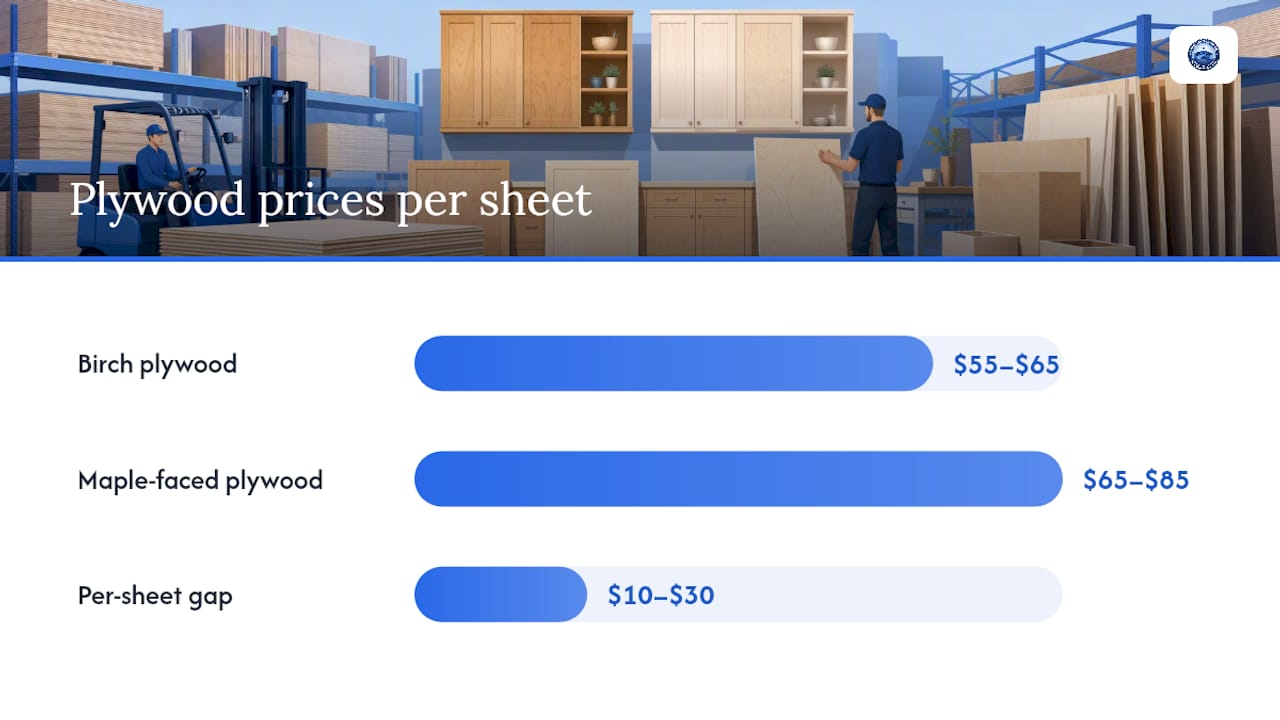
- Maple is generally more expensive than birch, with sheet costs of $65 to $85 compared to $55 to $65 for birch plywood, adding up over a full kitchen.
- Both woods resist humidity well, but maple's higher hardness offers better durability for high-contact areas like door fronts and drawer faces.
- Proper finishing techniques and lighting samples are crucial to achieving the desired look, with factory finishes offered as a reliable option to ensure quality.
Table of Contents
- Maple vs Birch Cabinets: The Quick Comparison
- What Do Maple and Birch Actually Look Like?
- How Much Harder Is Maple Than Birch?
- Painting or Staining: How Each Wood Takes a Finish
- What Do Maple and Birch Cabinets Actually Cost?
- Caring for Maple and Birch Cabinets Over Time
- Which Wood Should You Choose for Your Kitchen?
- Expert Notes on Choosing Between Maple and Birch
- A Straightforward Take on Wood Choice
- Get Cabinets Built the Way Pros Actually Build Them
- Sources
- FAQ
Maple vs Birch Cabinets: The Quick Comparison
Both woods work well in kitchen cabinetry, but they solve different problems. Maple leans toward durability and a refined, uniform look. Birch leans toward affordability and warp resistance, especially once you paint it.
Here's how they stack up on the factors that actually affect your renovation:
- Appearance: Maple has a creamy, tight, uniform grain. Birch runs warmer with more visible grain figure and occasional mineral streaking.
- Hardness: Hard maple measures around 1,450 lbf on the Janka hardness scale, compared to roughly 1,260 lbf for birch.
- Finishing: Maple takes clear coats beautifully but can blotch under stain without a conditioner. Birch paints cleanly with the right primer but can telegraph grain under light-colored paint.
- Cost: Birch plywood typically runs cheaper per sheet than maple-faced plywood.
Pro cabinet shops have known this tradeoff for decades. Standard practice is birch for the boxes and maple for the visible faces, since nobody sees the inside of a cabinet carcass but everyone sees the door front. That hybrid approach can save a meaningful chunk of your material budget without sacrificing the look you want on display. If you're weighing maple or birch for cabinets as a whole-kitchen decision, this split is usually the best answer.
What Do Maple and Birch Actually Look Like?
Maple reads clean and quiet. Its grain is tight and fine, and the wood tone runs from pale cream to a light honey color, occasionally interrupted by subtle mineral streaks that some homeowners love and others try to avoid when picking boards. Under a clear finish, maple looks almost uniform from panel to panel, which is exactly why designers reach for it when they want a seamless, modern look.
Birch tells a different story. It carries warmer golden undertones and more visible grain movement, sometimes with the same kind of mineral streaking you see in maple, but more pronounced. That extra character can work in your favor if you're after a traditional or rustic kitchen, but it becomes a liability under stark, glossy paint where every grain line shows.
Lighting changes both woods more than most homeowners expect. Under warm LED or incandescent light, maple can pick up a golden cast that makes it look closer to birch. Under cool daylight bulbs, birch's warmth mutes slightly and reads more neutral. If you're set on a specific tone, ask your cabinet builder for a sample board under your actual kitchen lighting before you commit.
How Much Harder Is Maple Than Birch?
Hard maple measures about 1,450 lbf on the Janka scale, while cabinet-grade birch measures around 1,260 lbf.
Where it matters: door faces, drawer fronts, and island panels that take daily hits from hands, keys, and the occasional dropped pan. Maple's extra density resists dents and dings better in these high-contact zones, which is part of why Today's Homeowner recommends it for durability-focused kitchens.
Where it doesn't matter: the cabinet box itself. Nobody presses a fist against the inside wall of a cabinet carcass, so paying a premium for maple hardness there is money spent on a difference you'll never feel.
Both woods handle kitchen humidity reasonably well when properly sealed. Birch has a reputation for resisting warping, which makes it a dependable choice for boxes that see temperature swings near ovens and dishwashers. Neither wood is prone to major movement as long as the finish stays intact and spills get wiped up promptly.
Painting or Staining: How Each Wood Takes a Finish
This is where the maple vs birch cabinets debate gets practical. Maple's tight, closed grain makes it the easier wood to paint smoothly, since there's less texture for brush marks or grain lines to show through. Staining maple is trickier: its dense grain absorbs stain unevenly, leading to blotchy patches unless you pretreat the wood with a conditioner.
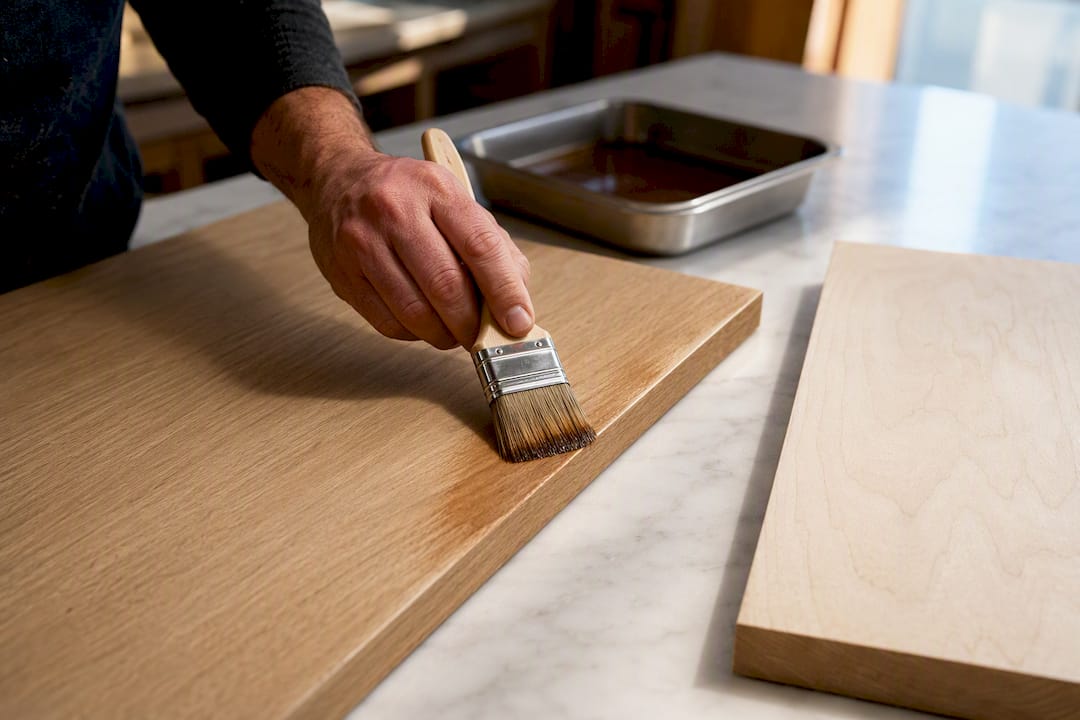
Birch behaves almost opposite. Its more open grain can telegraph through light or satin paint if you skip prep work, showing faint lines where the wood's texture sits under the coating. But under a clear or lightly tinted finish, birch's natural warmth and figure often look better than a comparably priced maple panel.
A few practical steps make either wood perform closer to its best case:
- Use a grain-filling primer on birch before painting, especially with satin or matte sheens that show texture.
- Apply a pre-stain wood conditioner on maple before staining to prevent blotching.
- Always test your exact primer, paint, or stain on a scrap panel before committing to full doors.
Pro Tip: Ask your cabinet supplier for a factory-finished sample in your chosen color. Factory spray finishes almost always look smoother and more even than what a brush or roller produces on site, and seeing the real sheen helps you avoid surprises after installation.
What Do Maple and Birch Cabinets Actually Cost?
Cabinet-grade birch plywood typically runs in the $55 to $65 range for a 3/4 inch, 4x8 sheet, while maple-faced plywood tends to land between $65 and $85 for the same size. That's a per-sheet gap of roughly $10 to $30.
A typical kitchen build uses somewhere around 25 to 30 sheets between boxes, shelves, and panels. Multiply that gap across a full project, and going all-maple instead of all-birch can add several hundred dollars to your material cost before you've bought a single door.
That's the financial case for the hybrid approach. Spend the maple premium where it's seen: doors, drawer fronts, and any exposed end panels. Save with birch where it isn't: cabinet boxes, drawer boxes, and interior shelving. You get the visual upgrade without paying for hardness and grain uniformity in places nobody looks.
Caring for Maple and Birch Cabinets Over Time
Both woods clean up the same way. A soft cloth, mild soap, and prompt wipe-ups after spills protect the finish on either species, and avoiding abrasive scrubbers keeps the topcoat from dulling prematurely. Minor scratches on either wood can often be touched up with a matching stain pen or a light re-coat of clear finish.
Time changes them differently, though. Maple tends to yellow slightly under UV exposure and clear finishes, which is worth knowing if you're chasing a bright white look decades down the road. Birch tends to deepen into a richer honey tone with age, which many homeowners find flattering rather than dated.
Refinishing works well on both woods when the box structure is still sound. If the finish has failed badly or the substrate has water damage, replacement doors are usually more practical than a full refinish.
Which Wood Should You Choose for Your Kitchen?
Match the wood to your finish plan first, then adjust for traffic and budget. Here's the decision flow that covers most kitchens:
- Painting on a tight budget? Choose birch with a grain-filling primer, or pick soft maple for the most visible faces if you want the smoothest possible paint job.
- Going clear coat or stain, and want a uniform look? Choose maple for every visible surface. Its tight grain reads consistent across doors and panels in a way birch can't match.
- Worried about long-term wear and resale value? Favor maple on doors and drawer fronts, since buyers and inspectors notice dents on high-contact surfaces more than they notice box construction.
- Want the pro-shop standard? Use Baltic birch for boxes and drawer construction, then maple for doors and face frames. This is the same approach cabinetmakers rely on to balance cost, strength, and appearance in one build.
None of these paths is wrong. They just serve different priorities, and knowing which one matters most to you settles the decision fast.
Expert Notes on Choosing Between Maple and Birch
Some cabinet builders construct cabinets using plywood boxes paired with solid wood doors, which lines up directly with the hybrid approach recommended throughout this guide. Plywood boxes bring structural stability and resist warping, while solid wood doors in maple or other species deliver the visible durability and finish quality buyers actually see and touch. For more on why plywood construction outperforms particleboard alternatives, see our MDF vs plywood comparison. Readers weighing other species can also check our cherry wood cabinet guide.
A Straightforward Take on Wood Choice
Homeowners often treat this decision like it's about picking the "better" wood, but that framing misses the point entirely. Maple isn't superior to birch. It's suited to a different job. The mistake we see most often is someone paying a maple premium on cabinet boxes that will spend their entire life hidden behind doors, or someone painting birch without proper grain-fill prep and blaming the wood when the paint job looks uneven.
The finish decision should come before the wood decision, not after. If you're staying clear or staining, maple's uniform grain is worth the extra dollars per sheet, because that's the one place the premium actually shows up in daily use. Layout and workflow matter here too. If your kitchen doubles as a workspace, it's worth thinking through functional kitchen design before finalizing wood choices, since traffic patterns affect which surfaces take the most wear.
— Nathan
Get Cabinets Built the Way Pros Actually Build Them
Some cabinet suppliers reduce the typical months-long wait seen with custom shops by keeping plywood boxes and solid wood doors in stock and ready to ship quickly. That means you get the same hybrid construction professionals recommend, birch-style plywood strength in the box, solid wood durability up front, without the lead times or markup that come with a traditional custom cabinet maker.

Browse finish and wood options, request a quote for your kitchen or bathroom project, and see current trade pricing if you're a contractor or builder ordering in bulk. Whether you're planning a fully painted kitchen or a clear-finished maple build, you can explore cabinet options and get a quote at Best Cabinet Specialist today and get your project moving without the usual wait.
Sources
- Birch vs Maple Plywood for Cabinets: Which to Choose
- Maple Vs. Oak, Cherry, and Birch Cabinets (2026) | Today's Homeowner
- NKBA (National Kitchen & Bath Association)
FAQ
Are Maple Cabinets Coming Back in Style?
Maple has stayed a steady favorite for clear and stained kitchens because of its uniform grain, and demand has picked back up as homeowners move away from heavily distressed or dark-stained looks toward cleaner, lighter finishes.
Which Is More Expensive, Birch or Maple?
Maple costs more. Cabinet-grade birch plywood typically runs $55 to $65 per sheet, while maple-faced plywood runs $65 to $85 per sheet, a gap that adds up to several hundred dollars across a full kitchen.
Which Is Better, Maple or Birch Wood?
Neither wood is universally better. Maple wins for clear finishes, hardness, and high-traffic visible surfaces, while birch wins for painted finishes and budget-conscious builds, and most pros combine both in one kitchen.
What Cabinet Color Is Outdated?
Heavy honey-oak stains and all-over dark espresso finishes have both fallen out of favor, with homeowners now favoring lighter painted finishes or natural wood tones like maple that feel current rather than dated.