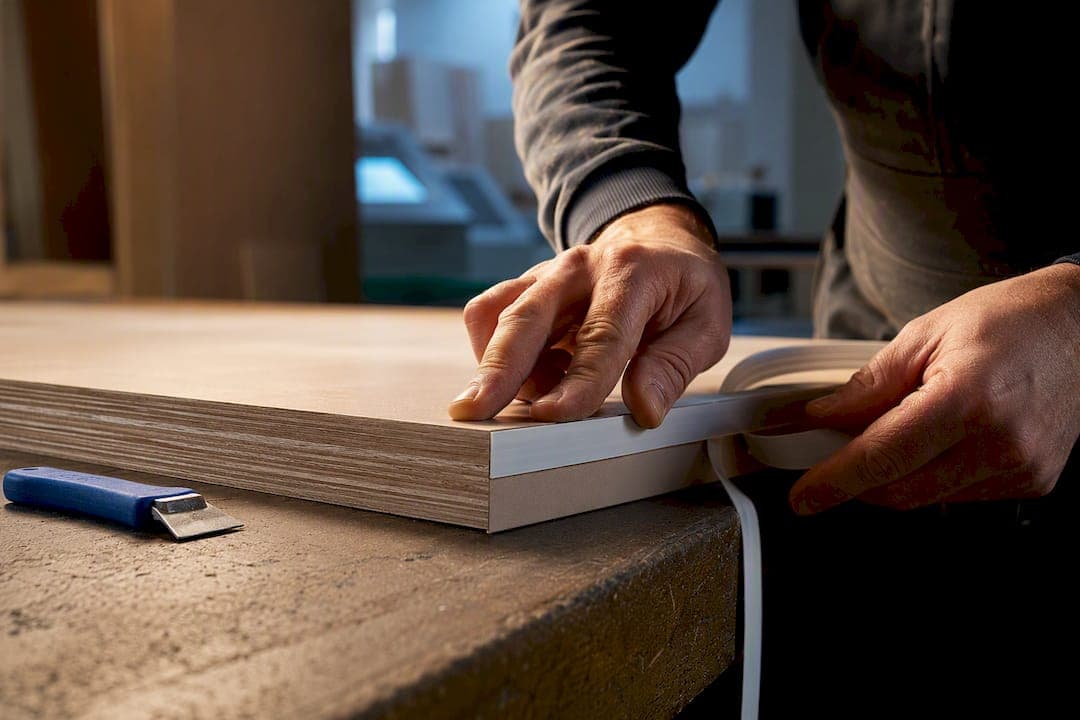
Edge banding covers the raw core of a plywood, MDF, or particle board panel so moisture and impact can't get to it. For most kitchens and bathrooms, PVC banding applied with PUR hot-melt adhesive gives you the best mix of durability, cost, and color matching. If you're doing it yourself, iron-on tape works fine; production shops rely on hot-melt machines or laser banding instead.
TL;DR:
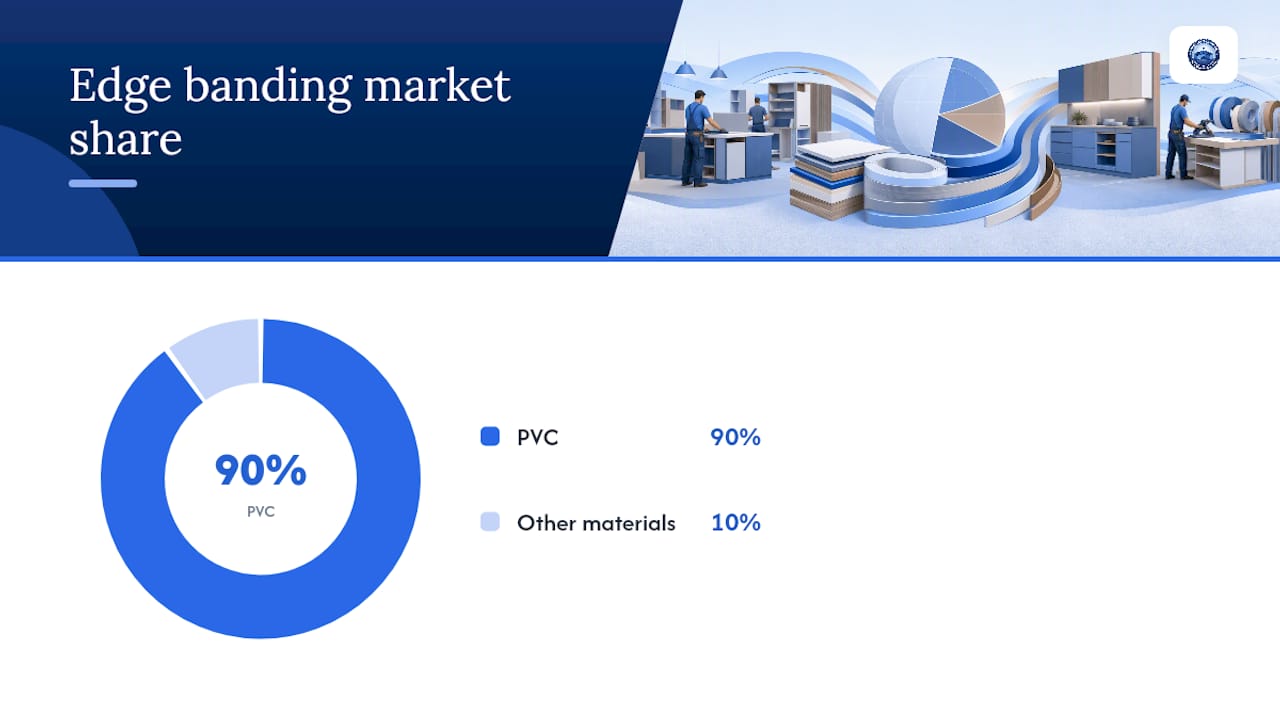
- PVC edge banding with PUR hot-melt adhesive covers about 90% of kitchen projects, offering optimal moisture and impact resistance at a low cost.
- Thicker banding, such as 2mm or 3mm, is suited for handleless or heavy-use edges but requires specialized equipment like hot-melt machines for proper application.
- PUR adhesive provides a waterproof bond, lasting over 10 years in residential kitchens, unlike EVA glue, which is less durable near moisture-prone areas.
- Proper surface preparation, including sanding and correct grain direction, is crucial for DIY edge banding to prevent lifting and ensure a clean, durable finish.
- Professional builders often ship pre-banded cabinets, saving time and reducing risk of errors, especially in tight schedules or for those seeking finished, ready-to-install units.
Table of Contents
- What Edge Banding Cabinets Actually Does
- Best Edge Banding for Cabinets: Comparing PVC, ABS, Veneer, Acrylic, and Melamine
- Edge Banding Thickness: Matching Material to Cabinet Part
- How to Edge Band Cabinets: DIY Steps and Machine Workflow
- Adhesive Types and How Long Edge Banding Actually Lasts
- How Best Cabinet Specialist Approaches Edge Finishing
- What Actually Matters When You're Choosing Edge Banding
- Get Cabinets With the Edge Work Already Handled
- Sources
What Edge Banding Cabinets Actually Does
Edge banding is a thin strip of material, usually PVC, ABS, veneer, or melamine paper, applied to the exposed edge of a cut panel. Without it, you're staring at the raw layers of plywood or the pressed particles of MDF every time you open a cabinet door.
That exposed edge isn't just an eyesore. It's a weak point. Bare panel cores soak up moisture, swell, and delaminate faster near sinks and dishwashers. A properly bonded edge also cuts down on the pathway through which formaldehyde-based adhesives in the board can off-gas at the cut edge, which matters more than most homeowners realize when they're picking materials for a kitchen remodel.
Edge banding does double duty functionally and visually:
- Moisture protection at seams and edges where water tends to collect
- Impact resistance against the bumps and scrapes cabinets take over decades of use
- Reduced exposure to raw plywood plies or the sawdust-like texture of cut MDF
- Color and finish matching so the edge blends with the door face instead of standing out
If you're weighing plywood versus MDF for your boxes, know that both need banding at any exposed edge. The core material changes how forgiving the edge is to work with, not whether it needs covering.
Best Edge Banding for Cabinets: Comparing PVC, ABS, Veneer, Acrylic, and Melamine
PVC is the default for a reason. It resists water, comes in an enormous range of colors and wood-grain patterns, and costs less than most alternatives while holding up to daily kitchen abuse. It's the material most commercial cabinet shops reach for first, and its pattern library makes it easy to match almost any door face without gambling on real wood grain.
ABS performs similarly to PVC in terms of water resistance and impact strength, but it's more recyclable and doesn't contain chlorine, which pushes some builders toward it for environmentally conscious projects.
Veneer edge banding gives you an authentic wood look because it is real wood, sliced thin and backed with adhesive. The tradeoff is moisture sensitivity. Veneer needs a sealed finish and should be kept away from sink cutouts and dishwasher openings unless it's fully finished on all sides.
Acrylic banding shows up on high-gloss acrylic-faced doors, where a plastic or veneer strip would look flat next to the mirror finish of the door. It costs more and shows fingerprints readily, so it's a style choice as much as a functional one.
Melamine paper banding is the budget option. It works fine on shelving interiors or anywhere hidden from view and away from moisture, but it lacks the durability for high-traffic edges.
By the numbers: 1mm to 2mm PVC banding paired with PUR hot-melt adhesive covers roughly 90% of kitchen cabinet projects, balancing moisture resistance, wear resistance, and cost better than any other combination on the market.
- PVC: water resistant, wide pattern selection, cost-effective
- ABS: comparable performance to PVC, more recyclable
- Veneer: authentic wood grain, needs sealing in wet zones
- Acrylic: matches high-gloss doors, shows fingerprints
- Melamine: budget-friendly, limited to dry and hidden edges
Edge Banding Thickness: Matching Material to Cabinet Part
Thickness isn't a cosmetic detail. It determines how well the tape holds up to daily use and which application method you can even use.
Thin banding in the 0.4mm to 1mm range works well on shelves and other edges that get little contact. It's inexpensive and easy to iron on, but it shows wear faster on frequently touched surfaces.
One millimeter has become the production standard for cabinet doors and box edges. It's thick enough to survive normal contact and thin enough to apply with either an iron or a basic edge bander.
Two millimeters shows up on handleless cabinets and other high-touch edges where fingers pull directly on the panel. The added thickness resists chipping at the exact spot where stress concentrates.
Three millimeters is reserved for heavy-duty commercial applications or intentional design reveals, where the edge itself becomes a visible design line rather than something meant to disappear.
- 0.4mm to 1mm: shelves, hidden or low-contact edges
- 1mm: standard doors, drawer fronts, cabinet boxes
- 2mm: handleless pulls and other high-friction edges
- 3mm: heavy-duty or decorative reveal applications
Keep in mind that thicker tape limits your options. A household iron struggles to properly bond anything heavier than about 1mm, which is why most 2mm and 3mm work goes through a hot-melt machine.
How to Edge Band Cabinets: DIY Steps and Machine Workflow
Before any tape touches a panel, square up the edge and sand it smooth. Dust and rough spots are the enemy of a clean bond, and even a slightly uneven cut will telegraph through thin banding.
For iron-on or adhesive-backed tape:
- Measure the edge and cut your banding with about half an inch of overhang on each end.
- Check the grain direction and plan any splices so they land in inconspicuous spots.
- Set a household iron to medium heat and run it slowly along the tape to melt the adhesive.
- Burnish the tape immediately while it's still warm, pressing firmly with a wood block or dedicated burnisher to squeeze out air bubbles.
- Let it cool fully before trimming. Rushing this step is the most common reason tape lifts later.
- Trim the overhang with a flush trim tool or sharp utility knife, then sand the edges flush with a fine sanding block.
For hot-melt machines, the sequence follows the same logic at scale: PUR or EVA glue is heated in the machine's reservoir, panels feed through continuously, and trimming stations shape the excess in one pass before a polishing unit buffs the seam. Shops running volume work lean on fully automatic edge banders because they hold tolerances that hand tools simply can't match run after run.
Your tool list for DIY work: a household iron or basic edge bander, a flush trim tool, a sharp utility knife, a sanding block, a burnisher or J-roller, and clamps if you're working on an odd angle.
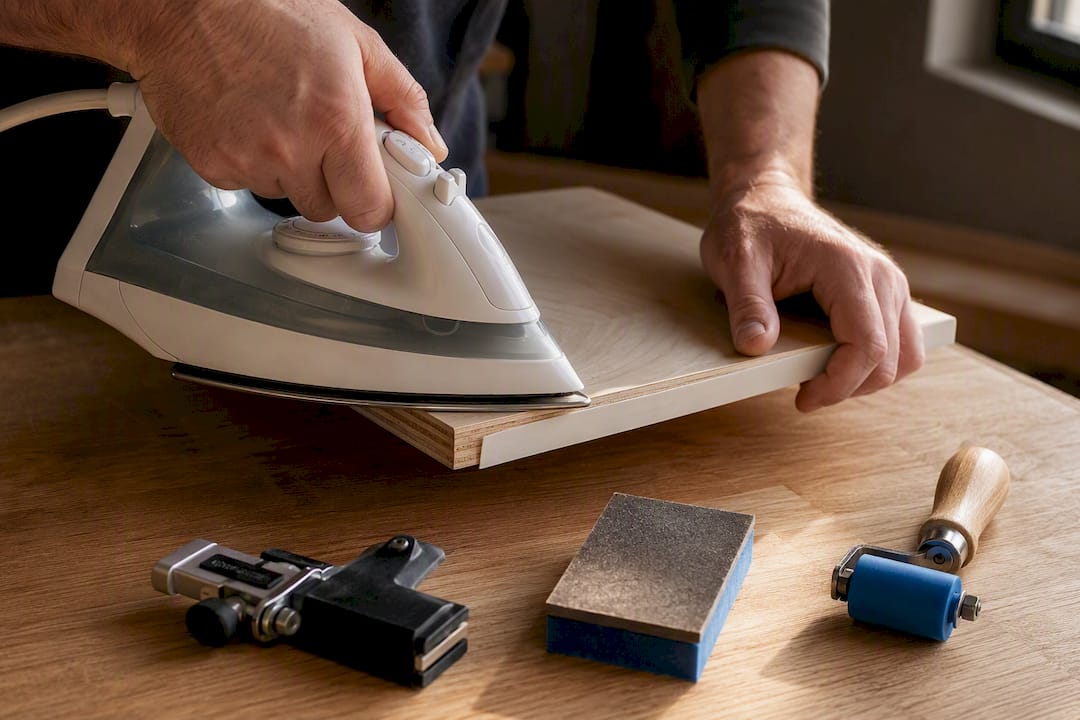
The most common failures trace back to a handful of causes. Glue that won't melt usually means the iron isn't hot enough or you're moving too fast. Overheating causes visible glue squeeze-out along the seam. Trimming against the wood grain can split veneer banding, so always check grain direction before you cut.
Pro Tip: Run your finger along the seam right after burnishing. If you feel any lift at the edge, reheat that spot for a few seconds and press again before it cools completely. Once it sets, a cold repair is much harder to blend in.
Adhesive Types and How Long Edge Banding Actually Lasts
The adhesive matters as much as the banding material itself, especially anywhere near water.
EVA hot-melt is the older, more common adhesive. It's affordable and bonds well in dry conditions, but it softens under sustained heat and moisture exposure, which makes it a weaker choice for sink cabinets or bathroom vanities.
PUR hot-melt cures into a genuinely waterproof bond line and holds up better under heat, making it the recommended adhesive for wet-area applications like kitchen sink bases and bathroom cabinets. It costs more per run but pays for itself in fewer callbacks.
Laser bonding skips adhesive glue lines entirely by fusing a functional layer built into the banding itself directly to the panel edge with heat. The result is a nearly invisible seam, but laser banding costs more and offers fewer color options than PVC or ABS run through a conventional machine.
What to expect long term: properly applied PVC or ABS banding with PUR adhesive typically holds up for 10 to 25-plus years in a residential kitchen. Watch for lifting at corners and exposed ends first, since those are the failure points that show up before anywhere else. A lifted corner can usually be re-bonded with a small amount of contact cement and a warm iron rather than replacing the whole run.
- EVA: budget-friendly, best for dry interior applications
- PUR: waterproof bond, the standard for kitchens and baths
- Laser bonding: seamless look, premium cost, limited colors
How Best Cabinet Specialist Approaches Edge Finishing
We build our cabinet boxes from plywood and pair them with solid wood doors, and edge treatment gets decided at the material stage, not as an afterthought. That sequencing matters more than most buyers realize.
- Plywood box selection happens with the finish plan already in mind, since core material affects how banding performs over time
- Pre-banded components ship ready to install for projects where speed and consistency matter most
- Unbanded boxes are available when a contractor or field crew prefers to finish edges on-site to match custom trim work
- Color and finish coordination happens before shipping, so banding matches door faces without guesswork on the job site
If you're comparing plywood construction options for a renovation, the edge finish is part of that same decision, not a separate line item.
What Actually Matters When You're Choosing Edge Banding
Most guides treat edge banding like a footnote, a quick mention before moving on to door styles and hardware. That's backwards. The adhesive and thickness decisions you make here determine whether your cabinets look tired in five years or still look sharp in twenty.
The conventional advice to "just match the color" undersells the real decision, which is adhesive chemistry. A gorgeous PVC match applied with EVA glue in a sink base is a callback waiting to happen. PUR costs a little more upfront and gets skipped constantly by builders trying to shave pennies off a bid, which is exactly why it's worth asking about before you sign off on any cabinet order.
If you're doing this yourself, prioritize technique over tools. A $40 household iron and patience will outperform a rushed job with expensive equipment. Burnish while it's warm, let it cool before you trim, and check your grain direction before the knife ever touches the veneer. Get those fundamentals right and the material choice becomes a much smaller variable than most people assume.
— Nathan
Get Cabinets With the Edge Work Already Handled
If you'd rather skip the iron and the trimming altogether, Best Cabinet Specialist builds that decision into every order instead of leaving it to you after delivery. Our plywood boxes and solid wood doors ship with edge finishing already matched to your chosen style, so you're not sourcing tape, testing adhesives, or troubleshooting a lifted corner three weeks into a renovation.
That matters most for contractors and builders working against a schedule, and for homeowners who want kitchen-grade durability without adding a weekend of finishing work to the project. We ship fast, and every cabinet leaves the shop project-ready rather than requiring finish work on-site.
Browse Best Cabinet Specialist's cabinet lineup to see current styles and finishes, and request a quote for your project dimensions before you commit to a supplier.
Sources
- Bands give plywood an edge
- What Is Edge Banding On Cabinets? Complete Guide | Blue Elephant CNC
- What is Edge Banding? The Complete Guide for Cabinet Makers | EZNESTING