For most budget-focused homeowners, buying RTA or assembled cabinets from a reputable online specialist and ordering samples first is the fastest, most affordable path to a finished kitchen. The exception: unusual layouts or premium custom finishes, where a local shop still earns its markup. Either way, your next move is the same. Order a sample door or book a free design consult before you commit to a full order.
TL;DR:
- RTA cabinets offer the lowest cost and fastest shipping, but require DIY assembly, making them ideal for standard kitchen layouts with straightforward dimensions.
- Pre-assembled cabinets cost more but install faster and suit remodels where speed and simplicity are priorities, especially for less confident DIYers.
- Semi-custom options provide flexibility for unusual layouts or finishes but have longer lead times and higher prices, making them suitable for complex projects needing tailored solutions.
- Carefully verify construction materials, delivery times, and warranty details with online sellers before ordering, as quality and support vary significantly across vendors.
- Accurate measurements, sample doors, and confirmed lead times are crucial steps to prevent costly mistakes and delays in online cabinet projects.
Table of Contents
- What Are RTA, Pre-Assembled, and Semi-Custom Cabinets?
- How Do You Evaluate an Online Cabinet Seller?
- How Much Do Online Cabinets Really Cost?
- How Do You Measure and Place an Online Cabinet Order?
- What Happens After Your Cabinets Ship?
- Should You Assemble Cabinets Yourself or Hire a Pro?
- How Does Best Cabinet Specialist Fit Into This Process?
- What Does the Online Ordering Process Actually Look Like?
- How Do You Handle Custom or Special Order Requests?
- What Should You Actually Do Next?
- Ready to Start Your Cabinet Order?
- Sources
- FAQ
What Are RTA, Pre-Assembled, and Semi-Custom Cabinets?
Buying kitchen cabinets online usually means choosing between three product types, and each one changes your price, your timeline, and how much work lands in your garage on a Saturday.
RTA (ready-to-assemble) cabinets ship flat in boxes and arrive as panels, hardware, and instructions. You build the box yourself, which is where most of the online savings come from. Labor that a factory would normally pay for gets handed to you instead, and that trade-off is what makes RTA the budget champion of buying cabinets online.
Pre-assembled cabinets arrive built. The factory has already glued, screwed, and squared the box, so you're paying for that labor upfront. They cost more than RTA per linear foot, but they install faster and remove the assembly variable entirely, which matters if you're not confident with a drill and a rubber mallet.
Semi-custom or built-to-order cabinets sit above both. These let you adjust dimensions, add specialty inserts, or request finishes outside the standard catalog. Lead times stretch out, sometimes by several weeks, and prices climb accordingly. This tier makes sense when your kitchen has an odd bump-out, a low ceiling, or an appliance package that standard 3-inch sizing increments can't accommodate.
Here's how the three stack up on the factors that actually matter to your project:
- Price per linear foot: RTA is lowest, pre-assembled is mid-range, semi-custom runs highest.
- Lead time: RTA ships fastest since factories keep flat-pack inventory ready; pre-assembled takes longer to box and freight; semi-custom takes longest because it's built to your spec.
- Installation complexity: RTA requires assembly time before installation even starts; pre-assembled goes straight to the wall; semi-custom often needs a contractor familiar with nonstandard dimensions.
- Finish quality: All three can use solid wood doors and plywood boxes. The difference is customization range, not baseline durability.
- Best project fit: RTA suits standardized kitchens and single-cabinet replacements; pre-assembled suits full remodels where speed matters more than a few dollars per foot; semi-custom suits nonstandard layouts or high-end finish goals.
A useful gut check: if your kitchen is a common footprint, like a 10x10 galley or an L-shaped layout with standard 24 or 36-inch runs, RTA or pre-assembled from an online specialist gets you most of a custom look for a fraction of the cost. Complex or luxury projects requiring hands-on decisions during the design phase are where showrooms still outperform online buying, particularly for buyers who want to touch every finish sample before committing.
If your project falls into that gray area between standard and unusual, a semi-custom option with fast shipping can bridge the gap without the six to eight week wait typical of full custom shops.
How Do You Evaluate an Online Cabinet Seller?
Not every online cabinet stores looks the same once you dig past the homepage photos. Are online cabinets legit as a category? Generally yes, but individual sellers vary widely in construction quality, communication, and how they handle problems after your card gets charged. Here's the checklist to run before you click "add to cart" on a full kitchen order.
- Confirm construction specs in writing. Ask specifically whether cabinet boxes are plywood or particleboard, and whether doors are solid wood or an engineered composite with a veneer. These two details drive both durability and price more than any marketing copy will.
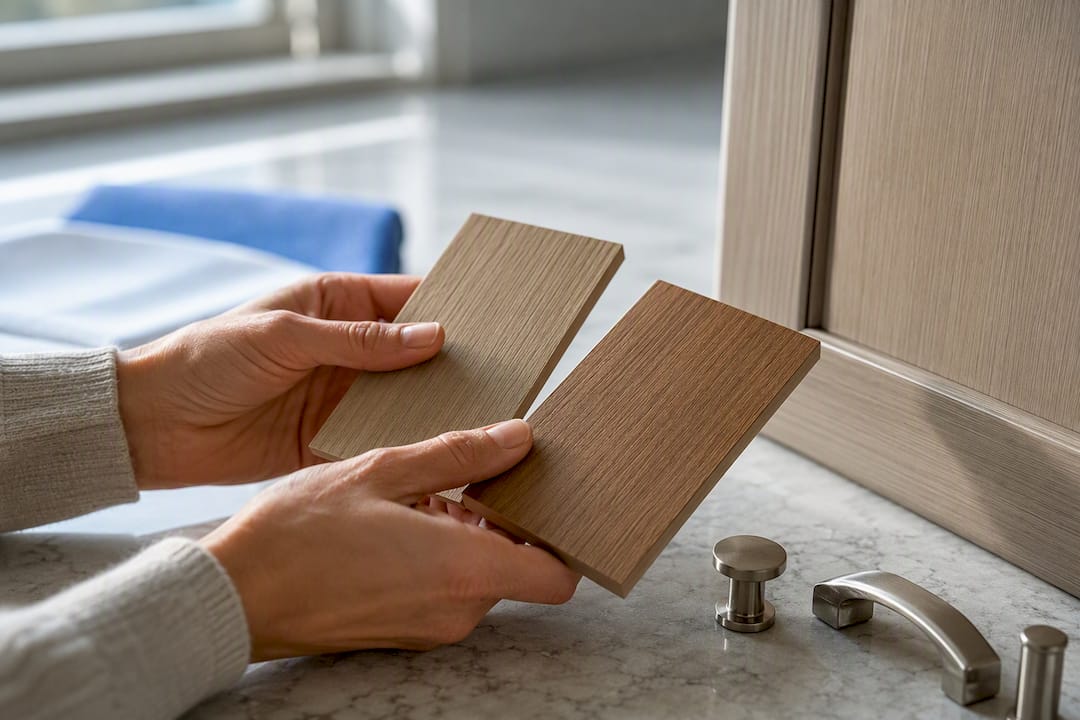
- Request a sample door. Reputable sellers offer a refundable or low-cost paid sample so you can check finish color, wood grain, and hardware quality against your kitchen's actual lighting. If a seller won't send one, that's worth noting.
- Ask for exact lead times, separated by product line. RTA and assembled cabinets often ship on different schedules. Get a specific range, not "a few weeks."
- Read the returns and warranty policy before ordering, not after a problem shows up. Look for the return window, whether it covers door-only replacement or full box replacement, and who pays return freight.
- Verify what hardware is included. Soft-close hinges and drawer slides add real value; confirm whether they're standard or an upcharge.
- Check customer support responsiveness. Email a pre-sale question and time the reply. If it takes four days to answer "do you have this in gray," imagine the wait during a shipping dispute.
- Ask about trade or bulk pricing if you're a contractor or ordering for multiple units. Many online specialists offer volume discounts that never appear on the standard product page.
Red flags worth walking away from include sellers who won't specify box material, vague "assembled or unassembled, your choice" language with no price difference explained, and any site with no visible customer reviews or complaint history. Checking BBB profiles is one of the fastest ways to spot recurring patterns, particularly around shipping damage and warranty follow-through, before you commit to a full kitchen order.
The NKBA knowledge base also maintains vendor profiles that can help you cross-reference a seller's industry standing beyond what shows up in a basic search.
Pro Tip: Ask the seller directly, "What's your lead time for assembled versus RTA on this specific door style?" Generic answers on lead time are the single biggest predictor of delivery surprises later.
How Much Do Online Cabinets Really Cost?
The sticker price on a cabinet product page is rarely the number you'll actually pay. Shipping, assembly labor, hardware upgrades, and design fees stack on top, and hidden costs like these frequently erase the price advantage that made online cabinets look cheap in the first place.
Build your budget with these line items, in this order:
- Product cost (the per-linear-foot price of the cabinet line itself)
- Shipping or freight (often a flat rate for smaller orders, freight-quoted for full kitchens)
- Assembly labor (your time if DIY, or a contractor's hourly rate if not)
- Countertops, trim, and fillers (frequently omitted from the "cabinet budget" entirely)
- Hardware upgrades (soft-close hinges, pulls, and knobs if not included standard)
- Design fees (usually waived if you use the seller's free design consult)
- Contingency for reorders or disposal (old cabinet removal and disposal costs add up fast)
For a rough sense of scale, our pricing guide broken down by linear foot walks through small (10x10), medium, and large kitchen examples with the caveats that matter, since regional labor rates and cabinet tier both swing the final number substantially.
Budget-stretching moves that actually work: time your order around manufacturer sales cycles, ask about trade pricing even if you're not a contractor (some sellers extend it to larger residential orders), mix RTA for less-visible cabinets like pantry or laundry runs with pre-assembled for high-visibility areas, and only order full-size samples for the two or three finishes you're seriously considering rather than five or six.
How Do You Measure and Place an Online Cabinet Order?
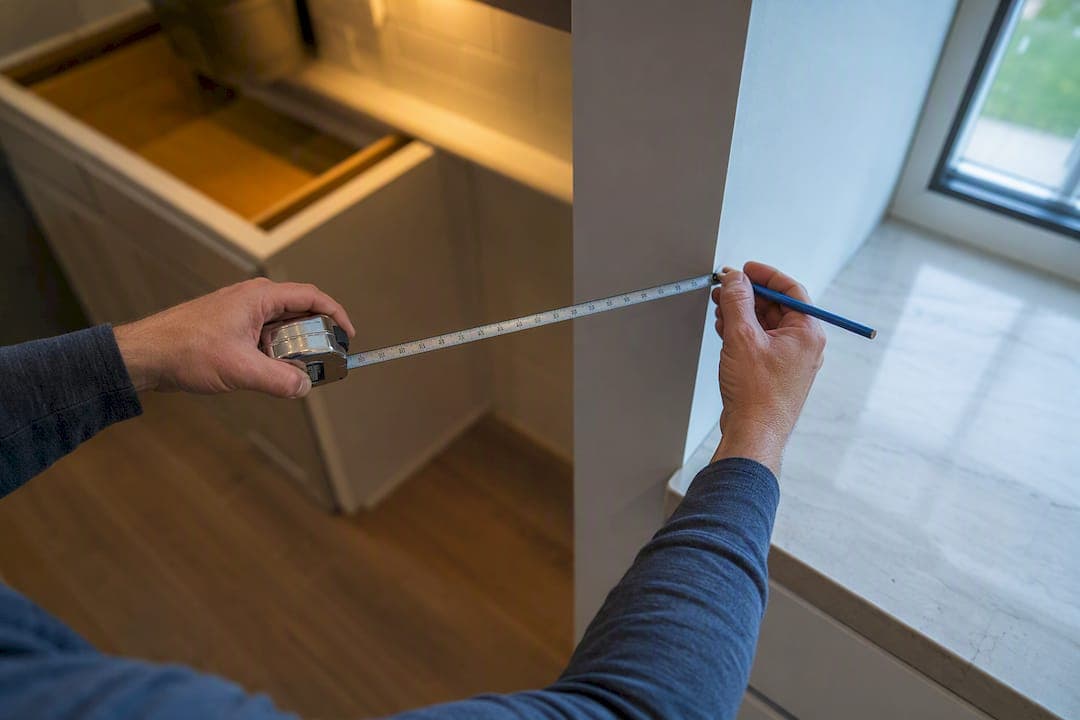
Sizing errors are the single most common reason cabinet orders get returned, and returns eat both time and money on freight-heavy items like cabinet boxes. Getting the measurements right the first time is worth more than any discount code.
- Measure every wall the cabinets will run along, floor to ceiling, corner to corner, in inches.
- Record all door and window openings, including trim width, since cabinets need clearance around both.
- Note appliance footprints for the refrigerator, range, and dishwasher, plus any manufacturer-specified clearance requirements.
- Mark ceiling height and any obstructions like soffits, vents, or low-hanging fixtures.
- Record the three must-have numbers: total wall run length for base cabinets, total wall run length for upper cabinets, and the depth available for any peninsula or island.
- Double-check plumbing and electrical locations so sink and outlet cutouts land correctly.
Our step-by-step measuring guide walks through each of these with diagrams, and it's worth reviewing even if you've measured a room before, since cabinet-specific clearances differ from general remodeling measurements.
Once you have real numbers, most online specialists offer free digital design tools or a live design consult where a specialist reviews your layout before you pay for anything. Use it. If your kitchen has multiple angles, an island, or a nonstandard ceiling height, consider paying for a professional measurer instead of trusting a DIY tape measure job, since a $100 measuring service is cheap insurance against a $3,000 reorder.
Before you finalize the order, run through a last checklist: confirm you approved the sample finish, confirm hardware selections in writing, record the promised lead time and delivery method (curbside versus liftgate matters), and inspect your order confirmation for itemized SKUs matching every cabinet, filler, and accessory you selected.
What Happens After Your Cabinets Ship?
Delivery is where a lot of online cabinet purchases go sideways, and it's almost always fixable if you know what to check before signing for the truck; understanding different freight and white-glove service levels can really help delivery options and expectations be clear from the start.
Most online cabinet stores use one of three delivery types. Curbside delivery means the truck drops boxes at the end of your driveway and you're responsible for getting them inside. Liftgate delivery adds a mechanical lift to lower pallets to ground level, useful for heavier assembled orders. White-glove delivery, less common for cabinets but worth asking about, brings boxes into the room of your choice. Know which one you're getting before delivery day, because showing up with curbside expectations and no help for a liftgate order wastes everyone's morning.
Inspect everything before the driver leaves, if at all possible:
- Count boxes against your order confirmation to catch missing items immediately.
- Photograph any dented, crushed, or torn packaging before opening it.
- Open at least one box per cabinet run to check for interior damage, even if the outside looks fine.
- Keep original packaging until you've fully inspected and approved every piece.
- Note damage on the delivery receipt itself, not just in a follow-up email.
Documenting condition with photos and preserving packaging speeds up warranty and freight claims considerably. Sellers who see clear photo evidence within 24 to 48 hours resolve claims faster than those who get a vague "something's wrong" email a week later.
Before you order, confirm three things in the warranty and return policy: the claims window (some sellers give you 48 hours from delivery, others a full week), whether damaged doors get replaced individually or require a full box swap, and the expected replacement lead time if a claim is approved. BBB customer review histories often reveal whether a seller's stated claims process matches what actually happens in practice.
Pro Tip: Take a wide photo of the entire delivery before touching a single box, then close-up photos of any damage. Insurance and warranty teams move faster with both angles in hand.
Should You Assemble Cabinets Yourself or Hire a Pro?
RTA assembly typically takes 30 to 60 minutes per cabinet once you've built your first one and know the sequence, according to our assembly tips guide for DIY homeowners. A basic tool kit covers most jobs: a drill, a rubber mallet, cam lock wrenches (usually included), a level, and an extra set of hands for anything wider than 30 inches.
For a full kitchen of 15 to 20 cabinets, that's realistically a full weekend of assembly before installation even starts. If your schedule can't absorb that, or you'd rather spend the weekend doing anything else, hiring a contractor for installation, or for both assembly and installation, is a reasonable trade against your time.
When requesting contractor quotes, give them the exact cabinet count, whether they're RTA or pre-assembled, and your kitchen's layout complexity. Ask for a scope that separately lists assembly labor, installation labor, and any carpentry work for trim, fillers, or scribe pieces needed to close gaps against uneven walls.
Budget for a few installation issues that catch first-timers off guard:
- Fillers and trim pieces to close gaps at walls and corners, often not included in the base cabinet price.
- Leveling shims for uneven floors, especially in older homes.
- Coordination with plumbers or electricians if sink or outlet locations shift even slightly from the original layout.
- Extra time for islands or peninsulas, which require additional bracing and often custom panel work.
How Does Best Cabinet Specialist Fit Into This Process?
Everything in the checklist above, samples, construction specs, shipping speed, warranty clarity, maps directly onto how Best Cabinet Specialist structures its own product lines. The RTA Cabinets collection uses plywood boxes and solid wood doors, the two construction specs worth verifying with any seller, paired with soft-close hardware standard rather than as an upcharge.
Best Cabinet Specialist built its shipping model to solve the exact problem this guide keeps flagging: long lead times that stall a renovation timeline. Fast shipping is a core part of the brand's positioning, addressing one of the most common complaints across the online cabinet category.
The product range covers the decision points from the RTA-versus-assembled section directly. Homeowners who want to build cabinets themselves can shop RTA lines including the Shaker, Classic, and Slim series, while buyers who'd rather skip assembly entirely can choose Assembled Cabinets ready to install on delivery.
As a women-owned and veteran-owned business, this company aims to provide a level of personal accountability to the buying experience that larger anonymous marketplaces often lack. That matters most for three buyer profiles: budget-focused homeowners comparing RTA against pre-assembled pricing, contractors who need trade pricing on volume orders, and DIYers who want clear specs and a sample in hand before committing to a full kitchen.
If you're evaluating the brand against this article's checklist, the practical next steps are the same three actions covered above: order a sample, use the free design consult to check your measurements against real product dimensions, and confirm lead time for your specific door style before finalizing anything.
What Does the Online Ordering Process Actually Look Like?
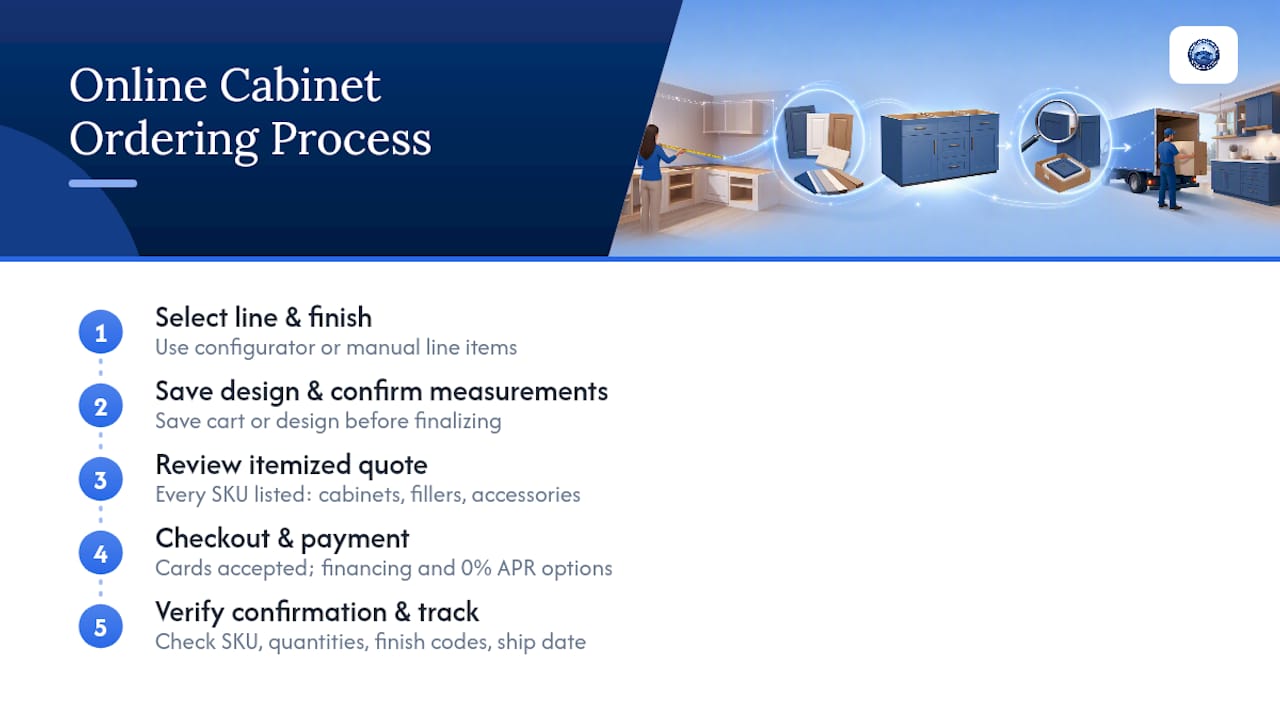
Buying kitchen cabinets online follows a fairly consistent sequence across reputable sellers, even though product pages vary in layout.
First, you select your cabinet line and finish, then build your order using either a room configurator tool or a manual line-item list matching your measured wall runs. Most sites let you save a cart or design before finalizing, which is worth doing if you're still confirming measurements.
Second, you review an itemized quote showing every SKU: base cabinets, wall cabinets, fillers, and any accessories like trays or organizers. This is your last chance to catch a sizing mismatch before payment.
Third, checkout typically accepts major credit cards, and many online cabinet retailers also offer financing options, sometimes including 0% APR promotional periods for larger orders, which can make a full kitchen more manageable month to month.
Fourth, you'll receive an order confirmation email within minutes to a few hours. Check this immediately against your quote. It should list every SKU, quantity, finish code, and estimated ship date. If anything doesn't match what you approved, contact support before production or packing begins, since changes get harder and sometimes costlier once an order enters fulfillment.
Finally, expect a separate shipping notification with tracking once your order leaves the warehouse, typically referencing the lead time quoted at checkout.
How Do You Handle Custom or Special Order Requests?
Standard sizing covers most kitchens, but plenty of projects need something the base catalog doesn't offer, whether that's a non-standard cabinet width, an unusual finish color, or a specialty insert like a built-in spice rack or appliance garage.
Most online cabinet sellers handle this through a special order or semi-custom request process, separate from their standard product pages. You'll typically submit your requested dimensions or finish through a design consult rather than the standard cart, since these orders often require a quote review before production starts.
Expect three practical differences from a standard order. Lead times run longer, sometimes by two to four weeks beyond standard stock timing, since custom pieces get built rather than pulled from ready inventory. Pricing usually increases per unit, reflecting the labor of building outside standard sizing. Return policies tend to be stricter, since a custom-built cabinet has no resale value to the seller if it doesn't work out; many sellers limit custom orders to defect-only returns rather than the more flexible policies applied to standard stock.
Before submitting a special order request, confirm the exact dimensions in writing, ask whether a sample or rendering is available before production begins, and get the lead time and any change-order policy in case your measurements need a small adjustment mid-process.
What Should You Actually Do Next?
Here's the sequence I'd recommend if you're standing at the start of this process: measure your kitchen carefully using the dimensions covered above, order two or three finish samples before committing to any single line, then use a free design consult to sanity-check your measurements against real product specs. Confirm lead time and delivery method in writing before you pay, and line up your installer, whether that's yourself with a weekend free or a contractor, before cabinets arrive so they're not sitting in boxes for a month.
Pause and call a local shop instead if your kitchen has an unusual angle, a nonstandard ceiling height, or you're chasing a premium custom finish that matters more to you than saving money. Online buying rewards standard layouts and clear decision-making. It punishes guesswork.
— Nathan
Ready to Start Your Cabinet Order?
Best Cabinet Specialist is the practical alternative to a long showroom wait, offering plywood-box, solid-wood-door cabinets with fast shipping instead of the multi-week lead times common across the cabinetry market. Whether you're leaning RTA to save on labor or want cabinets ready to install the day they arrive, both routes are built for the exact checklist covered in this guide.
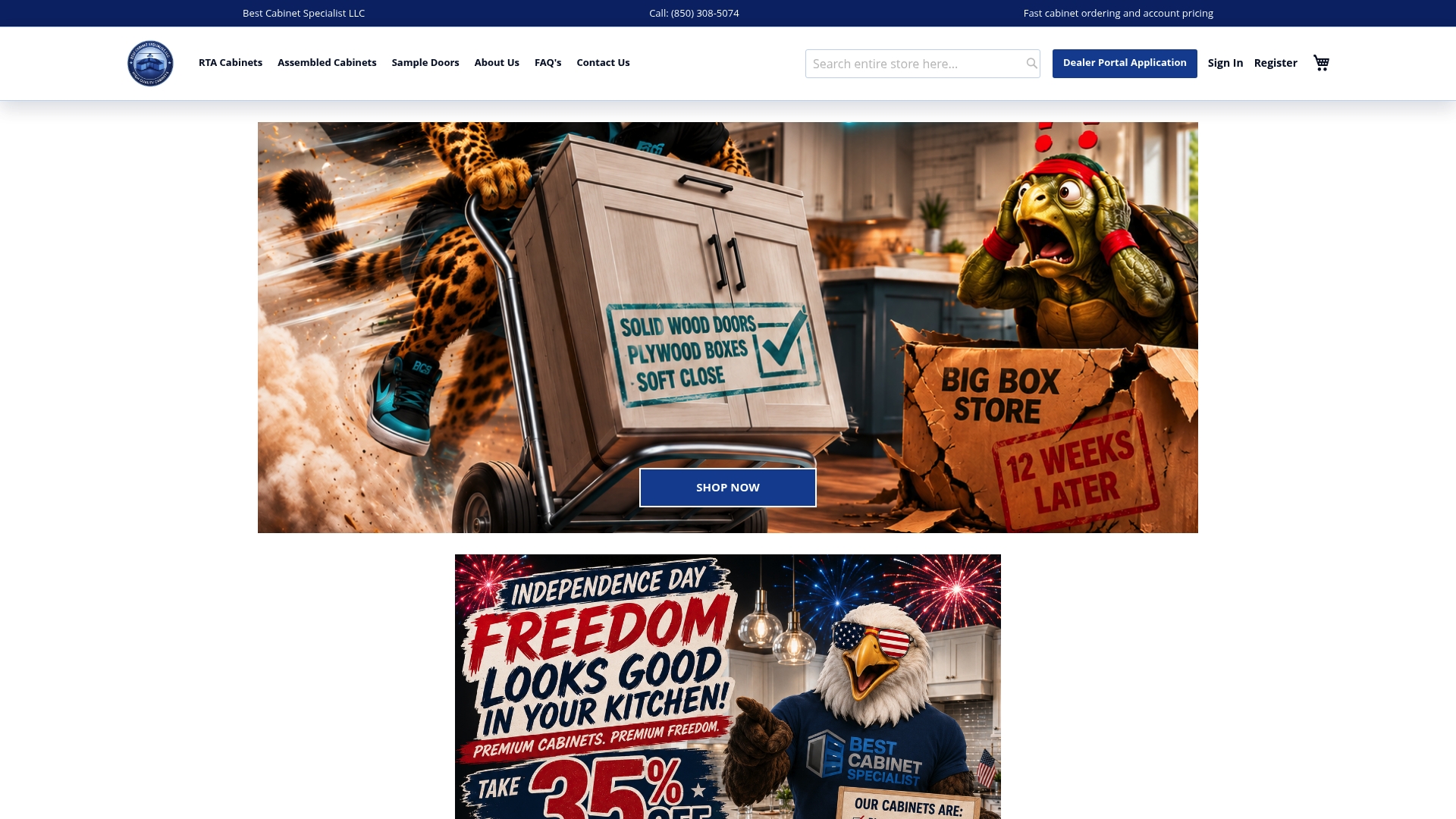
Start by browsing the RTA Cabinets collection if you're comfortable with weekend assembly, or check out Assembled Cabinets if you'd rather skip that step entirely. Every line uses the same plywood-box, solid-wood-door construction this article recommends verifying with any seller, and soft-close hardware comes standard rather than as an add-on cost. If you're still finalizing measurements or comparing finishes, browse the full catalog at Cabinet-specialist and request a sample door before placing your full order.
Sources
A few sources shaped the vendor-vetting advice in this guide. The BBB profile for CabinetSet.com and BBB profile for CliqStudios illustrate common complaint patterns worth checking before you buy. The NKBA knowledge base offers industry-standard vendor context, while comparison guides from Bradco Kitchen, GoldenHome Cabinets, and Sipthestyle informed the cost and product-type comparisons throughout.
FAQ
What Is the Cheapest Way to Buy Cabinets?
RTA cabinets from a reputable online specialist are typically the cheapest route, since you're paying for materials and shipping rather than factory assembly labor. Combining RTA with sale timing and trade pricing, where available, stretches that savings further, though shipping and hardware upgrades should still be built into your budget.
Is It Cheaper to Buy Cabinets or Build Them Yourself?
Buying RTA cabinets almost always beats building from scratch once you account for lumber, tools, and the hours involved in cutting and finishing boxes yourself. RTA gives you factory-cut precision and pre-finished doors while still letting you handle the assembly labor that keeps the price down.
What Month Do Kitchen Cabinets Go on Sale?
Cabinet sellers commonly run promotions around major renovation seasons, particularly late winter into early spring and around major holiday sales weekends, though specific timing varies by retailer. Checking a seller's site directly around these periods, and asking if a sale is planned, is more reliable than assuming a fixed calendar month.
Are Online Cabinet Companies Legit?
Most established online cabinet sellers are legitimate businesses with real construction standards, though quality and service vary by company. Checking BBB review histories, requesting a sample door, and confirming construction specs in writing are the fastest ways to separate reliable sellers from riskier ones before you order a full kitchen.
Does Best Cabinet Specialist Offer Samples Before I Buy a Full Kitchen?
Requesting a sample door or finish before committing to a full order is one of the strongest safeguards covered in this guide, and it's worth confirming directly with the seller before checkout. Current pricing and sample availability for Best Cabinet Specialist's RTA and assembled lines are listed on the product pages themselves.