Kitchen cabinet price per linear foot is the standard measure professionals and homeowners use to estimate the cost of kitchen cabinetry for renovations. Cabinetry accounts for 55%–70% of the total kitchen renovation budget, making it the single largest expense in most projects. A homeowner spending $20,000 on a kitchen remodel typically allocates $10,000–$14,000 for cabinets alone. Three cabinetry tiers drive the price spread: stock, semi-custom, and custom. Labor and installation add another layer of cost on top of materials, so understanding both is the only way to build a realistic budget.
What factors determine kitchen cabinet price per linear foot?
The cabinetry tier you choose is the biggest cost driver, but it is not the only one. Several variables stack on top of each other to push the final number up or down.
- Material quality and construction. Solid wood doors with plywood boxes cost more than particleboard alternatives. Plywood holds screws better and resists moisture, which matters in a kitchen.
- Finish and hardware. Painted finishes, soft-close hinges, and decorative hardware each add to the per-foot price. A simple shaker door in white costs less than a custom glazed panel.
- Customization level. Stock cabinets come in fixed sizes. Semi-custom allows some size and finish adjustments. Custom cabinets are built to exact specifications, which drives up both material and labor costs.
- Regional labor rates. Installation labor in San Francisco or New York runs significantly higher than in rural Midwest markets. The same cabinet box costs more to hang depending on your zip code.
- Kitchen layout complexity. Straight runs of base and wall cabinets are the least expensive to install. L-shaped, U-shaped, or galley kitchens with corner units, islands, and soffits require more time and skill.
- Add-on features. Pull-out shelves, lazy Susans, built-in spice racks, and custom inserts all increase the cost per linear foot beyond the base cabinet price.
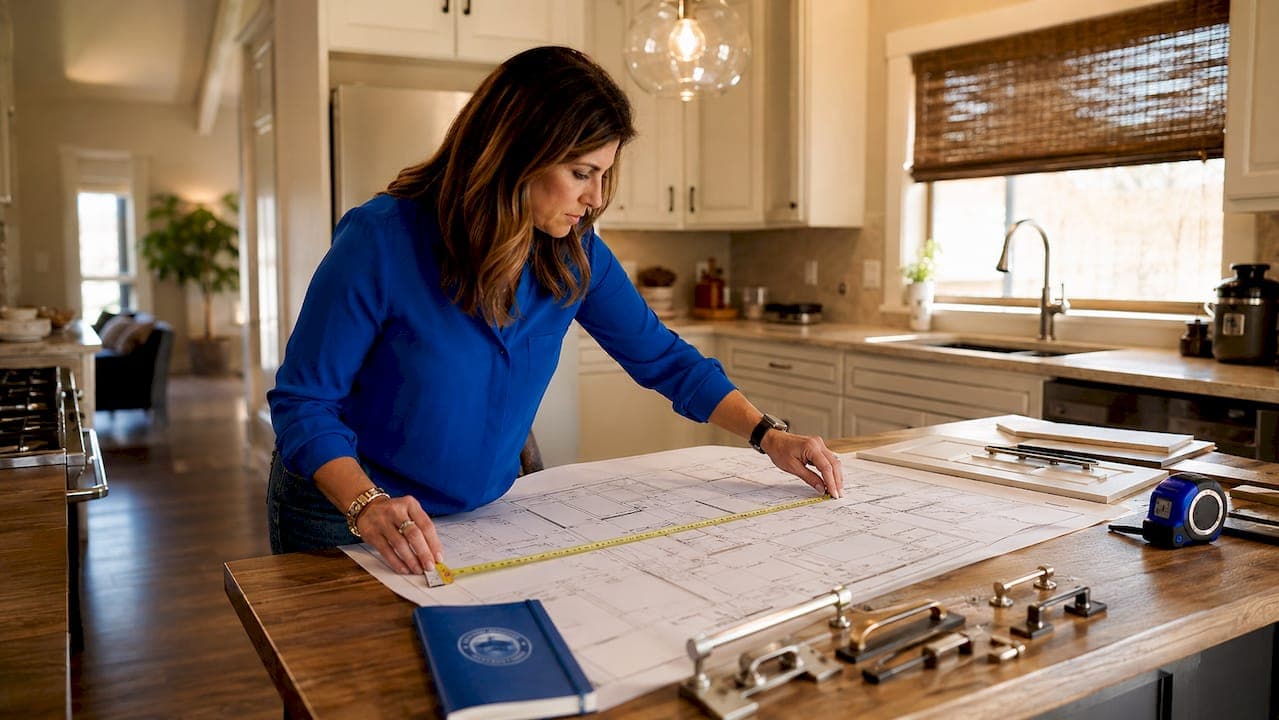
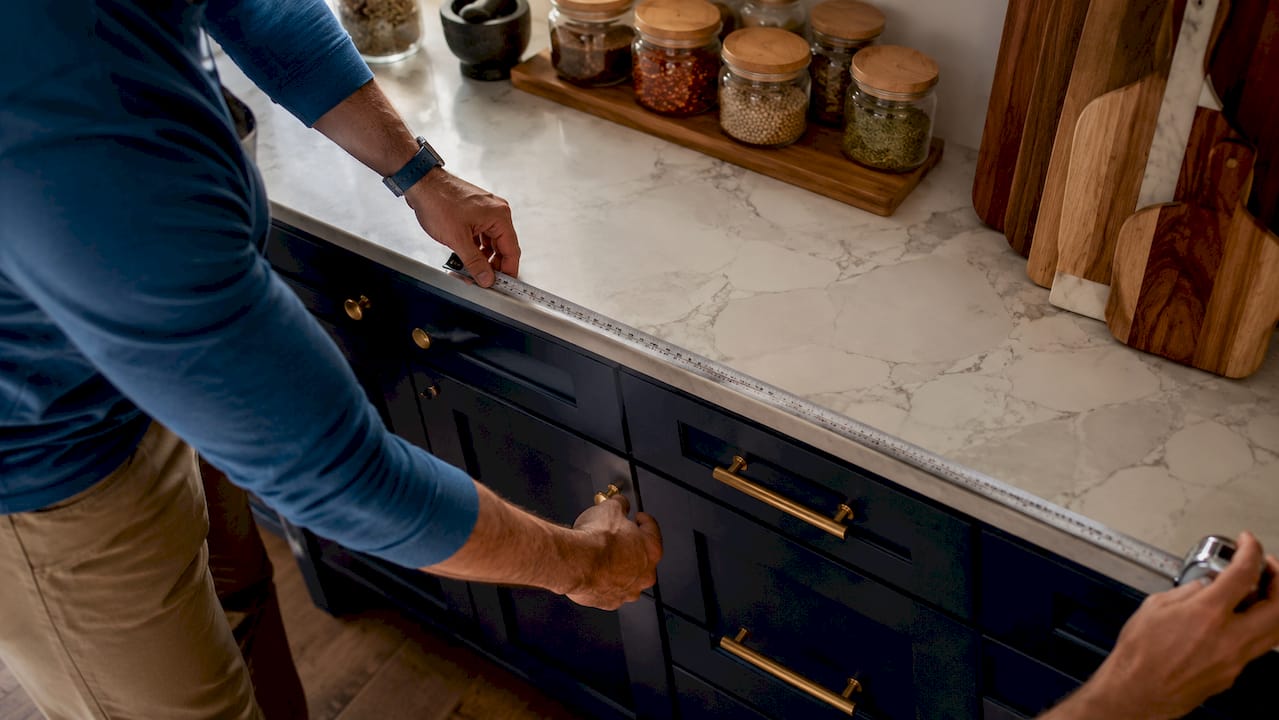
Pro Tip: Measure your kitchen's linear footage before contacting any supplier. Add up the total wall length where cabinets will hang or sit. This single number lets you compare quotes accurately and prevents suppliers from quoting different scope.
The existing kitchen layout also affects labor complexity in ways many homeowners miss. Removing old cabinets, patching walls, and leveling uneven surfaces all add time. A gut renovation costs more per linear foot than a straightforward replacement in a well-maintained kitchen.
What are the average kitchen cabinet prices per linear foot?
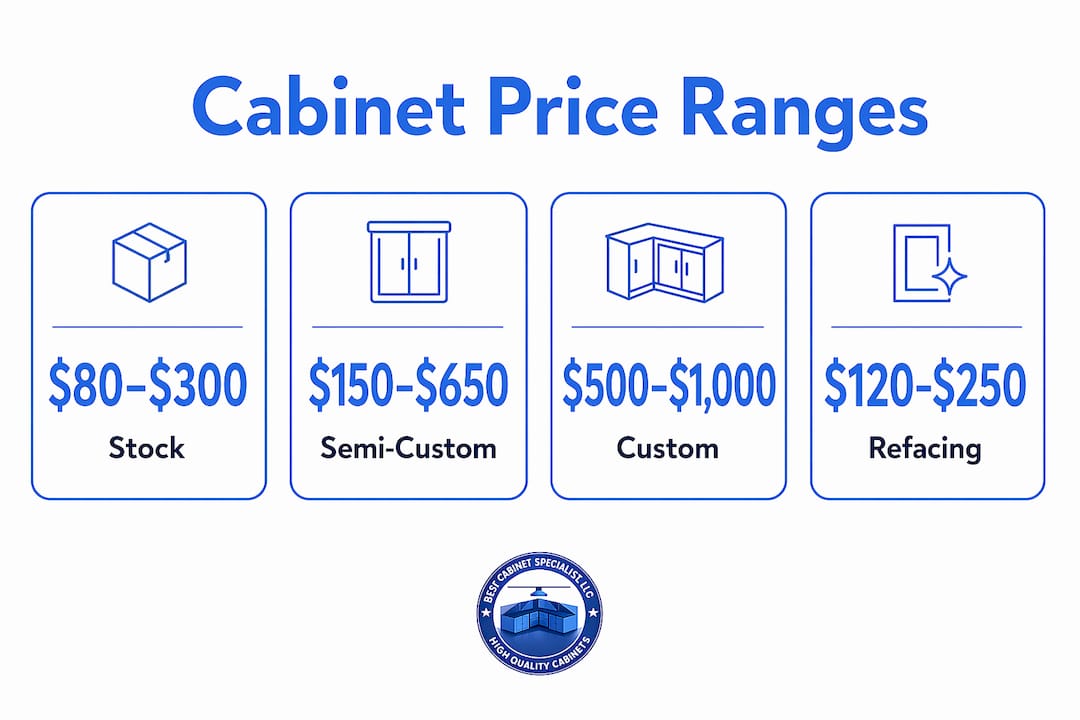
Stock, semi-custom, and custom cabinets carry very different price tags per linear foot when installed. Knowing the range for each tier lets you match your budget to the right product category before you ever walk into a showroom.
Stock cabinets are pre-built in standard sizes and shipped from warehouse inventory. They offer the fastest lead times and the lowest cost. Semi-custom cabinets allow modifications to size, finish, and interior configuration, which pushes the price up but still keeps costs well below full custom work. Custom cabinets are built from scratch to your exact measurements and design preferences. They carry the highest price and the longest lead time, often 8–12 weeks.
A standard 10×10 kitchen contains roughly 20–40 linear feet of cabinetry. Total replacement costs for a 10×10 kitchen range from $2,000 to $24,000 depending on the tier selected. That spread is wide because the difference between stock and custom pricing is enormous.
| Cabinetry tier | Installed price per linear foot | Best for |
|---|---|---|
| Stock | $80–$300 | Budget renovations, rental properties, fast timelines |
| Semi-custom | $150–$650 | Most homeowners balancing quality and cost |
| Custom | $500–$1,200+ | High-end renovations, unique layouts, premium finishes |
Cabinet depth is standardized at 24 inches for base cabinets and 12 inches for wall cabinets across most product lines. That standardization means linear foot pricing reflects wall length only, not depth. This simplifies estimates because you only need one measurement to compare quotes across suppliers.
Semi-custom cabinets represent the best value for most homeowners. They offer meaningful flexibility in size and finish without the premium price of full custom work. Best Cabinet Specialist builds its ready-to-assemble cabinet options with plywood boxes and solid wood doors, hitting the quality level of semi-custom at a price point closer to stock.
How does cabinet installation labor affect the overall price per linear foot?
Labor is the part of the budget that surprises homeowners most often. Professional installation runs $50–$300 per linear foot, or $40–$80 per hour, depending on the complexity of the project. In complicated kitchens requiring scribing, custom inserts, or significant wall prep, installation costs can reach $450 per linear foot. That is not a rare edge case. It happens regularly in older homes with out-of-plumb walls or unusual layouts.
Key factors that push labor costs higher include:
- Scribing. Fitting cabinets flush against uneven walls requires custom trimming. It takes time and skill, and most installers charge extra for it.
- Corner solutions. Blind corners, lazy Susan units, and diagonal corner cabinets require more precise fitting than standard runs.
- Demolition and disposal. Removing old cabinets, hauling debris, and patching walls adds hours before a single new cabinet goes up.
- Electrical and plumbing coordination. Cabinets near sinks or appliances may require coordination with other trades, which adds scheduling complexity and cost.
Pro Tip: Get at least three installation quotes and ask each contractor to break out labor from materials. A quote that bundles everything makes it impossible to compare fairly. Separate line items reveal where the real cost differences lie.
Industry experts consistently note that homeowners underestimate labor complexity, which leads to budget overruns. Planning for the higher end of the labor range from the start prevents that problem. If your kitchen comes in under the high estimate, you have money left over. If it does not, you are not scrambling for funds mid-project.
Labor costs between $100–$300 per linear foot are typical for most remodels. Add that to your material cost per linear foot to get a realistic all-in number before you commit to a budget.
What cost-saving alternatives exist for kitchen cabinet updates?
Cabinet refacing is the most practical alternative to full replacement when the existing cabinet boxes are structurally sound. Refacing means replacing only the doors, drawer fronts, and visible exterior panels while keeping the original cabinet frames in place. The result looks like a new kitchen without the cost or disruption of a full gut renovation.
Refacing costs $120–$250 per linear foot, which is significantly less than even stock cabinet replacement when you factor in demolition, disposal, and full installation labor. Refacing skips demolition entirely, which removes one of the larger hidden costs in a full replacement project.
| Approach | Cost per linear foot | Demolition required | Best for |
|---|---|---|---|
| Full replacement (stock) | $80–$300 installed | Yes | Damaged boxes, layout changes |
| Full replacement (custom) | $500–$1,200+ installed | Yes | Complete redesigns |
| Cabinet refacing | $120–$250 | No | Sound boxes, cosmetic refresh |
Refacing works best when the cabinet boxes are square, level, and free of water damage. If the boxes are warped, swollen, or structurally compromised, refacing is not the right call. Full replacement is the only option when the underlying structure is failing.
The semi-custom aesthetic from refacing comes from the wide range of door styles and finishes available. You can choose shaker doors, raised panel designs, or flat-front modern styles in dozens of paint and stain options. The result is a kitchen that looks updated without the price tag of new cabinetry throughout.
Refacing also reduces project timelines significantly. A full cabinet replacement can take weeks from order to installation. Refacing typically wraps up in a few days once materials arrive.
Key takeaways
The most reliable way to budget a kitchen renovation is to calculate your total linear footage first, then apply the installed cost per linear foot for your chosen cabinetry tier, and add a realistic labor estimate on top.
| Point | Details |
|---|---|
| Cabinetry dominates the budget | Cabinets consume 55%–70% of total kitchen renovation costs, so tier selection drives everything. |
| Tier determines price range | Stock runs $80–$300 per linear foot installed; semi-custom $150–$650; custom $500–$1,200+. |
| Labor adds significant cost | Installation adds $50–$300 per linear foot, reaching $450 in complex kitchens. |
| Refacing saves money | Cabinet refacing at $120–$250 per linear foot avoids demolition and suits cosmetically dated kitchens. |
| Measure first, quote second | Total linear footage is the one number that makes every supplier quote comparable. |
Why I always tell homeowners to budget labor before materials
Most homeowners start with the cabinet catalog and work backward to a budget. That is the wrong order. After years of watching kitchen projects go over budget, the pattern is almost always the same: the materials came in on target, and the labor blew the budget.
The per-linear-foot metric is genuinely useful, but only when you apply it to the full installed cost, not just the cabinet box price. A $150-per-linear-foot semi-custom cabinet sounds reasonable until you add $200 per linear foot in labor for a tricky L-shaped kitchen with three corner units and uneven walls. Suddenly you are at $350 per linear foot all-in, which is a very different conversation.
My advice is to get your installation quotes before you finalize your cabinet selection. Once you know what labor will cost in your specific kitchen, you can work backward to figure out how much you have left for materials. That sequence protects your budget far better than picking cabinets first and hoping labor fits.
Getting multiple quotes also reveals something useful: installers price the same job very differently based on how they assess complexity. One contractor sees a straightforward job; another sees three problem areas that will add hours. Both quotes tell you something real about your kitchen.
— Nathan
Cabinets that fit your budget and ship fast
Budgeting by linear foot only works when you have a supplier with transparent, consistent pricing. Best Cabinet Specialist offers affordable, high-quality cabinets built with plywood boxes and solid wood doors, designed to give you semi-custom quality without the custom price tag or the long wait.

Best Cabinet Specialist is a women-owned and veteran-owned business that ships project-ready cabinets fast, so your renovation stays on schedule. Whether you are replacing a full kitchen or updating a single wall of cabinetry, the team is ready to help you match the right product to your linear footage and budget. Visit Best Cabinet Specialist to get started.
FAQ
What is the average cost of kitchen cabinets per linear foot?
Stock cabinets average $80–$300 per linear foot installed, semi-custom run $150–$650, and custom cabinets reach $500–$1,200 or more per linear foot installed in 2026.
How many linear feet does a typical kitchen have?
A standard 10×10 kitchen contains approximately 20–40 linear feet of cabinetry, depending on the layout and number of upper and lower cabinet runs.
Does the linear foot price include installation labor?
Installed prices include labor, but always confirm this with your supplier or contractor. Labor alone adds $50–$300 per linear foot and can reach $450 in complex kitchens.
Is cabinet refacing cheaper than full replacement?
Yes. Refacing costs $120–$250 per linear foot and skips demolition entirely, making it a strong option when the existing cabinet boxes are structurally sound.
What is the most cost-effective cabinetry tier for most homeowners?
Semi-custom cabinets offer the best balance of quality, flexibility, and price for most homeowners, with installed costs ranging from $150–$650 per linear foot.