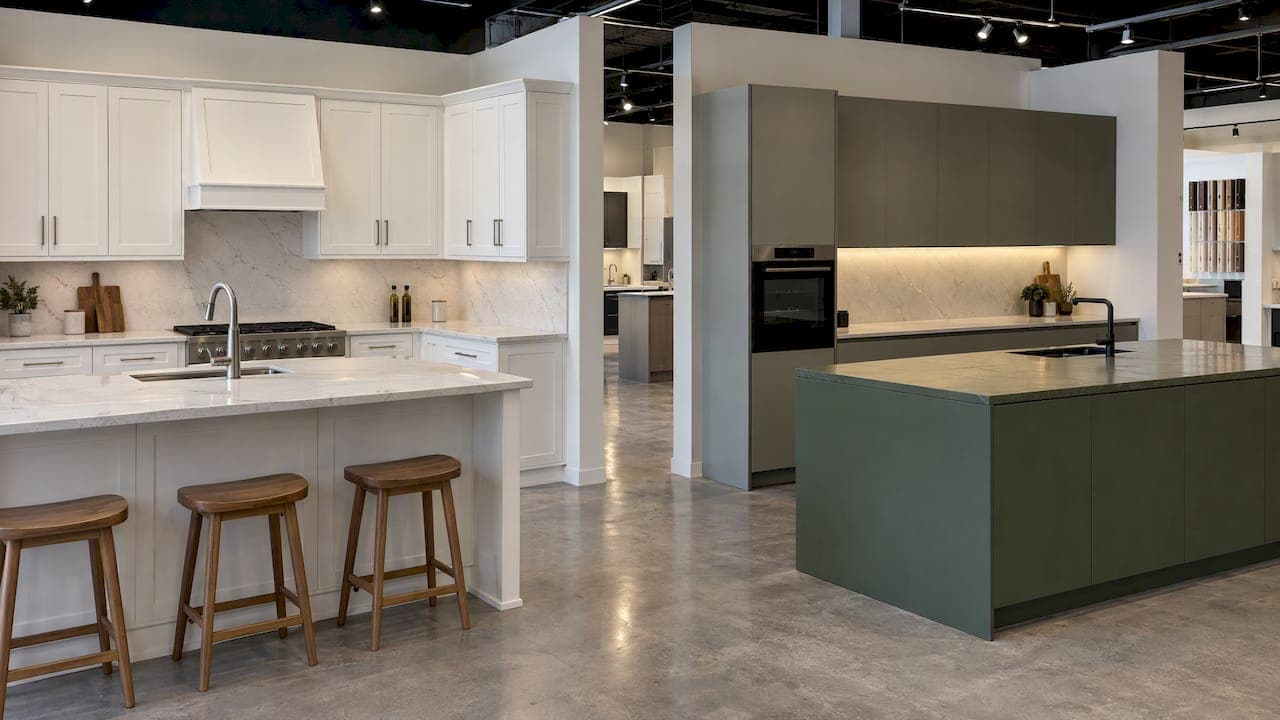
Transitional cabinets blend traditional and modern design: simple recessed-panel doors, soft painted or wood finishes and modest hardware. Modern cabinets go further toward minimal: flat slab doors, clean lines and little or no visible hardware. If you want a kitchen that feels warm and will not date quickly, transitional is the safer choice. If you want a sleek, uncluttered look, modern fits better. This guide compares the two on the things that decide a purchase: door style, hardware, finish, construction, budget and fit with your space.
TL;DR
- Transitional cabinets sit between traditional and modern. Think Shaker or slim Shaker doors, painted or natural wood, and simple hardware.
- Modern cabinets use flat slab doors, minimal or hidden hardware and strictly clean lines.
- Construction matters more than style for durability. A plywood box with solid wood doors lasts in either look.
- Transitional is the more forgiving choice for resale, mixed-era homes and renovations on a budget. Modern works best when the whole room is planned around it.
- Order a sample door before you commit to a full kitchen.
Table of Contents
- What transitional and modern mean in cabinets
- Door styles side by side
- Hardware and finishes
- Materials, durability and maintenance
- Budget and construction factors
- How to choose for your space
- Which style stays current longer?
- What we recommend
- See the styles in person
- FAQ
- Sources
What transitional and modern mean in cabinets
The terms get used loosely, so start with definitions. Architectural Digest describes transitional design as a combination of modern and traditional elements, with a timeless, warm, layered and softer character than a strictly contemporary space. The designer quoted there also describes transitional rooms as tonal, textural and minimal.
In cabinet terms, that usually means:
- A door with a recessed center panel and a simple frame, most often a Shaker profile.
- Painted or medium-tone wood finishes rather than high-gloss or stark color blocks.
- Hardware you can see but that does not draw attention: simple bar pulls, plain knobs, or a slim edge pull.
Modern cabinets strip more away. The NKBA's 2024 U.S. kitchen trends report associates modern kitchens with European-style flat-panel cabinets, little or no hardware, push-to-open technology, hidden storage and open-kitchen planning. The door is a flat slab. There is no frame, no panel and often no handle.
One more term you will see is contemporary. Strictly, modern refers to a specific mid-century-rooted style, while contemporary means what is current. Most shoppers use "modern" to mean sleek and flat-fronted, and that is how we use it here.
Door styles side by side
The door is the biggest visual difference, and it is the part you see every day.
| Feature | Transitional | Modern |
|---|---|---|
| Door profile | Shaker, slim Shaker, simple recessed panel | Flat slab |
| Detailing | Subtle edge profile, restrained trim | None, or a very thin reveal |
| Hardware | Visible pulls or knobs in simple shapes | Minimal, integrated, or push-to-open |
| Typical colors | Soft white, gray, greige, natural wood, deep tones such as black | Solid neutrals, matte darks, wood grain slabs |
| Overall feel | Warm, layered, familiar | Sleek, open, uncluttered |
The NKBA's 2019 trends report shows how strongly transitional leans on one door type. Among the transitional examples it studied, 63% used painted wood and 65% used recessed-panel doors, and the cabinets most often came in light or medium painted finishes. That matches what most buyers picture: a painted Shaker door.
The line between the two is blurrier than the table suggests. The Spruce reports a shift toward slim Shaker rails and minimalist door profiles that sit comfortably between traditional and contemporary design. A slim Shaker door keeps the recessed panel but narrows the frame, so it reads cleaner and more modern while staying familiar. For many buyers it is the practical middle: a door that works in a transitional room and does not look out of place in a fairly modern one.
If you want to see the full range of door options before choosing, our guide to cabinet door styles walks through each one.
Hardware and finishes
Hardware is where the two styles separate fastest.
Transitional hardware is visible and simple. Bar pulls, cup pulls and plain round knobs in brushed nickel, matte black or brass all work. Ornate or heavily decorative pieces push the look toward traditional, while no hardware at all pushes it toward modern.
Modern hardware is often absent. Push-to-open mechanisms, recessed finger pulls and slim edge pulls keep the cabinet fronts unbroken. This looks clean, but plan for it: push-to-open needs compatible hardware, and finger pulls change how the drawer fronts are cut.

For finishes, transitional gives you more room. Painted white and gray remain the default, and natural wood is common. Wood is also returning in warmer tones: The Spruce notes that honey oak is making a comeback in 2026, with designers favoring matte or satin finishes, and describes oak as versatile and durable. If you are curious how oak tones and grains look in other applications, oak finish samples can help you judge shade and grain before you choose a cabinet color.
Modern kitchens tend to favor flat, uniform surfaces: solid matte colors, or a single wood-grain slab. Because there is no door profile to catch the eye, the finish carries the whole look. Flaws in color or grain show more.
Designers also expect timeless kitchen design to stay in demand. According to The Spruce's 2026 cabinet trends, that means clean, simple cabinet profiles and sleek, timeless hardware. Both styles can meet that description. The difference is how much detail you are willing to leave out.
Materials, durability and maintenance
Here is the point many style guides skip: style and construction are separate decisions. A transitional door and a modern door can sit on the same cabinet box. What decides how long the kitchen lasts is the box, the door material and the hardware inside.
Cabinet box. Plywood is made of layered wood veneers, which gives it good screw-holding strength and resistance to moisture damage compared with particleboard or MDF. That is why we build our cabinets with plywood boxes. Kitchens and bathrooms are humid, and sink bases take the worst of it.
Doors. Solid wood doors are durable and can be refinished or touched up. Transitional Shaker doors, built from a frame and a center panel, are the classic solid wood design, which is why solid wood and Shaker pair so naturally. Modern slab doors can be made from wood, veneer or engineered panels. A slab in a high-use kitchen needs a durable surface, because there is no profile to hide wear.
Maintenance. The two styles differ in what they ask of you:
- Recessed-panel doors have small inside corners where grease and dust collect. A damp cloth and a soft brush handle it.
- Slab doors wipe clean in one pass, which is a real advantage in a busy kitchen.
- Handleless fronts show fingerprints and can wear at the edges where you grip them. Matte finishes hide this better than gloss.
- Dark painted finishes of either style show dust and scratches more than lighter ones.
Hardware inside. Soft-close hinges and drawer slides matter more to daily satisfaction than the door style. Our cabinets include soft-close hardware, so a transitional or slim Shaker door does not trade away that quiet, smooth closing.
Budget and construction factors
Price depends on several things, and door style is only one of them. Compare these when you price a kitchen:
- Box construction. Plywood boxes cost more up front than lower-grade boxes but hold up longer, especially around sinks and dishwashers.
- Door material. Solid wood costs more than thermofoil or laminate, but it lasts and can be repaired.
- Assembled or ready-to-assemble. RTA cabinets arrive flat-packed, which cuts shipping bulk and often cost. Assembled cabinets save labor on site. Contractors on tight schedules often choose assembled; homeowners or crews comfortable with assembly often choose RTA.
- Hardware. Push-to-open systems or specialty pulls can add cost on a modern kitchen. Simple pulls and knobs on a transitional kitchen usually cost less to specify.
- Lead time. A custom kitchen can take weeks or months. If your project schedule is fixed, a stock or ready-to-ship line avoids delay.
- Accessories. Filler strips, toe kicks, trim, and end panels add up. A cleaner modern look still needs them.
The other question buyers ask is what the most expensive part of a kitchen remodel is. In most projects it is the cabinetry, which is why choosing the right construction at a fair price matters more than choosing between two door profiles.
A practical way to keep costs under control: pick one door style across the whole kitchen, then spend selectively. Transitional gives you the most flexibility here because Shaker doors work with budget and upscale countertops alike.
How to choose for your space
Start with the room, not the trend. Architectural Digest's cabinet design guide suggests weighing the home's architecture, ceiling height, room shape, period details and your own preferences. It notes that Shaker works in historic homes and new builds, and that mixing painted Shaker with modern slab doors on frameless construction can add a modern sensibility, more space and easier access in small or midsize kitchens.
Here is how that plays out in practice.
Choose transitional if
- Your home has period details, trim or mixed architecture that a stark modern kitchen would fight.
- You are renovating to sell, or you want a kitchen that appeals to the widest range of buyers.
- You are outfitting rental units and want durable doors that look current without being tied to a trend.
- You like warmth and a bit of texture, and want the freedom to change paint, hardware or counters later.
Choose modern if
- Your space is open-plan with clean architectural lines and little ornament.
- You want the least visual noise and the easiest-to-wipe surfaces.
- You are designing the whole room around it: lighting, appliances, flooring and hidden storage.
- You are comfortable with handleless or minimal hardware and the planning it needs.
Consider the middle
Slim Shaker is the answer for many people who cannot decide. It keeps the recessed panel and the Shaker shape but trims the frame, so the kitchen looks sleeker without going fully flat. In dark finishes such as black, slim Shaker reads modern. In white, it reads soft and transitional. The same door can lean either way depending on color and hardware.
Mixing is also an option. A kitchen with slim Shaker on the perimeter and flat doors on an island or tall pantry wall can feel deliberate, as long as the color and finish stay consistent.
Which style stays current longer?
Both can age well, but they age differently.
Transitional is built for longevity. Its NKBA 2024 report lists transitional and timeless as a leading expected kitchen style, which supports what designers say: a middle-ground style is less likely to look dated, because it does not depend on a single trend. The timeless quality comes from restraint. Simple doors, balanced proportions and finishes you can repaint or update.
Modern ages well when it is done cleanly and consistently. It can look dated if it relies on a trend finish, such as a high-gloss color that falls out of favor. Matte, natural and neutral modern finishes avoid that risk.
The practical tip: put the trend in the parts that are easy to change. Paint color, hardware, lighting and backsplash are cheap to update. Door profile and cabinet construction are not, so choose those for the long term.
What we recommend
We have talked with a lot of homeowners, contractors and property managers about this choice, and the same pattern keeps showing up. People who start out wanting a modern kitchen often end up with a slim Shaker door, because it gives them the clean look without committing to handleless planning. People who want a classic kitchen often move toward a simpler Shaker than they first imagined.
Our advice is to spend your attention on construction first and style second. A plywood box with a solid wood door and soft-close hardware will outlast a lower-grade cabinet in either style, and that is what we build around. Then pick the door that fits your room and your resale or tenant plans. If you are unsure, a sample door is cheap insurance, because color and finish look different in your own light than on a screen.
For contractors and builders, we suggest standardizing on one series across a project. It speeds ordering, keeps finishes consistent from unit to unit and makes replacements simple later.
— Nathan
See the styles in person
We offer transitional-friendly and modern-leaning options in one place. Our Shaker, Classic and Slim series RTA cabinets come with plywood boxes, solid wood doors and soft-close hardware, and our assembled cabinets are ready to install when your schedule is tight. Not sure about a color or door? Order sample doors first and compare them against your counters and floors.
We are a women-owned and veteran-owned business, and we focus on fast shipping and fair pricing for homeowners, contractors, builders, interior designers and property managers. Ready to start? Shop Now for kitchen and bathroom cabinets.
Slim Shaker pieces to start with
If you are leaning toward the middle ground, these slim Shaker pieces show how the style looks in different finishes:
- White Slim Shaker 3 Drawer Base Cabinet, 36"W: a soft, transitional take.
- Black Slim Shaker 3 Drawer Base Cabinet, 36"W: the same door profile, with a more modern read.
- White Slim Shaker Vanity Drawer Base Cabinet, 18"W: for bathrooms that need to match the kitchen.
- Black Slim Shaker Utility Cabinet, 30"W × 96"H: full-height storage for a clean wall.
Compare the same door in two colors and you will see how much finish changes the style. Shop Now when you are ready to price your layout.
FAQ
What is the difference between transitional and modern cabinets?
Transitional cabinets blend traditional and modern features, usually with a Shaker or recessed-panel door, painted or natural wood and simple visible hardware. Modern cabinets use flat slab doors, clean lines and often little or no hardware. Transitional feels warmer and more layered, while modern feels sleeker and more minimal.
Are transitional cabinets more timeless than modern ones?
Generally yes, because their simple, balanced design does not rely on one trend. The NKBA lists transitional and timeless among the leading expected kitchen styles. Modern can last just as long if you choose neutral, matte finishes and avoid trend-driven colors.
Is slim Shaker transitional or modern?
It sits between the two. The recessed panel keeps it connected to Shaker tradition, while the narrower frame gives it a cleaner, more modern profile. Color and hardware decide which way it leans: white with soft pulls reads transitional, and black with minimal hardware reads modern.
Do modern cabinets cost more than transitional cabinets?
Not automatically. Cost depends more on box construction, door material, hardware and whether cabinets are assembled or RTA than on the style name. Handleless systems and push-to-open hardware can raise the price of a modern kitchen, while simple pulls on a transitional kitchen are usually easier to budget.
Which cabinet style is best for rental properties?
Transitional, in most cases. Shaker-style solid wood doors in a neutral finish look current to a wide range of tenants, hold up to daily use and are easy to touch up or replace. Standardizing on one series across units keeps ordering simple.
Sources
- Transitional Design: Everything You Need to Know, Architectural Digest
- 39 Kitchen Cabinet Design Ideas, Architectural Digest
- NKBA 2019 Design Trends: Kitchens
- NKBA 2024 Kitchen Trends
- 5 Kitchen Cabinet Trends You're Going to See Everywhere, The Spruce
- This Outdated Cabinet Trend Is Making a Major Kitchen Comeback, The Spruce