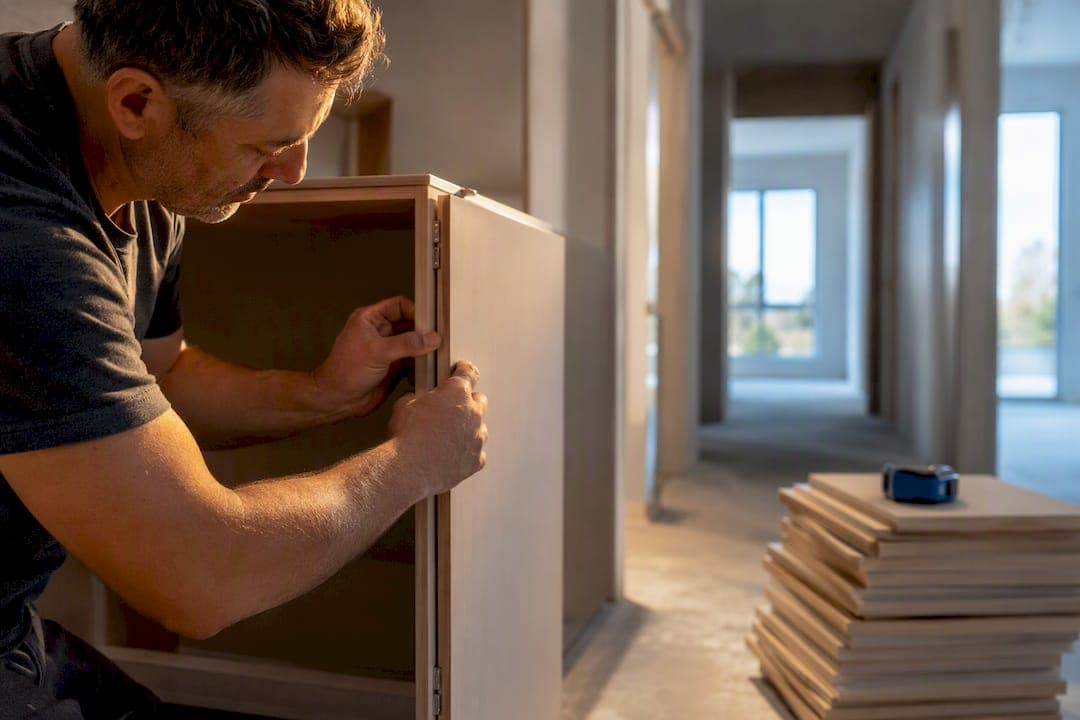
For multifamily projects, specify plywood-box cabinets with commercial-grade hardware, sourced from a supplier that supports bulk ordering, shop drawings, and jobsite delivery. Some suppliers fit that role for developers managing high unit counts. The reasons come down to three things: plywood boxes outlast particleboard under repeated tenant turnover, standardized specs keep every unit identical, and a supplier built for volume orders shortens the lead times that usually threaten your schedule.
TL;DR:
- Plywood boxes are recommended for their moisture resistance and long-term durability, especially in humid kitchen and bathroom environments.
- Deliveries typically take 90 to 120 days, with custom finishes extending lead times beyond 120 days, making early specification critical.
- Maintaining consistent finish batches and standardized dimensions across units helps ensure proper color match and installation efficiency.
- Prioritize locking in box construction, hardware, and finish details early in the project to avoid costly field adjustments and schedule delays.
- A detailed warranty with a five-year or longer coverage period and prompt replacement service supports ongoing maintenance in multifamily developments.
Table of Contents
- What Should You Require in a Multifamily Kitchen Cabinet Spec?
- Plywood, MDF, or Thermofoil: Which Material Actually Holds Up?
- How Long Does Cabinet Delivery Take on a Multifamily Project?
- Where Should You Spend, and Where Can You Cut?
- How Long Should Multifamily Cabinets Actually Last?
- Cabinet Bid Specs: What to Write and What to Ask Suppliers
- Why some cabinet suppliers fit the multifamily procurement model
- Scaling Cabinet Orders Without Losing Color Match
- What Design Trends Matter for Multifamily Kitchens Right Now?
- What Warranty and Support Should You Expect After Installation?
- Author Perspective: The Three Things Every Project Should Demand
- How Best Cabinet Specialist Supports Multifamily Cabinet Orders
- Sources
What Should You Require in a Multifamily Kitchen Cabinet Spec?
Your bid package and drawings should lock down four things before a single unit gets framed: box construction, door material by asset class, hardware grade, and dimensional tolerances. Loose language here is what causes field change orders three months into a build.
Here's what a project-ready spec typically includes:
- Box construction: 1/2-inch plywood sides and back minimum, with reinforced corner blocks or dowel-and-glue joinery rated for repeated drawer loading.
- Door and face material by asset class: paint-grade MDF for Class A finishes, thermofoil for Class B/C durability at lower cost, solid wood for premium or boutique units.
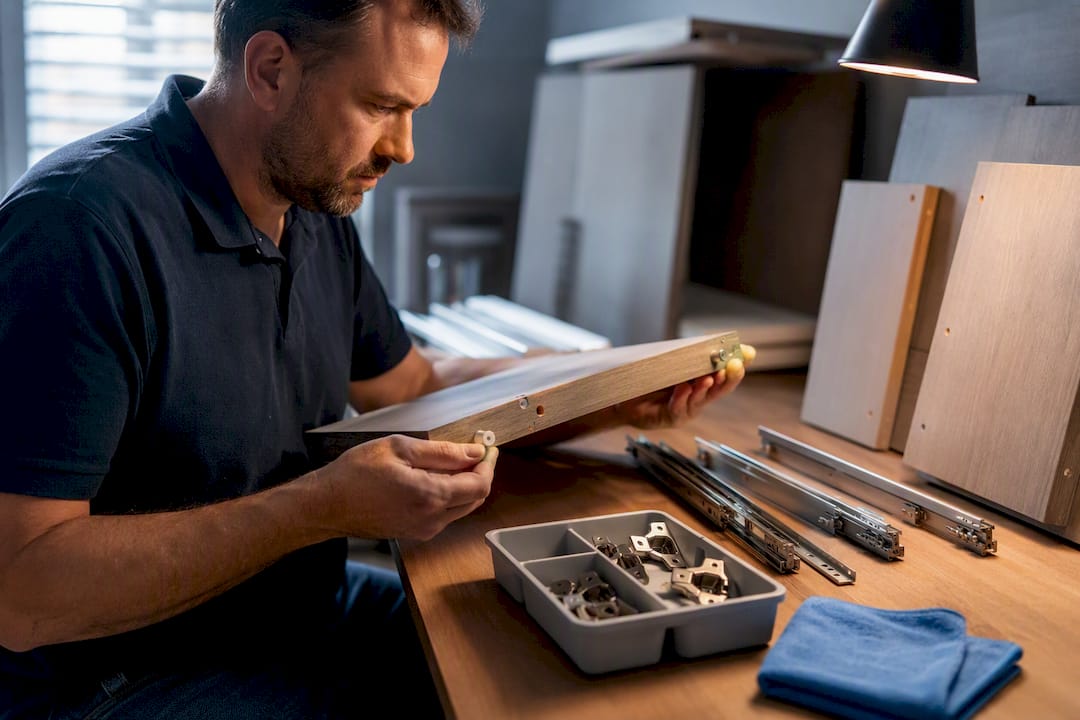
- Hardware standard: soft-close hinges rated for at least 50,000 cycles, and drawer slides rated for a minimum 75-pound load, full extension.
- Standard sizes and tolerances: base cabinets in consistent 3-inch width increments, wall cabinets matched to a single reveal dimension across every unit, and a written tolerance (typically 1/16 inch) for factory-cut openings.
Nail down these four items in the spec and your general contractor stops fielding "which cabinet goes where" calls during install week.
Plywood, MDF, or Thermofoil: Which Material Actually Holds Up?
Plywood boxes resist moisture swelling and hold screws better than particleboard over a long-term hold period, which is particularly important in kitchens and baths with daily humidity cycles. MDF door faces take paint evenly and resist warping better than solid wood in humid climates, but they chip at the edges if a mover or tenant is careless. Thermofoil wraps a vinyl finish over an MDF substrate, and multifamily suppliers frequently recommend it because the finish never needs repainting between tenant turns, and large orders come out color-matched with none of the sheen variation you get from job-site painted doors, a point 4C Cabinets makes to owners weighing finish options.
Melamine works for interior cabinet boxes where nobody sees the surface, but it chips at cut edges faster than thermofoil on exposed faces.
- Plywood boxes: best moisture and screw-holding performance, moderate cost premium over particleboard.
- Paint-grade MDF doors: smooth, consistent look, works well for Class A finishes, vulnerable to edge chipping.
- Thermofoil doors: lowest maintenance, best color consistency across bulk orders, limited high-end appeal.
- Melamine interiors: acceptable for hidden cabinet boxes, not recommended for exposed faces.
Pro Tip: Order finish samples from the actual production run, not a catalog swatch, before you approve color across 100+ units. Thermofoil and paint batches can drift slightly between production runs, and catching that before delivery beats catching it during a punch list.
How Long Does Cabinet Delivery Take on a Multifamily Project?
Typical lead times for multifamily cabinet orders run 90 to 120 days, depending on order size and how much customization you specify. Standard sizes with stock finishes sit at the shorter end of that range; custom door profiles or nonstandard finish colors push you toward 120 days or beyond.
- Lock the spec early. Finalize box construction, door material, and hardware before you release drawings for pricing, since late changes reset the production queue.
- Order in phases that match your build schedule. Staged deliveries tied to building completion reduce on-site storage needs and damage risk from stacking units in unfinished spaces.
- Request shop drawings before production. Shop drawing review catches dimensional conflicts on paper instead of during a live install.
- Verify field dimensions before final cut. A quick field check against approved drawings prevents the most common cause of on-site rework: framing that shifted slightly from the original plan.
- Set acceptance checkpoints per phase. Sign off on each delivered batch before the next one ships, so a defect in unit 20 doesn't surface after unit 80 is already installed.
Ask your supplier directly whether they offer project-management support for scheduling and jobsite coordination. That single service often determines whether your install crew works efficiently or waits around for missing pieces.
Where Should You Spend, and Where Can You Cut?
Per-unit cabinet cost breaks down into three drivers: box material, door face, and hardware grade. Box material carries the biggest long-term impact because a weak box shows up as sagging shelves and loose hinges within two or three years, generating maintenance calls that cost more than the material savings ever did.
The smartest value-engineering move is keeping the plywood box and downgrading the door face, not the reverse. One documented case: a 233-unit project upgraded to plywood box construction and still saved roughly $230,000 overall by holding the line on box quality while adjusting door specs and negotiating volume pricing.
Bulk purchasing tactics that actually move your budget:
- Lock pricing by coordinating procurement across the entire unit count in phases, which can improve cost efficiency compared to negotiating separately per building.
- Standardize one door profile and one hardware set across every unit type to qualify for volume discounts.
- Accept thermofoil over paint-grade where tenant turnover is high, since it cuts both material cost and future refinishing calls.
- Avoid cutting box material thickness or joinery quality. That savings gets erased by warranty claims within a few years.
How Long Should Multifamily Cabinets Actually Last?
Plywood boxes with commercial hardware generally perform well for over a decade under standard multifamily turnover, while particleboard boxes with lower-grade hardware tend to show signs of wear and failure notably earlier. That gap alone usually justifies the plywood spec on lifecycle cost, not just upfront price.
Build a maintenance schedule that includes annual hinge and slide inspection, plus a small stock of matching spare doors and drawer fronts for tenant damage repairs. Your warranty should specify parts coverage of at least 5 years and a defined response time, ideally 30 days or less, for replacement parts on active units. Thermofoil and closed-grain finishes resist scuffs and cleaning chemicals better than open-grain painted wood, which reduces the number of tenant-damage work orders your maintenance team fields each year.
Cabinet Bid Specs: What to Write and What to Ask Suppliers
Your written spec should name material grade, finish tolerance, delivery schedule, installation scope, and acceptance criteria in plain contract language. Vague terms like "quality plywood" or "standard hardware" leave room for a supplier to substitute cheaper stock mid-order.
Before you award a bid, ask every supplier these questions:
- What is your current lead time for an order this size, and does it change with custom finishes?
- Do you provide shop drawings and sample approval before production starts?
- Can you support staged, phased delivery matched to a multi-building schedule?
- What warranty terms and response times apply to defective or damaged units?
- Can you provide references from a comparable multifamily project?
Red flags that should end a bid conversation fast: no shop drawings offered, delivery dates described only as "estimated," and no verifiable project references. Build in an acceptance and holdback clause tied to each delivery phase, so payment follows performance instead of a single lump commitment upfront.
Why some cabinet suppliers fit the multifamily procurement model
Some suppliers build plywood-box cabinets with solid wood doors and offer trade pricing and fast shipping designed to close the gap between a signed contract and a finished punch list. That combination directly answers the two things this guide keeps returning to: durable construction and a supplier that won't blow your schedule.
Certain suppliers bring a level of hands-on attention that larger factory operations often lose at scale. The procurement steps outlined above, locking specs early, requesting samples, verifying field dimensions, phasing delivery, align with how some suppliers structure orders for contractors and property managers running multi-unit builds.
Scaling Cabinet Orders Without Losing Color Match
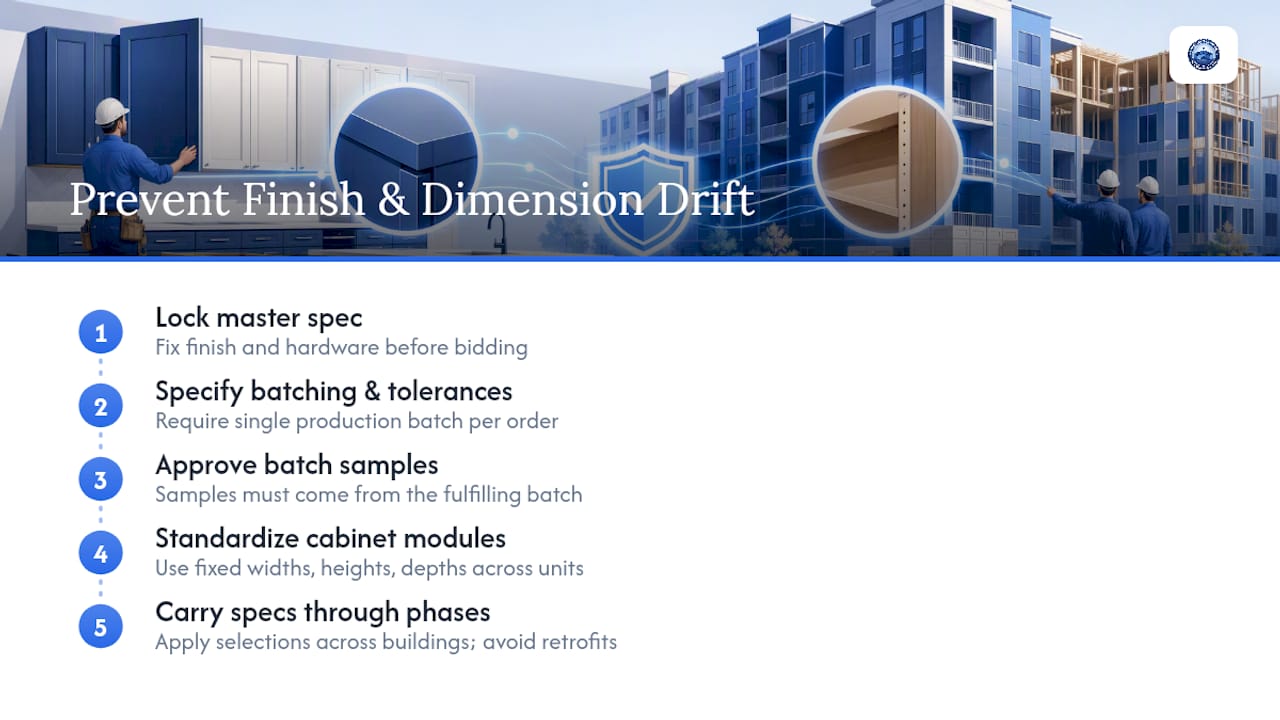
Repeatability is the real test of a multifamily cabinet spec. A design that looks great in one unit and drifts in finish or dimension by unit 40 creates a punch list nightmare, and it's the single most common failure point property developers report on large orders.
Color and finish matching depend on production batching, not just the paint formula. Paint-grade and thermofoil finishes matched from a single production run stay consistent within a tight tolerance, but ordering the same "color" across multiple separate runs months apart introduces visible variation, especially under the fluorescent lighting common in leasing offices and model units. Ask your supplier whether your full order ships from one production batch or several, and specify that finish samples come from the batch that will actually fill your order, not a general catalog chip.
Dimensional consistency matters just as much as color. Standardizing on one cabinet module system, meaning a fixed set of widths, heights, and depths used across every unit type, means your installation crew handles the same hardware and the same cut list on unit 5 as unit 105. That consistency cuts install labor time because crews stop relearning a new configuration for every floor plan variation.
For projects spanning multiple buildings or phases, lock your finish and hardware selections at the master spec level before the first unit breaks ground. Retrofitting a color match after 50 units are already installed costs far more than getting the batching and tolerance language right in the original bid package.
What Design Trends Matter for Multifamily Kitchens Right Now?
Multifamily developers in 2026 are leaning toward two-tone cabinet layouts, painted upper cabinets paired with a contrasting wood-look or thermofoil lower run, because it reads as upscale without the cost of full solid wood construction across every box. Shaker-style doors remain the dominant profile for a simple reason: the flat panel with a routed edge shows less wear at high-touch points than ornate raised-panel doors, and it never looks dated the way heavily detailed profiles eventually do.
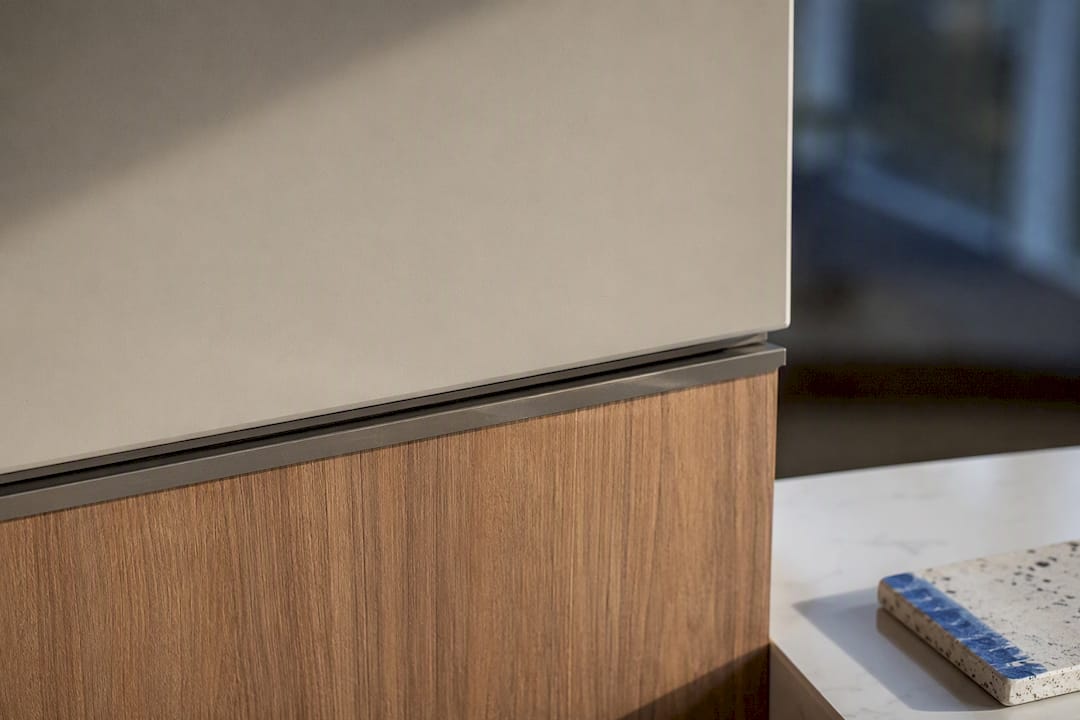
Handleless or slim-profile hardware is becoming more popular in premium projects, influenced by tenant preferences, although minimalist hardware can show fingerprints and wear more quickly on certain finish types.
Customization within a multifamily budget usually means picking from a limited, pre-approved palette rather than fully custom millwork. A door style guide can help you match profile choices to your asset class before locking the spec. Smart storage inserts, pull-out trash bins, adjustable shelving, and vertical tray dividers, add tenant-facing value at a marginal cost increase per unit, and they're increasingly expected in Class A and B new construction rather than treated as an upgrade. Coordinating cabinet finish decisions with adjacent interior finishes, including door and closet hardware throughout the unit, is worth planning early; resources like interior door replacement guidance cover how these finish decisions read together across a full unit.
What Warranty and Support Should You Expect After Installation?
A commercial multifamily warranty should cover box construction and hardware failure for a minimum of 5 years, with door finish defects covered separately since finish wear and structural failure are different risks with different failure timelines. Ask for a written response time on replacement parts, ideally under 30 days, because a warranty with no service-level commitment is only a promise on paper.
Post-installation support matters more on multifamily projects than single-family renovations, since damage and defect claims arrive in waves tied to lease turnover rather than a single move-in date. Suppliers with ADA-compliant cabinet options and turnkey installation support are generally better equipped to handle ongoing service requests, because they've already built the infrastructure for jobsite coordination during initial installation.
Request a defined spare-parts stocking plan as part of your contract, not just a general warranty statement. Matching doors, drawer fronts, and hardware for units 3 and 4 years down the line becomes difficult if the original production run and finish batch aren't documented and held on file by the supplier. A property management team that keeps a small on-site stock of matching parts, sourced directly from the original order, cuts turnaround time on unit turns dramatically compared to reordering from scratch each time.
Coordinate warranty language with your general contractor's own workmanship warranty so responsibility for installation-related versus product-related defects is clear before a claim ever comes in. Ambiguity here is where warranty disputes usually start.
Author Perspective: The Three Things Every Project Should Demand
Every multifamily cabinet decision comes down to three priorities, in order: durability first, schedule second, repeatability third. Get the box material and hardware grade right, and everything downstream, maintenance calls, tenant complaints, warranty claims, gets easier. Get the schedule wrong, and none of the material quality matters because your units sit empty past turnover deadlines.
Cost and long-term value aren't opposites here. The cheapest spec on paper is rarely the cheapest one over a 10-year hold period, and the projects that manage this well treat the box material as fixed and the door face as the actual budget lever. Before you finalize a bid package, walk your spec against the checklist above line by line.
— Nathan
How Best Cabinet Specialist Supports Multifamily Cabinet Orders
Certain suppliers offer developers a faster path to consistent, durable cabinets than the typical custom-shop timeline, without requiring sacrifice of plywood box construction to hit a budget number. Orders may combine plywood boxes and solid wood doors with trade pricing for bulk purchasing and fast shipping to help prevent procurement delays.
Requesting samples, spec sheets, or a project quote is straightforward: reach out through Best Cabinet Specialist with your unit count and target finish, and the team will walk you through door style options and delivery timing for your specific project size. If you're still finalizing your finish palette, the modern cabinet ideas guide is a useful starting point before you lock your bid package. Start with a quote request today and get real lead times for your unit count instead of a generic estimate.
Sources
- Multifamily Cabinetry Supplier | Factory-Direct Cabinets | URBN
- Multi-Family Cabinets, Countertops, and More | 4C Cabinets