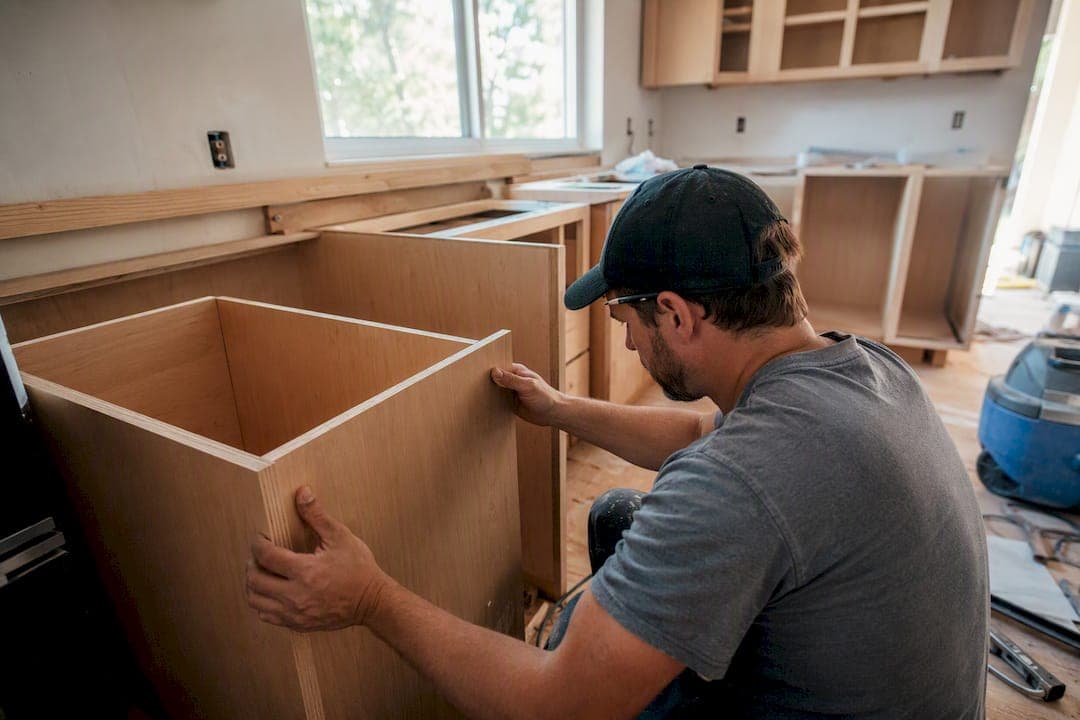
Expect trade discounts typically ranging from moderate to substantial percentages off retail depending on order volume, with per-linear-foot pricing running $150 to $500 installed and stock cabinets sitting at the low end of that band. Semi-custom and custom lines push higher once you factor in door style, finish, and modifications. If you quote by the linear foot without confirming per-cabinet pricing, you're leaving margin on the table or setting up a change order fight later.
Here's the quick reference before you build a bid:
- Trade discount bands: 10 to 20% for small or first-time orders, 25 to 35% for established trade accounts, 40%+ for volume builders and repeat commercial work.
- Order-size triggers: many suppliers set minimums around $1,000 to $2,500 wholesale, or a set number of linear feet, before trade pricing kicks in.
- Per-linear-foot ranges: stock/RTA runs $100 to $300, semi-custom $200 to $400, custom $400 to $1,200 or more, all before installation.
Next step: get a cabinet-by-cabinet itemized quote before you lock a client price, and build labor, delivery, and modifications into the number separately rather than folding them into a single per-foot estimate.
Key Takeaways
Contractor pricing on cabinets hinges on trade discount tier, product type, and whether modifications and labor are itemized separately from the headline quote.
| Point | Details |
|---|---|
| Trade discounts scale with volume | Expect 10 to 20% on small orders and 25 to 35%+ once you're an established trade account. |
| Per-linear-foot pricing is a starting point | Installed cabinets run $150 to $500 per linear foot, but confirm cabinet-by-cabinet pricing before ordering. |
| Labor varies widely by region | National labor-only installation averages fall between $388 and $1,802 depending on scope and location. |
| Modifications inflate quotes | Accessories and finish upgrades commonly add 15 to 35% above the base cabinet price. |
| Best Cabinet Specialist supports trade workflows | Trade pricing, plywood construction, and fast shipping make it a practical supplier option for contractor-scale projects. |
Table of Contents
- How Contractor Trade Discounts Actually Work
- What Do Cabinets Actually Cost Per Linear Foot?
- How Should You Price Cabinets for a Client Quote?
- How Do You Get Trade Pricing From a Cabinet Supplier?
- Sample Cabinet Job Estimates for Small, Average, and Large Kitchens
- How Best Cabinet Specialist Fits Into Your Trade Workflow
- Why Contractors Underprice Cabinets More Often Than They Overprice Them
- Get Trade Pricing and Fast Shipping With Best Cabinet Specialist
- Frequently Asked Questions
- Sources
How Contractor Trade Discounts Actually Work
Trade programs aren't a single number. Most suppliers structure discounts in tiers tied to annual spend, order frequency, or account type, not just the size of one order.
"Up to 50% off" in a supplier's marketing usually describes the ceiling reserved for the top volume tier, not the starting offer. Read the fine print on qualifying thresholds before you bake that number into a bid.
- Business verification (resale certificate, contractor license) is standard before any trade account opens.
- Order minimums often reset per project, not per year, so consolidating smaller jobs into one purchase order helps.
- Lead times shrink for suppliers who prioritize trade accounts over retail during peak renovation season.
Pro Tip: Ask your supplier whether stacking a scheduled delivery window with a slower production month unlocks a better rate. Off-peak timing is one of the easiest levers to negotiate, and it costs you nothing but flexibility.
What Do Cabinets Actually Cost Per Linear Foot?
Cost benchmarks vary by cabinet tier, and conflating "product price" with "installed price" is the fastest way to underbid a job. Installed cabinet costs commonly run $150 to $500 per linear foot, or $4,500 to $15,000 total for a standard kitchen, depending on whether you're working with stock, semi-custom, or custom boxes.
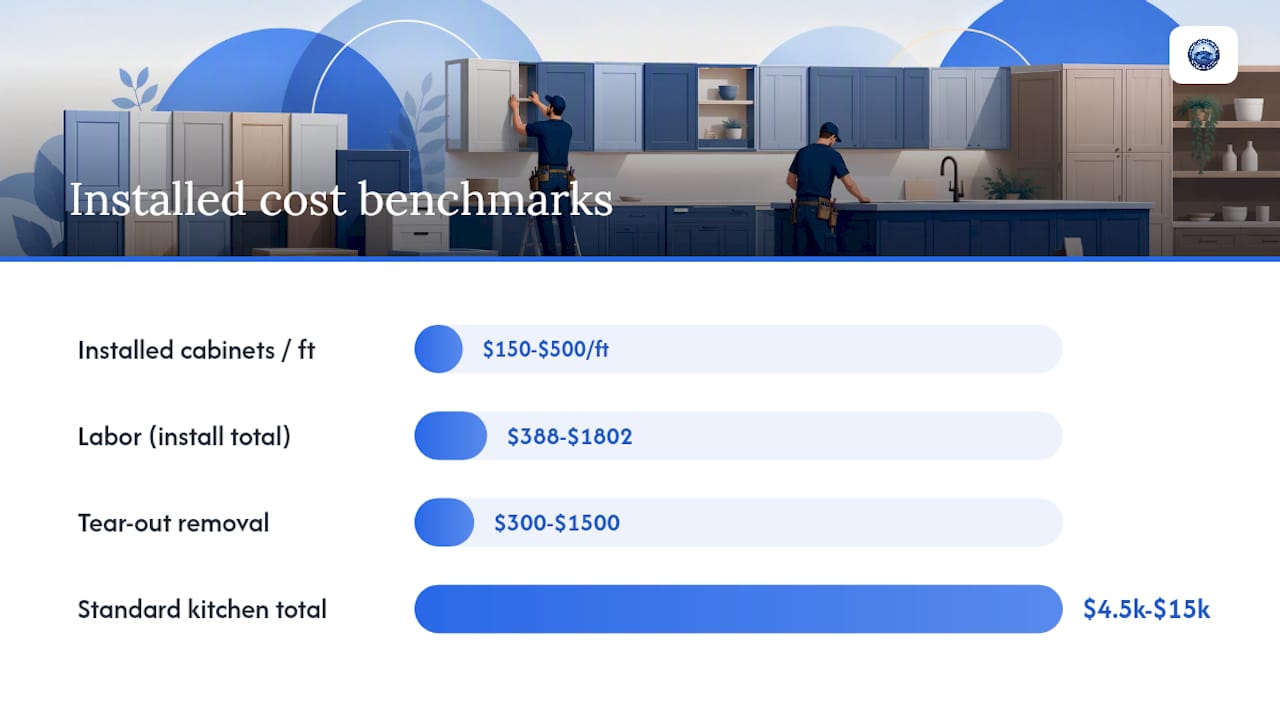
Labor alone averages $388 to $1,802 nationally for cabinet-only installation, with wide swings based on kitchen size, cabinet count, and regional labor rates. Tear-out of existing cabinets typically adds $300 to $1,500, and some installers fold that into their base labor quote rather than billing it separately.
A few things shape these numbers more than most contractors expect:
- Access and layout complexity (corner units, soffits, uneven walls) can push labor 15 to 25% above baseline.
- Cabinetry typically represents 25 to 35% of a full kitchen remodel budget, which is a useful sanity check when a client pushes back on your number.
- Delivery, disposal fees, and permit costs are frequently excluded from headline per-linear-foot quotes.
Statistic Callout: For a 25-linear-foot kitchen, midrange installed totals commonly land between $16,000 and $22,000. That figure assumes standard access, no structural changes, and removal handled as a separate or included line item, so confirm those assumptions before quoting a client the same range.
How Should You Price Cabinets for a Client Quote?
Converting your supplier invoice into a client price comes down to three common methods, and picking the wrong one for the job type is where margin disappears. A reliable framework for per-linear-foot budgeting helps early in the sales process, but it should never be the final invoice basis.
- Percentage markup on cost: typically 20 to 40% over your net supplier price, scaled up for high-end or design-heavy jobs.
- Fixed-per-cabinet fee: a flat dollar amount per box regardless of size, common on RTA and stock jobs where install time is predictable.
- Blended per-linear-foot rate: combines product, hardware, and labor into one number, useful for quick client-facing estimates but risky if modifications aren't priced separately.
Bundling demolition, countertop coordination, and plumbing disconnect/reconnect into one line item simplifies the client invoice and typically improves your effective margin, since clients rarely price-shop bundled services the way they'd shop kitchen transformations on a budget alone.
How Do You Get Trade Pricing From a Cabinet Supplier?
Qualifying for a trade account isn't complicated, but suppliers do expect documentation upfront.
- Gather your paperwork. A business license, resale or tax-exempt certificate, and proof of contractor registration cover most supplier applications.
- Apply for a trade or wholesale account. Most cabinet suppliers process this online or through a dedicated trade contact within a few business days.
- Provide a projected annual spend estimate. This is what determines your starting discount tier, so be realistic but don't undersell your volume.
- Confirm order minimums and lead times in writing. Verbal quotes on discount percentages shift once the order is actually placed.
Bring a portfolio of recent jobs to any in-person supplier meeting. It signals volume and consistency, which are the two things that move you up a discount tier.
- Consolidate multiple small jobs into a single purchase order when possible.
- Time orders for off-peak production windows to negotiate faster lead times or a modest price break.
- Ask about loyalty pricing after your second or third order. This is where most contractors leave money unclaimed simply because they didn't ask.
Sample Cabinet Job Estimates for Small, Average, and Large Kitchens
These three examples assume standard access, existing cabinet removal billed separately, and stock or semi-custom product tiers. Adjust upward for custom work or difficult access.
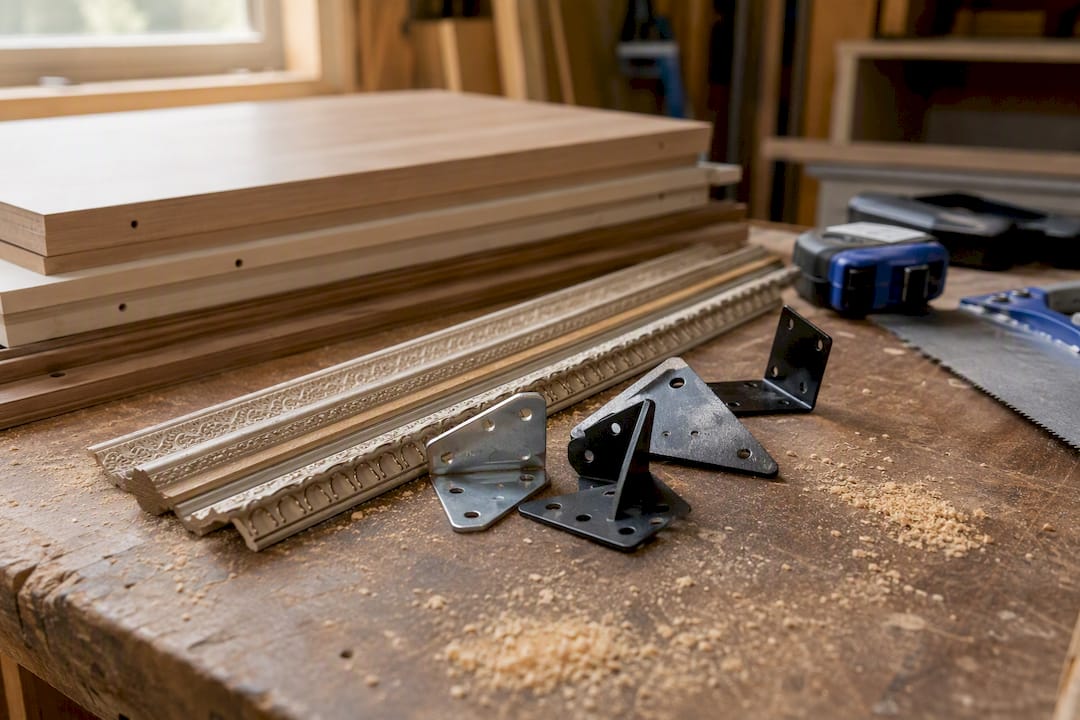
Modifications and accessories (fillers, crown molding, finished panels) commonly add 15 to 35% above the headline product price, and that's the single most underestimated line item in contractor bids. Build a contingency of at least 10% into every estimate, and confirm cabinet-by-cabinet pricing before finalizing the order, since per-linear-foot budgeting alone can miss the final invoice by 10 to 20%.
How Best Cabinet Specialist Fits Into Your Trade Workflow
Best Cabinet Specialist builds its trade program around what actually slows contractors down: long lead times and unpredictable pricing. Cabinets ship with plywood boxes, solid wood doors, and soft-close hardware standard, so you're not upselling clients on features that should already be included.
Contractors juggling multiple job sites need suppliers who don't turn a two-week lead time into a six-week wait. Fast shipping paired with bulk order support keeps a schedule intact instead of stalling a crew on-site.
- Trade pricing scales with order volume, from single-kitchen jobs to multi-unit builder packages.
- Bulk ordering support simplifies purchasing across several projects at once.
- A women-owned and veteran-owned business background shapes a service model built around responsiveness, not just catalog size.
Why Contractors Underprice Cabinets More Often Than They Overprice Them
The conventional advice tells contractors to "get multiple quotes" and "negotiate hard on discounts." That's not wrong, but it misses where the real money leaks: modifications, delivery, and removal that never make it into the original bid.
The contractors who protect their margin best aren't the ones chasing the highest discount tier. They're the ones who quote per-cabinet instead of per-linear-foot, and who separate labor, delivery, and modifications into their own line items before a client ever sees a number.
If you take one thing from this guide, let it be this: negotiate the discount, but audit the assumptions behind every quote you build. That's where the real pricing discipline lives.
Get Trade Pricing and Fast Shipping With Best Cabinet Specialist
Most cabinet suppliers force a trade-off: better pricing means longer lead times, or fast shipping means paying closer to retail. Best Cabinet Specialist is built to avoid that compromise for contractors who need both.

Cabinets ship with plywood boxes and solid wood doors as the standard build, not an upcharge, and trade pricing scales with your order volume whether you're outfitting one kitchen or a multi-unit build. Bulk order support and quick turnaround mean fewer delays between signing a client contract and getting cabinets on-site. If you're ready to see how trade pricing works for your next project, start a trade account with Best Cabinet Specialist and get a quote built around your actual order size.
Frequently Asked Questions
What discount can contractors typically get on kitchen cabinets?
How much should I charge a client per linear foot for cabinets? Installed pricing typically falls between $150 and $500 per linear foot depending on cabinet tier, but that figure should guide early budgeting only. Confirm your actual markup against a cabinet-by-cabinet itemized quote before finalizing a client price.
Does contractor pricing on cabinets include installation labor? Not usually. Product cost and installation labor are typically quoted separately, with national labor-only averages ranging from $388 to $1,802 depending on kitchen size and region.
What's the biggest hidden cost contractors miss when pricing cabinet jobs?
How do I qualify for a trade or wholesale cabinet account? Most suppliers require a business license, resale certificate, and proof of contractor status, along with a projected annual spend estimate that determines your starting discount tier.
Sources
- 2026 Cabinet Installation Cost: Prices & Factors | Thumbtack
- How Much Do Kitchen Cabinets Cost? (2026 Prices) - HomeGuide
- Cost of Kitchen Cabinets (2026 Guide) | Fin Home Blog
Local labor rates, project access, and material quality will shift every number above, so treat these as starting benchmarks, not fixed prices.