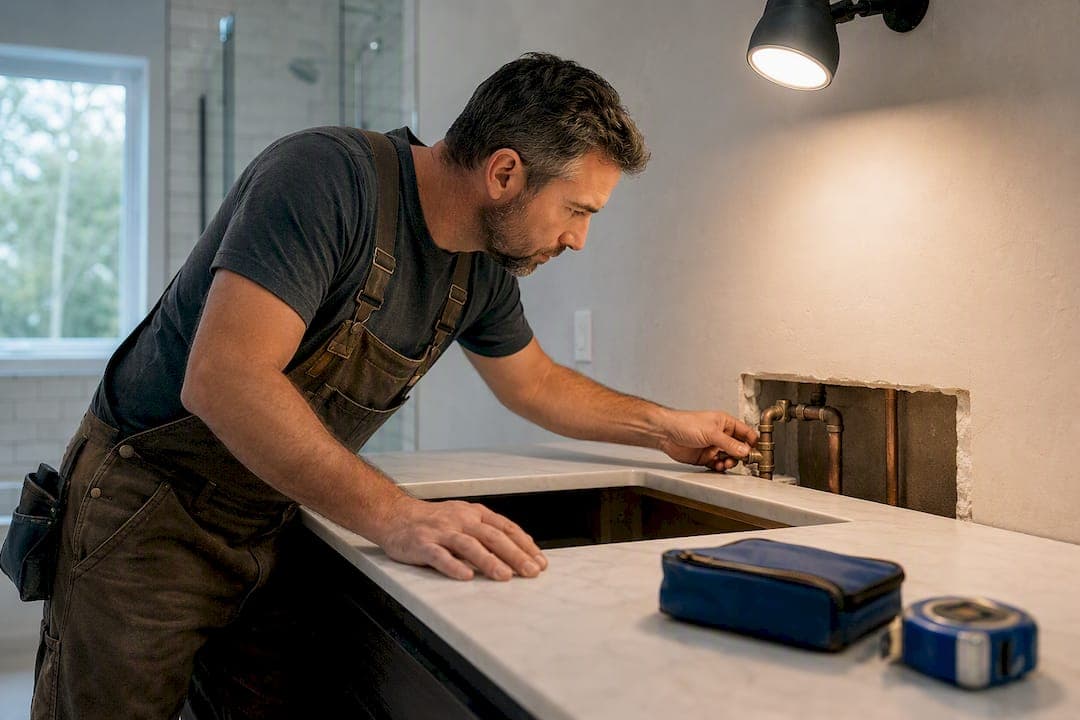
Most homeowners pay between $300 and $2,500 for a fully installed bathroom vanity, with $900 to $1,500 being the sweet spot where cabinet quality, countertop, and basic plumbing hookup all land comfortably. Cabinet tier drives the biggest swing in price, followed by countertop material and whether your plumbing needs any rework. Custom builds and layout changes push well past $5,000, and your local labor market can shift totals by several hundred dollars either way.
TL;DR:
- Cabinet construction quality, size, and configuration are the main factors driving vanity costs, with custom builds often exceeding $5,000.
- A basic vanity installation with existing plumbing typically costs $300 to $900, but adding plumbing modifications or larger sizes can significantly increase expenses.
- Countertop material choice can add thousands to the total, with natural stone like granite and quartz costing $40 to $200 per square foot installed.
- Regional labor rates and permit requirements can cause installation costs to vary by several hundred dollars, especially in high-demand metropolitan areas.
- Budgeting for hidden costs such as old vanity removal, backsplash, and potential drywall repair requires adding a 10 to 15 percent contingency upfront.
Table of Contents
- How Much Does a Bathroom Vanity Cost by Tier?
- What Drives the Cost of a Bathroom Vanity?
- How Much Do Countertop and Sink Materials Add?
- What Do Installation and Plumbing Actually Cost?
- What Hidden Costs Should You Budget For?
- How Do You Compare Vanity Quotes the Right Way?
- Why Does the Same Vanity Cost More in Some Cities?
- What Financing and Cost-Saving Options Actually Help?
- Publisher's Perspective on Vanity Value
- Ready to Shop Bathroom Cabinets?
- Where to Verify Local Pricing and Labor Rates
- Sources
- FAQ
How Much Does a Bathroom Vanity Cost by Tier?
Your budget tier sets the ceiling before you even pick a faucet. Stock vanities with a basic laminate or cultured marble top run about $300 to $900 installed, while semi-custom units with quartz or solid-surface tops typically land between $900 and $2,500. Premium and fully custom vanities, especially double-sink or floating designs with natural stone, often exceed $5,000.
Size matters too. A 24 inch single-sink vanity might come in near the low end of its tier, while a 60 inch double-sink unit can push a mid-range project past $3,000 once you add a second faucet set and drain line.
| Tier | Installed Range | Typical Width Example |
|---|---|---|
| Budget/Stock | $300–$900 | 24"–30" single sink |
| Mid-Range/Semi-Custom | $900–$2,500 | 24"–30" single or small double |
| Premium/Custom | $2,500–$5,000+ | 60"+ double sink |
Homewyse's national cost calculator pegs a basic installation starting around $576 to $871 per vanity, which lines up closely with the low end of mid-range pricing once you factor in a real-world faucet and sink. Regional labor rates and material availability shift these numbers, sometimes by a few hundred dollars in either direction.
What Drives the Cost of a Bathroom Vanity?
Cabinet construction accounts for more of your total than most homeowners expect. A vanity built with a plywood box, solid wood doors, and soft-close hinges costs more upfront than a particleboard equivalent, but it resists moisture damage and holds up to daily use for decades instead of years.
Three factors move the price most:
- Cabinet tier: stock units are mass-produced in standard sizes, semi-custom lets you pick finishes and some dimensions, and custom cabinetry is built to exact specifications at a premium.
- Construction quality: dovetail joints, plywood sides, and soft-close drawer slides add cost but extend the vanity's working life significantly.
- Configuration: a single-sink 30 inch vanity costs far less than a 60 inch double-sink unit, since you're paying for double the cabinet, a wider top, and a second faucet hookup.
- Mounting style: floating (wall-mounted) vanities need reinforced blocking behind the drywall, which adds labor that a floor-standing unit doesn't require.
If you're comparing cabinet options, it helps to understand how vanity materials hold up around sink cutouts before committing to a size or configuration, since moisture exposure near the sink is where cheap construction fails first.
How Much Do Countertop and Sink Materials Add?
Countertop choice can swing your total by thousands, and it's usually where homeowners either save smartly or overspend on looks they don't need. Laminate remains the cheapest option and works fine for guest bathrooms, while quartz commonly runs $50 to $200 per square foot installed, and granite or other natural stone often falls in the $40 to $100 per square foot range for standard slabs.
Sink type adds another layer to the equation:
- Cultured marble: budget-friendly, comes with an integrated sink, and holds up reasonably well if sealed properly.
- Laminate: the least expensive surface, best paired with a drop-in sink for simple installs.
- Quartz: durable, low-maintenance, and available with integral or undermount sink options.
- Granite: natural variation in every slab, typically undermount, and needs periodic sealing.
- Solid surface: seamless integral sinks reduce grout lines and cleaning, at a moderate cost premium.
- Concrete: custom-poured options look striking but usually cost more than quartz once fabrication is included.
Undermount sinks generally cost more to install than drop-in units because the countertop needs precise edge finishing. Vessel sinks add plumbing height requirements that can affect faucet selection. Match your countertop to your cabinet tier: a $400 stock cabinet paired with a $150 per square foot stone slab is an odd allocation of your budget.
What Do Installation and Plumbing Actually Cost?
A straight swap, same size, same sink location, same drain and supply lines, is the cheapest labor scenario you can ask for. Homewyse-style calculators confirm that preserving your existing plumbing layout keeps installation costs low, while any rough-in change adds real money fast.
By the numbers: Plumbing rough-in changes, like moving a drain or relocating a supply line, typically add $300 to $1,500 or more to a project, on top of base installation labor.
Here's what typically pushes labor costs higher:
- Converting a single sink to a double sink requires a second drain and supply line.
- Moving a drain more than a few inches often means opening the wall or floor.
- Installing a floating vanity requires blocking behind drywall for structural support.
- Switching from a drop-in to an undermount sink adds countertop fabrication time.
Ask any contractor for a written scope that separates cabinet installation, plumbing labor, and countertop fabrication. National averages don't reflect what plumbers and carpenters charge in your zip code, and BLS wage data by occupation is a solid way to sanity-check a quote that seems unusually high or low for your area.
What Hidden Costs Should You Budget For?
The vanity price you see online rarely includes everything you'll actually pay. Old vanity removal and disposal typically runs $115 to $500, and heavy stone tops can trigger an extra delivery or handling fee.
Other line items that catch people off guard:
- Backsplash installation, priced separately from the countertop in most quotes.
- Permit fees, only required in some jurisdictions when plumbing locations change.
- Drywall or subfloor repair if water damage is discovered once the old vanity comes out.
- Delivery surcharges for oversized or stone-top vanities shipped to rural addresses.
Pro Tip: Add a 10 to 15 percent contingency to any vanity budget. Hidden water damage behind an old cabinet is one of the most common surprises contractors find once demolition starts.
How Do You Compare Vanity Quotes the Right Way?
A vague quote is how homeowners end up paying more than they planned. Before you sign off on any bid, walk through this checklist.
- Confirm every line item is itemized: cabinet, countertop, sink, faucet, plumbing labor, disposal, and delivery should each appear separately, not bundled into one number.
- Ask about lead time: stock cabinets ship fast, but custom orders can take six to ten weeks, and that timeline should be in writing.
- Clarify who installs what: some suppliers handle cabinet delivery only, leaving plumbing and countertop fabrication to separate contractors.
- Ask about warranty coverage: cabinet construction warranties vary widely, and a longer warranty on plywood boxes and doors signals more confidence in the build.
- Get the change-order policy in writing: know what happens to the price if hidden plumbing or wall damage turns up mid-project.
- Keep your existing plumbing layout if your budget is tight: this single decision often saves more than any material downgrade.
- Choose quartz or cultured marble over natural stone if you want durability without the premium price: both hold up well daily without the sealing maintenance granite requires.
Before finalizing dimensions, double check your space using a proper vanity measuring process, since a quote based on the wrong width will need revising later.
Why Does the Same Vanity Cost More in Some Cities?
National price ranges are a starting point, not a guarantee. Labor availability is the biggest regional swing factor: metro areas with high construction demand, coastal cities and fast-growing metro regions in particular, often see plumber and carpenter hourly rates well above the national median, while smaller markets in the Midwest and South tend to run lower.
Material costs vary regionally too, though less dramatically than labor. Stone slabs shipped long distances from fabrication hubs can carry higher freight costs in areas far from major distribution centers. Import tariffs and shipping delays on quartz and granite occasionally cause temporary regional price spikes that don't show up in national averages.
Local permit requirements add another wrinkle. Some municipalities require permits for any plumbing relocation, even minor ones, while others only require permits for full rough-in changes. That paperwork adds both time and a modest fee that varies by city and county.
The most reliable way to localize a national estimate is to check actual wage data for your area. The Bureau of Labor Statistics' occupational wage data breaks down median hourly rates for plumbers and carpenters by metro area, which lets you multiply expected labor hours by your actual local rate instead of guessing from a national average. If your metro area shows plumber wages 20 percent above the national median, expect your installation labor line to run higher too, even if the vanity itself costs the same as it would anywhere else.
Rural areas sometimes offset higher delivery costs with lower labor rates, which can balance out to a similar total despite very different line items.
What Financing and Cost-Saving Options Actually Help?
Stretching a vanity budget doesn't require cutting corners on construction quality. The smartest savings usually come from decisions made before you order anything.
Keeping your existing plumbing layout is the single biggest cost lever available to most homeowners. Moving a drain or supply line by even a foot can add hundreds of dollars in labor, so measuring your current setup and choosing a vanity that fits it saves real money without sacrificing quality.
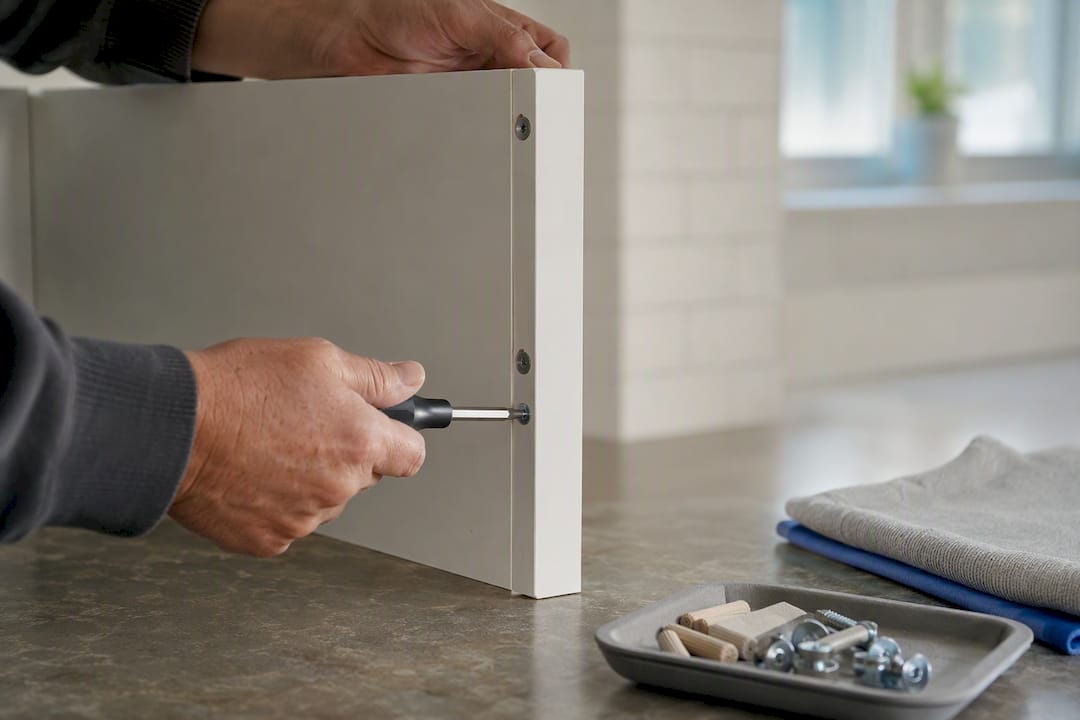
Buying RTA (ready-to-assemble) cabinets instead of pre-assembled units lowers both the purchase price and shipping cost, since flat-packed cabinets ship more efficiently. You do the final assembly, which takes a few hours with basic tools, but you skip the labor markup that comes with a fully built unit.
Timing your purchase around off-season renovation windows, typically late fall and winter when contractor demand dips, can also shave installation costs since labor availability loosens up.
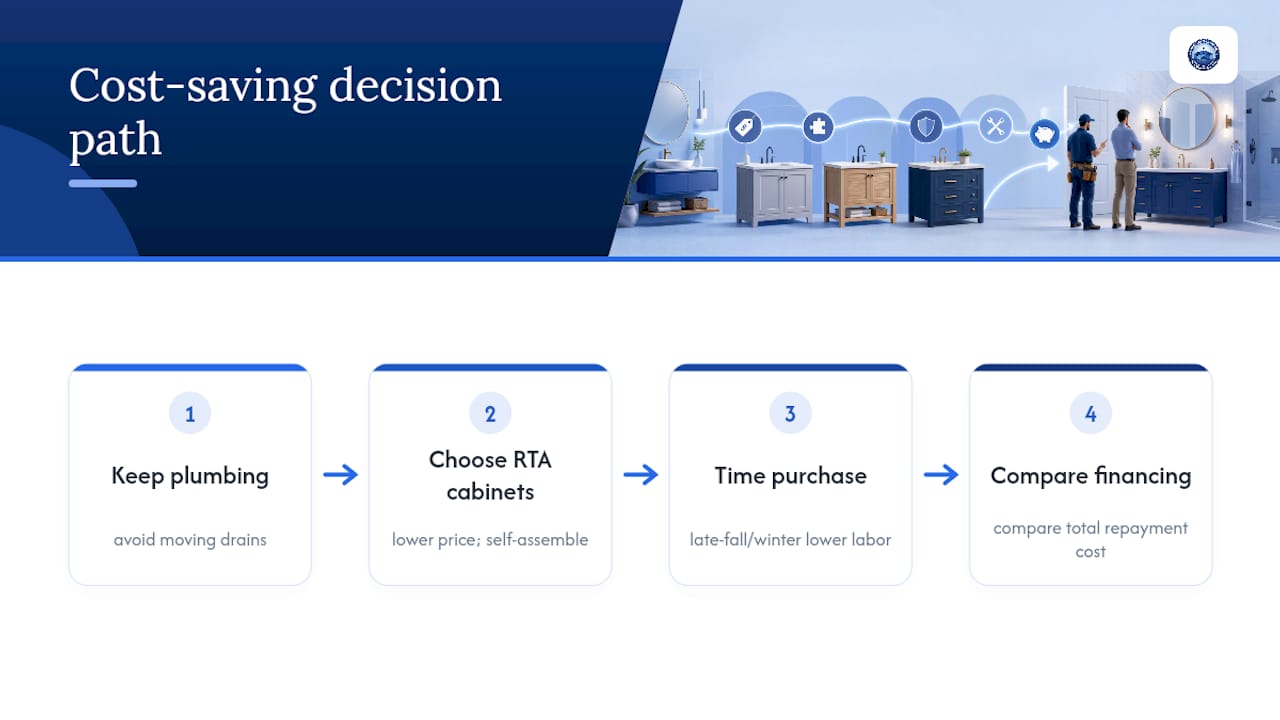
For financing, many home improvement retailers and cabinet suppliers offer store credit cards or short-term promotional financing with no interest if paid within a set window, often six to eighteen months. Home equity lines of credit remain a common option for larger bathroom remodels that bundle vanity replacement with other work, since the interest rate is typically lower than a credit card. Whatever financing route you choose, compare the total repayment cost, not just the monthly payment, before signing.
Publisher's Perspective on Vanity Value
Best Cabinet Specialist is a women-owned and veteran-owned business built around a simple frustration: cabinetry that takes months to arrive and costs more than it should. Their vanities use plywood boxes and solid wood doors, construction details that improve durability compared to cheaper alternatives. Whatever tier fits your budget, compare full installed quotes and confirm the complete scope before you commit.
— Nathan
Ready to Shop Bathroom Cabinets?
Once you know your target price tier, the next step is picking cabinetry that matches it without the wait times that plague much of the cabinet industry. Best Cabinet Specialist's RTA cabinet lineup gives budget-minded homeowners plywood-box construction and solid wood doors at a lower price point than pre-assembled units, since flat-pack shipping cuts freight costs and you handle final assembly yourself.

If you'd rather skip assembly entirely, the assembled cabinets category arrives ready to set in place, which shortens your installation timeline if you're working with a contractor on a fixed schedule. When you request a quote, have your vanity width, preferred finish, and single or double sink configuration ready. Shipping timelines and finish availability vary by product line, so confirm both before ordering. Once your cabinet order is placed, get a local installer to quote plumbing and countertop work separately so your final installed price reflects your actual site conditions, not just the national averages in this guide.
Where to Verify Local Pricing and Labor Rates
- HomeAdvisor's vanity installation cost guide for national price ranges.
- Homewyse's cost calculator to customize estimates for your project.
- BLS Occupational Employment and Wage Statistics for local plumber and carpenter wages.
- NKBA for kitchen and bath industry design standards.
Sources
- What Does Bathroom Vanity Installation Cost 2025 Data | HomeAdvisor
- Bathroom Vanity Cost (2026 Guide) | Fin Home Blog
- Cost to Install Bathroom Vanity | Homewyse
- Occupational Employment and Wage Statistics | Bureau of Labor Statistics
FAQ
Why Are Bathroom Vanities So Expensive?
Cabinet construction, countertop material, and plumbing labor all add up quickly, especially with solid wood doors, plywood boxes, and stone countertops. Custom sizing and double-sink configurations increase both material and labor costs, which is why premium installed vanities can exceed $5,000 while stock units stay under $900.
How Much Does It Cost to Put in a New Bathroom Vanity?
A basic installed vanity swap, same size and same plumbing location, typically costs $300 to $900, while mid-range projects with a quartz or solid-surface top run $900 to $2,500. Moving plumbing or upsizing to a double sink pushes costs well beyond that range.
How Much Does It Cost to Buy a Vanity Without Installation?
Cabinet-only prices vary widely by tier, size, and material, and current pricing for RTA and assembled bathroom cabinets from Best Cabinet Specialist is available directly on their product pages. Stock cabinets from big-box retailers generally start under $300, while semi-custom and custom units cost significantly more before you even add a countertop.
Who Has the Best Price on Bathroom Vanities?
Pricing depends heavily on cabinet construction, size, and whether you choose RTA or pre-assembled units. Homeowners looking for durable plywood-box construction without the long lead times common in the cabinet industry can compare RTA and assembled options to see which fits their budget and timeline best.