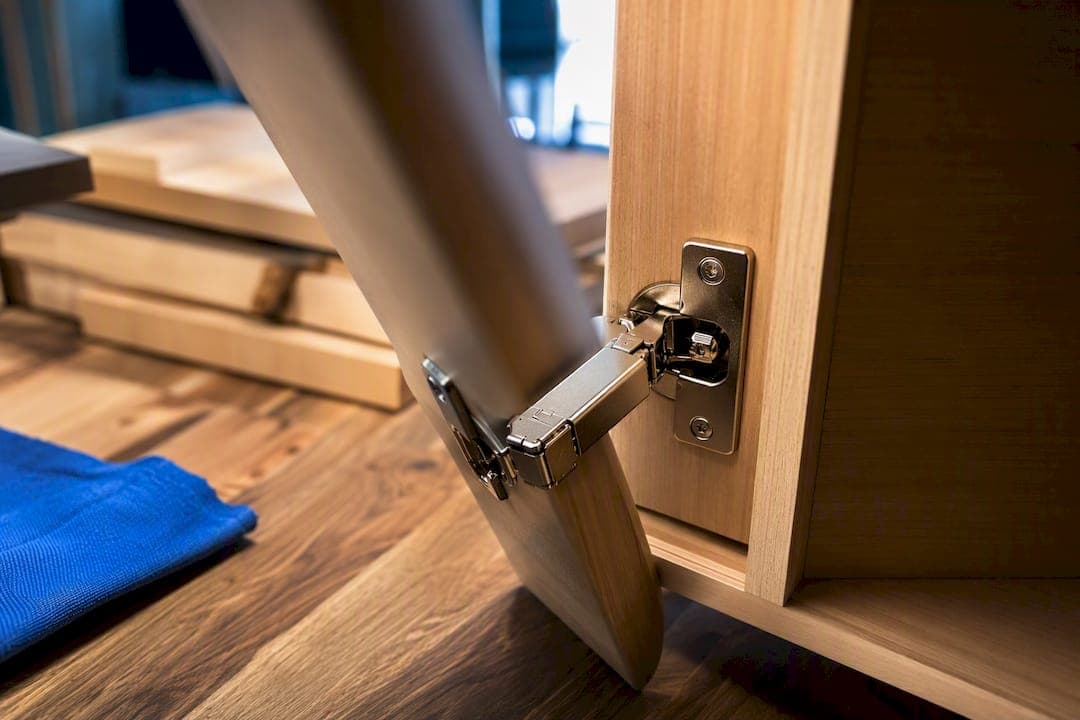
Soft-close hinges use a hydraulic damper to slow the door's final travel to a whisper-quiet stop, while self-close hinges rely on a torsion spring to pull the door shut with a firm, audible snap. Choose soft-close for kitchens, bathrooms, and anywhere quiet matters; choose self-close for rentals, exterior doors, and high-traffic commercial settings where budget and durability lead. Check the warranty terms either way, since that's often where the real trade-off shows up.
TL;DR:
- Soft-close hinges perform best in quiet spaces like kitchens and bathrooms, but they tend to have shorter warranties and can stiffen in cold environments.
- Self-close hinges are more durable and cost less, making them suitable for high-traffic, outdoor, or rental applications with frequent use.
- Hybrid hinges combine spring and damping mechanisms, providing guaranteed closure with quieter landings, ideal for multi-use buildings and commercial projects.
- For heavy solid wood doors or high-cycle environments, matching hinge weight ratings to door material is more critical than choosing soft-close over self-close.
- Always verify hinge type compatibility with your cabinet style and intended use to ensure optimal performance and longevity.
Table of Contents
- How Soft-Close Hinges Work: Mechanics, Variants, and Quick ID
- How Self-Close Hinges Work: Spring and Cam Mechanics
- Soft-Close vs Self-Close: A Side-by-Side Look
- Pros and Cons: Weighing the Trade-Offs
- Which Hinge Fits Your Project? A Room-by-Room Guide
- When a Hybrid Self-Closing Soft-Close Hinge Makes Sense
- Best Cabinet Specialist's Take on Hinge Pairing
- What I've Learned Installing Both Hinge Types
- Order Cabinets With the Right Hinges Already Paired
- Sources
How Soft-Close Hinges Work: Mechanics, Variants, and Quick ID
Soft-close hinges get their signature "hush" from a small hydraulic or pneumatic damper built into or attached to the hinge cup. As the door approaches the last 10 degrees or so of travel, the damper's piston compresses fluid or air, absorbing momentum instead of letting the door slam into the cabinet frame. That's the whole trick: it doesn't stop the door early, it just controls the final few inches.
You'll find the damping mechanism in a few common forms. Some hinges have an integrated cartridge built right into the hinge body. Others use a separate soft-close adapter clipped onto a standard hinge, and soft-close slides apply the same idea to drawers instead of doors.
Only a true damper can guarantee that impact-free landing every time, which is the detail that separates a genuinely soft-close hinge from a door that merely closes quietly under light pressure.
Pro Tip: Run the 10-second test before you buy replacement hardware: push the door most of the way shut and let go. If it slows down and settles silently in the last few inches, you're looking at a soft-close hinge. Flip it over and check the hinge arm for a small plunger or cartridge to confirm.
Soft-close hinges reduce latch speed by roughly 35% and run 4 to 6 decibels quieter at the point of closure compared with spring-only hinges, based on trade testing. That's a noticeable difference if you've ever lived with a cabinet that slams every time someone grabs a coffee mug.
The trade-off is sensitivity. Hydraulic fluid changes viscosity with temperature, so a damper that feels perfectly smooth in a heated kitchen can act sluggish or stiff in an unconditioned garage or a cold mudroom. Warranties on hydraulic dampers also tend to run shorter than their mechanical counterparts, often landing closer to the 3-year mark rather than a decade.
How Self-Close Hinges Work: Spring and Cam Mechanics
Self-close hinges skip the fluid entirely and rely on a torsion spring or a cam mechanism built into the hinge knuckle. Once the door swings past a set engagement point, usually around 30 degrees from closed, the spring takes over and pulls the door the rest of the way shut on its own. There's no damping involved, so the door accelerates into the frame and lands with an audible click or snap.
That mechanical simplicity is the whole appeal. A few variants show up in the market:
- Simple mechanical spring hinges, the most common and least expensive version
- Hybrid units that pair spring pull-in with a small amount of damping for a softer landing
- Motorized self-closing applications, more common in commercial or accessibility-focused installs
Identifying a self-close hinge is straightforward once you know what to listen for. There's a distinct snap at the end of the swing, and if you look inside the hinge arm, you won't find a cartridge or plunger, just the spring mechanism and sometimes a tension adjustment screw. That adjustment screw is worth noting during installation, since it lets you fine-tune how hard the door pulls shut, which matters for heavier solid wood doors.
Because there's no fluid seal to fail, mechanical self-close hinges typically need less maintenance over their lifespan and tend to carry longer warranty periods, sometimes stretching toward 10 years compared to the shorter windows common on hydraulic dampers.
Soft-Close vs Self-Close: A Side-by-Side Look
Mapping the two hinge types against the factors that actually matter on a job site makes the decision a lot easier than reading spec sheets in isolation.
| Factor | Soft-Close | Self-Close |
|---|---|---|
| Mechanism | Hydraulic or pneumatic damper | Torsion spring or cam |
| Noise level | Quiet, cushioned landing | Audible snap or click |
| Best use case | Kitchens, bathrooms, premium remodels | Rentals, exteriors, high-traffic commercial |
| Durability / warranty | Often shorter warranty, temperature-sensitive | Often longer warranty, fewer failure points |
| Cost | Higher per hinge | Roughly 10% less than hydraulic soft-close |
A few things stand out once you line them up this way:
- The mechanism difference explains almost everything else on this list. A damper controls speed; a spring guarantees closure.
- Perceived quality tends to favor soft-close, which is part of why it's become the default upgrade in mid-range and high-end kitchen lines.
- Self-close hardware holds up better in unconditioned spaces, wind-exposed exterior doors, and anywhere the hinge sees dozens of cycles a day.
- Heavy solid wood doors put more strain on either mechanism, so matching hinge weight rating to door material matters more than the soft-close-versus-self-close question itself.
Pros and Cons: Weighing the Trade-Offs
Every hinge choice comes down to what you're willing to trade for what you actually need. Here's how the two stack up in practical terms:
- Soft-close pros: Near-silent operation, reduced risk of pinched fingers, and a perceived-luxury factor that homeowners consistently notice during remodels.
- Soft-close cons: Higher upfront cost, dampers that can wear out or stiffen in cold spaces, and shorter typical warranty coverage.
- Self-close pros: Lower cost, simpler maintenance with no fluid seals to fail, and reliable closure even under heavy daily use.
- Self-close cons: Noticeably louder, and spring tension can fatigue over years of heavy cycling, requiring occasional adjustment.
- Hybrid hinges: Combine spring pull-in with light damping, addressing both the noise complaint and the guaranteed-closure requirement in one unit, at a price that sits between the two.
Which Hinge Fits Your Project? A Room-by-Room Guide
Matching hinge type to room and traffic pattern is the fastest way to avoid buyer's remorse. Kitchens and primary bathrooms almost always call for soft-close. That's where slamming drawers and cabinet doors get noticed most, and where the quiet, controlled motion earns its higher price tag.
Nurseries and bedrooms lean soft-close too, mostly for the safety angle. A door that eases shut instead of snapping closed reduces the risk of pinched fingers for small hands.
Rentals, laundry rooms, and secondary storage cabinets are where self-close earns its keep. Tenants and heavy daily use punish hardware, and the lower cost plus longer warranty make mechanical spring hinges the more sensible spec.
Exterior doors and commercial applications favor self-close almost by default, since wind exposure and temperature swings can throw off a hydraulic damper's timing. A simple rule of thumb: if a door sees more than 50 open-close cycles a day, or lives outside a conditioned space, lean mechanical.
Pro Tip: For retrofits, always confirm overlay type and hinge template before ordering. A face-frame cabinet and a frameless RTA cabinet often require different hinge cups, and mismatched templates are the most common reason a hinge swap turns into a bigger repair.
- Kitchens and bathrooms: soft-close for noise control and finish protection
- Nurseries and bedrooms: soft-close for finger-pinch safety
- Rentals and utility spaces: self-close for cost and simple upkeep
- Exterior and commercial doors: self-close for temperature stability and cycle life
When a Hybrid Self-Closing Soft-Close Hinge Makes Sense
Hybrid hinges combine spring-driven pull-in with hydraulic damping, so the door closes automatically every time but still lands soft instead of slamming. That's the best of both worlds on paper, and in mixed-use buildings it often is.
These hinges tend to show up in multi-family housing, hospitality projects, and mixed-use buildings where designers need guaranteed closure for code or cleanliness reasons but can't sacrifice the quiet experience tenants expect.
- Expect a slightly firmer feel than pure soft-close, since the spring is still doing real work
- Budget for periodic tension checks, since two mechanisms mean two things that can eventually need adjustment
- Confirm cycle ratings against ANSI/BHMA commercial standards if you're specifying for a high-traffic building
Best Cabinet Specialist's Take on Hinge Pairing
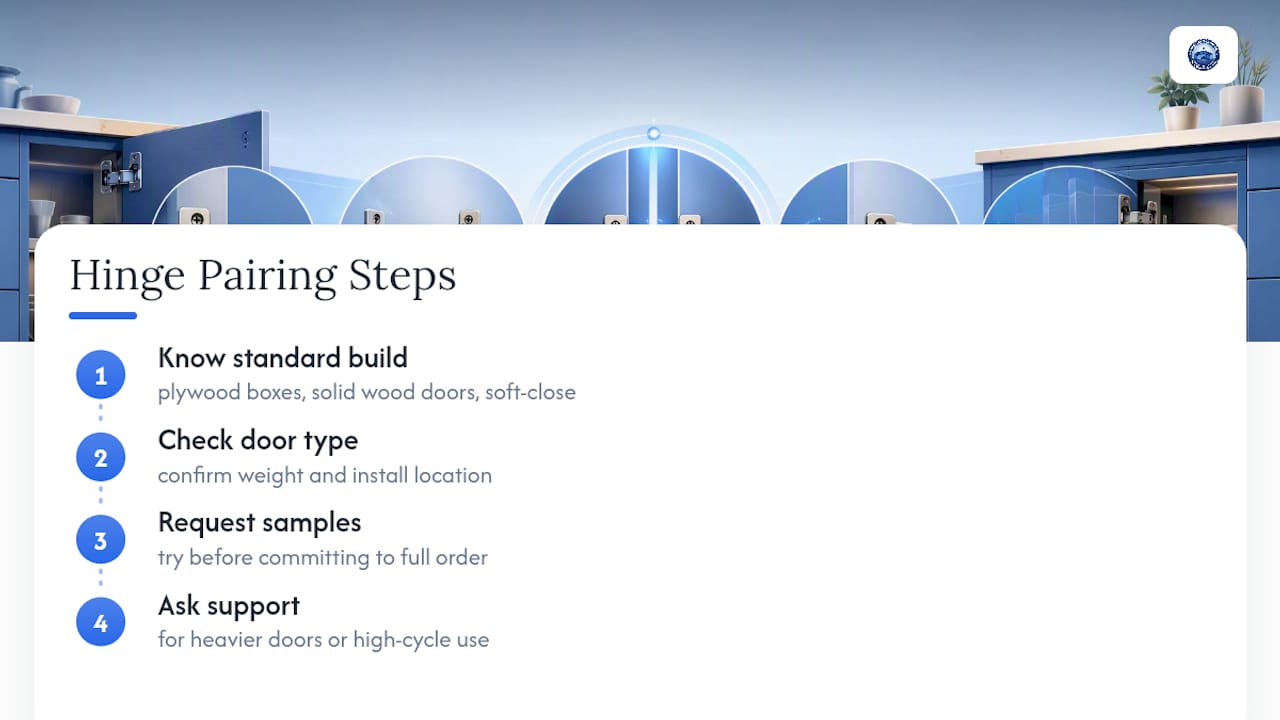
Best Cabinet Specialist builds every cabinet with plywood boxes and solid wood doors, and pairs them with soft-close hardware as a standard feature, not a pricey add-on. The company backs that craftsmanship with fast shipping, so your project doesn't stall waiting on hinges or hardware.
If you're not sure which hinge style fits your door weight or install location, check your door type first, request samples before committing to a full order, and reach out to Best Cabinet Specialist's support team for pairing recommendations on heavier solid wood doors or high-cycle applications.
What I've Learned Installing Both Hinge Types
My rule of thumb after years around cabinet installs: if you'd notice the sound in a quiet room, spend the money on soft-close. If the door lives somewhere loud or hard-working, like a garage or a rental unit, save the cash and go mechanical. I've seen homeowners regret cheaping out on a primary kitchen and just as many contractors regret specifying soft-close on a job site door that got slammed fifty times a day. Check the warranty and cycle rating before you buy, not after something fails.
— Nathan
Order Cabinets With the Right Hinges Already Paired
Best Cabinet Specialist takes the guesswork out of hinge pairing by building soft-close hardware directly into its plywood-box, solid-wood-door cabinets, so you're not shopping for hinges separately or hoping they fit. Whether you're outfitting a kitchen that needs quiet, premium-feeling doors or a rental property that needs durable, low-maintenance hardware, the cabinets ship fast and arrive ready for install.
If you're ready to move forward on a kitchen or bathroom project, visit Best Cabinet Specialist to browse cabinet styles, request samples, and get a quote built around the hinge performance your space actually needs.
Sources
- Soft Close vs Self Close Cabinet Hinges — Wurth Louis and Company
- Soft Close vs Self Close Cabinet Hinges: Differences, Pros & Cons 2025 Guide — Casta Cabinetry