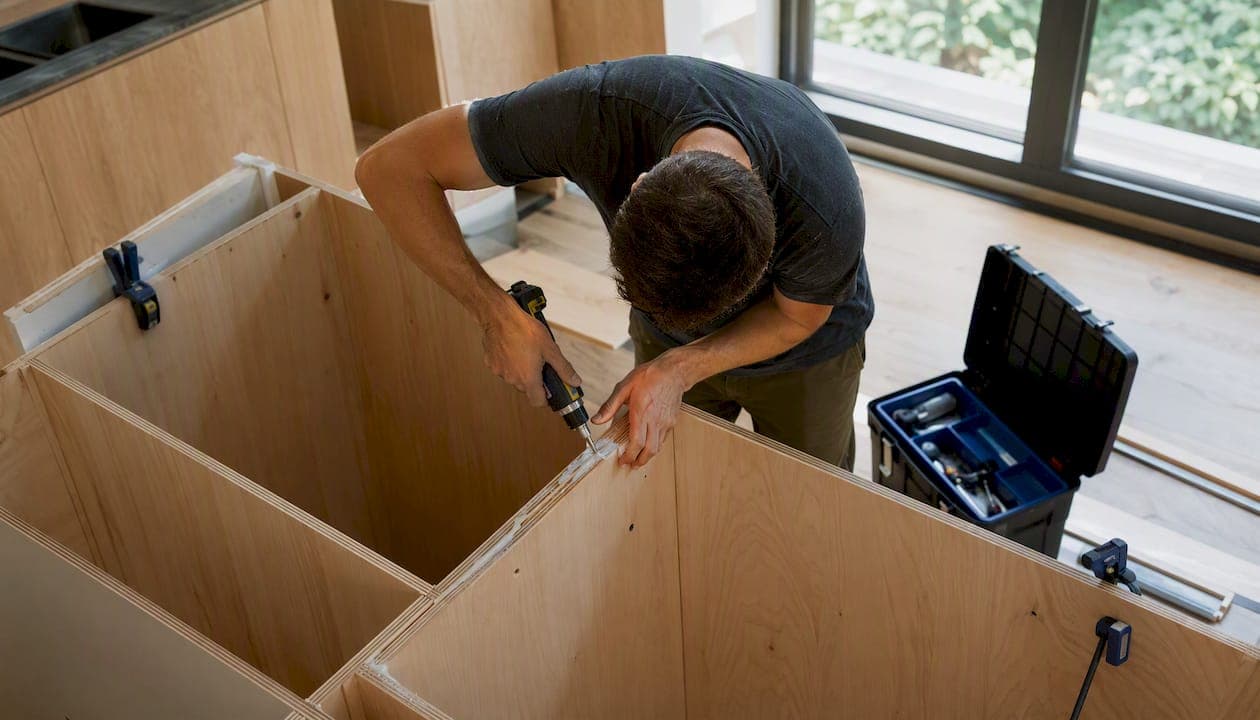
Any cabinet containing composite wood panels sold or installed in the United States must meet CARB Phase 2 / TSCA Title VI formaldehyde emission limits. Before you accept delivery or sign a purchase order, do three things: ask your supplier for a Certificate of Compliance or Declaration of Conformity, check that the product label reads "CARB Phase 2," "TSCA Title VI," "NAF," or "ULEF," and request third-party lab test documentation or mill traceability records.
Copy this checklist and send it to your supplier or include it in your RFI:
- Certificate of Compliance or Declaration of Conformity (signed, dated, product-specific)
- Product label confirming CARB Phase 2 / TSCA Title VI / NAF / ULEF designation
- Third-party laboratory test report (batch or lot specific)
- Mill or producer identification and chain-of-custody records
- Safety Data Sheet (SDS) and product technical data sheet
Pro Tip: If a supplier hesitates or says compliance documentation "isn't available right now," treat that as a red flag and pause the order until paperwork arrives in writing.
Key Takeaways
TSCA Title VI / CARB Phase 2 limits are the procurement benchmark for composite wood cabinets across the entire United States, and every buyer should require written compliance documentation before accepting delivery.
| Point | Details |
|---|---|
| CARB Phase 2 is now federal law | TSCA Title VI made CARB Phase 2 limits the national standard; all U.S. buyers are covered. |
| Always request written documentation | A Certificate of Compliance, third-party lab report, and product label are the minimum acceptable proof. |
| Know which materials are regulated | Particleboard, MDF, thin MDF, and hardwood plywood in cabinets all require compliance docs; solid wood is exempt. |
| Ventilate after installation | Open windows and run exhaust fans for at least 72 hours after new cabinet installation to reduce off-gassing. |
| Best Cabinet Specialist | Offers plywood-construction cabinets with compliance documentation available for homeowners, contractors, and builders. |
Table of Contents
- What are CARB 2 cabinets and how does TSCA Title VI apply nationally?
- Which cabinet materials and components are covered, and what's typically exempt?
- How manufacturers meet CARB 2: adhesives, production controls, and testing
- How to verify CARB 2 / TSCA Title VI compliance before you buy or accept delivery
- Why CARB 2 compliance matters for indoor air and how to reduce exposure after installation
- How CARB Phase 2 became the U.S. standard and what to check when sourcing today
- Sample specification language and a procurement checklist for contractors and builders
- Why CARB 2 compliance is the baseline we recommend for every cabinet project
- Best Cabinet Specialist offers CARB 2–compliant cabinets with documentation ready
- Sources
What are CARB 2 cabinets and how does TSCA Title VI apply nationally?
CARB Phase 2 is the stricter phase of California's Airborne Toxic Control Measure (ATCM) for composite wood products, adopted by the California Air Resources Board (CARB). It sets maximum formaldehyde emission limits for hardwood plywood, particleboard, MDF, and thin MDF used in finished goods like cabinets, furniture, and flooring. The rule was designed to reduce indoor formaldehyde exposure, which is a known respiratory irritant and classified human carcinogen at sustained high concentrations.
The federal connection matters for every buyer outside California. The U.S. Environmental Protection Agency (EPA) adopted comparable emission limits under TSCA Title VI of the Toxic Substances Control Act, making the CARB Phase 2 framework effectively the national standard. Any composite wood panel or finished good containing regulated panels that is sold, supplied, or imported into the United States must comply, regardless of where it was manufactured or where the project is located.
The practical takeaway: CARB Phase 2 began as a California rule, but TSCA Title VI's national adoption means a contractor in Texas, a homeowner in Ohio, and a builder in Florida all face the same compliance requirement. Suppliers across the U.S. must be prepared to provide TSCA Title VI documentation for panels and finished goods.
Key designations to know:
- CARB Phase 2 / TSCA Title VI: the baseline compliance label for regulated composite wood
- NAF (No Added Formaldehyde): panels manufactured without formaldehyde-based adhesives, exceeding the standard limit
- ULEF (Ultra-Low-Emitting Formaldehyde): panels with emissions well below the standard threshold, with reduced third-party testing requirements
Pro Tip: The EPA's TSCA Title VI FAQ page is the fastest way to confirm what products are regulated and what labeling is required — bookmark it before your next procurement cycle.
Which cabinet materials and components are covered, and what's typically exempt?
Not every part of a cabinet triggers the rule. The regulation targets composite wood panels, not solid wood or metal. Knowing which components are regulated helps you ask the right questions at the submittal stage.
Regulated composite wood categories:
- Hardwood plywood (veneer and composite core)
- Particleboard
- Medium-density fiberboard (MDF)
- Thin MDF (under 8mm)
- Finished goods that contain any of the above (including assembled cabinets)
Typical cabinet parts made from regulated materials: box panels, shelves, drawer bottoms, cabinet backs, and doors made from MDF or particleboard cores.
Parts generally exempt: solid wood components (face frames, solid wood doors, wood drawer boxes), metal hardware, and glass inserts. Veneer-only surfaces applied over a non-composite substrate may also fall outside the rule depending on construction.
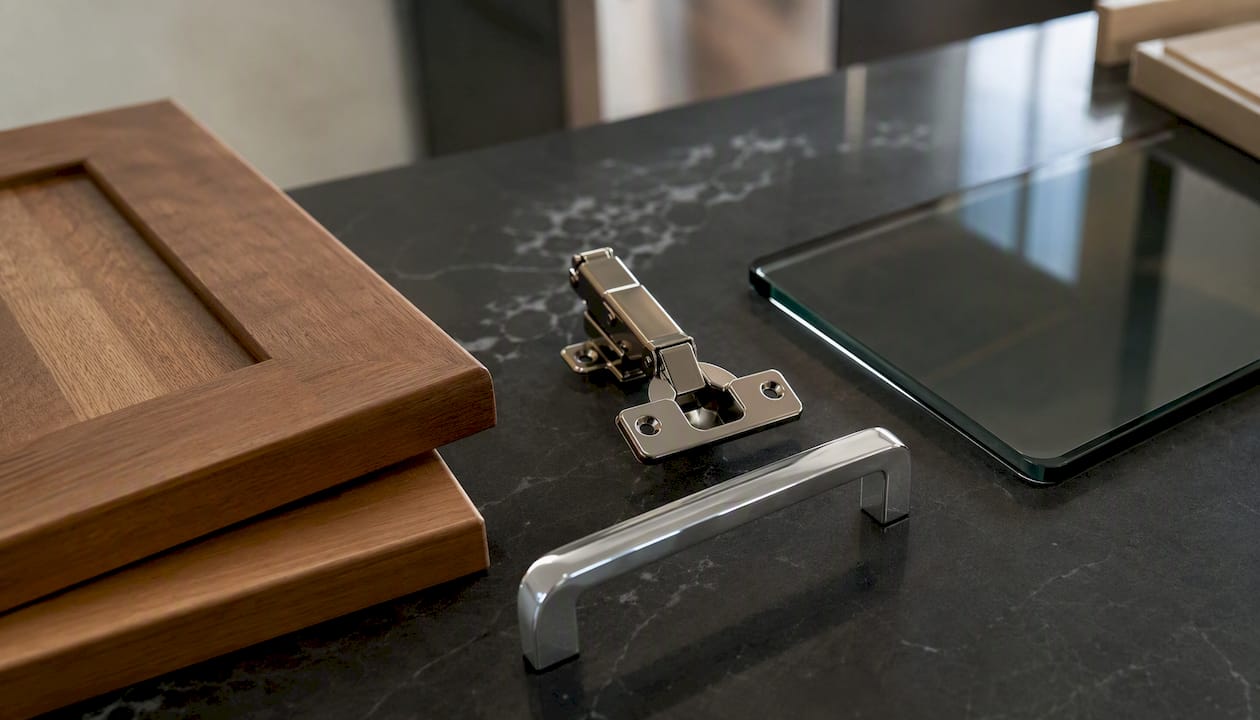
The CARB Phase 2 compliance overview from Tredi Interiors notes that finished goods containing regulated panels are covered even when the panels are not sold separately, which is why assembled cabinet packages require the same documentation as raw panel purchases.
Formaldehyde emission limits by product category (CARB Phase 2 / TSCA Title VI):
| Product Category | Maximum Emission Limit |
|---|---|
| Hardwood plywood | Very low formaldehyde emissions as mandated by CARB Phase 2 |
| Particleboard | Strict low formaldehyde emissions as required |
| MDF | Mandated to meet CARB Phase 2 emission standards |
| Thin MDF (≤8mm) | Regulated under CARB Phase 2 stringent emission limits |
Materials checklist for reviewing submittals or product specs:
- Confirm box construction material (plywood vs. particleboard vs. MDF) and request the corresponding limit documentation
- Verify door core material (solid wood is exempt; MDF-core doors require compliance docs)
- Check drawer box construction (solid wood or dovetail wood = exempt; MDF/particleboard = regulated)
- Ask whether shelves are solid wood, plywood, or particleboard — each has a different limit
- Confirm cabinet backs and panels are labeled or documented
How manufacturers meet CARB 2: adhesives, production controls, and testing
Meeting CARB Phase 2 is primarily an adhesive and manufacturing process decision. Most compliant cabinet manufacturers use one of three approaches.
Common manufacturing strategies:
- NAF resins: soy-based, protein-based, or other formaldehyde-free adhesives used in panel production; panels qualify for the NAF designation and typically exceed Phase 2 limits by a wide margin
- ULEF resins: low-formaldehyde adhesive systems that keep emissions well below the standard threshold; qualify for reduced third-party testing frequency
- All-plywood construction: plywood with NAF or ULEF adhesives is increasingly common in quality cabinet lines and tends to produce lower emissions than particleboard alternatives
- Sealed and finished panels: factory-applied finishes (lacquer, UV coating, thermofoil) slow off-gassing from the panel substrate, though they do not substitute for underlying compliance
The testing process follows a defined sequence:
- The panel manufacturer selects a CARB-approved third-party certifier (TPC) to oversee compliance
- The TPC conducts or witnesses laboratory testing using standard chamber test methods (such as ASTM E1333 or ASTM D6007) to measure formaldehyde emissions from panel samples
- Results are compared against the applicable limit for that product category
- Passing lots receive a Certificate of Compliance or Declaration of Conformity tied to the specific mill, product, and production period
- Chain-of-custody records link the certified panel to the finished cabinet
Manufacturer proof items to request:
- Mill certificate identifying the panel producer and TPC
- Chain-of-custody documentation linking panels to the finished cabinet
- Third-party lab test report (batch or lot specific, with test method identified)
- Certificate of Compliance or Declaration of Conformity
- Product label or packaging label showing CARB Phase 2 / TSCA Title VI / NAF / ULEF
Pro Tip: A supplier who can only offer verbal assurances or a generic "we're compliant" letter without a named TPC, a test method, and a lot-specific report is not providing adequate documentation. Verbal claims do not satisfy TSCA Title VI requirements at submittal or closeout.
How to verify CARB 2 / TSCA Title VI compliance before you buy or accept delivery
Verification is a document review process, not a visual inspection. Compliant panels look identical to non-compliant ones. The paperwork is the only reliable check.
Step-by-step verification process:
- Request the Certificate of Compliance or Declaration of Conformity before placing the order — not after
- Confirm the certificate names the specific product, mill, and TPC
- Ask for the third-party lab test report and verify the test method (ASTM E1333 or ASTM D6007 are standard)
- Check the product label on packaging for CARB Phase 2, TSCA Title VI, NAF, or ULEF language
- Request the SDS and product technical data sheet for each panel type used in the cabinet package
- Confirm mill or producer identification and chain-of-custody records if the project requires closeout documentation
Sample supplier questions to copy into your email or RFI:
- "Can you provide a Certificate of Compliance or Declaration of Conformity for the composite wood panels used in this cabinet line?"
- "Which CARB-approved third-party certifier (TPC) conducted or oversaw your emissions testing?"
- "What test method was used, and can you share the lot-specific lab report?"
- "Are the panels NAF or ULEF designated, or do they meet the standard CARB Phase 2 / TSCA Title VI limits?"
- "Is the CARB Phase 2 / TSCA Title VI designation printed on the product packaging or label?"
How to interpret the documents:
A valid Certificate of Compliance should name the manufacturer, the specific product or panel type, the applicable emission limit, the TPC, and the compliance date or production period. A lab report should identify the test method, the measured emission value, and a clear pass/fail result against the applicable limit. If the measured value is below the limit for that product category (see the table in the materials section above), the panel passes.
| Supplier Response | Action |
|---|---|
| Full documentation provided (CoC, lab report, label, mill ID) | Accept — proceed with order |
| Partial documentation (CoC only, no lab report or mill ID) | Conditional — hold order pending complete submittal |
| Verbal assurance only, no written documentation | Reject — do not accept delivery until paperwork is in hand |
| Documentation references a different product or lot | Escalate — request lot-specific docs matching your order |
For commercial projects, treat CARB 2 / TSCA Title VI paperwork as a standard submittal item. Missing documentation at closeout can delay certificate of occupancy and create liability exposure for the GC. The CabinetWorld procurement guide makes this point clearly: documentation is as important as the product itself.
Why CARB 2 compliance matters for indoor air and how to reduce exposure after installation
Formaldehyde off-gassing from composite wood panels is highest in the days and weeks immediately after installation. The EPA's formaldehyde guidance identifies formaldehyde as a respiratory irritant that can cause eye, nose, and throat irritation at lower concentrations and carries long-term health risks at sustained higher exposures. CARB Phase 2 / TSCA Title VI limits are set to keep indoor air concentrations at levels considered safe for continuous residential occupancy.
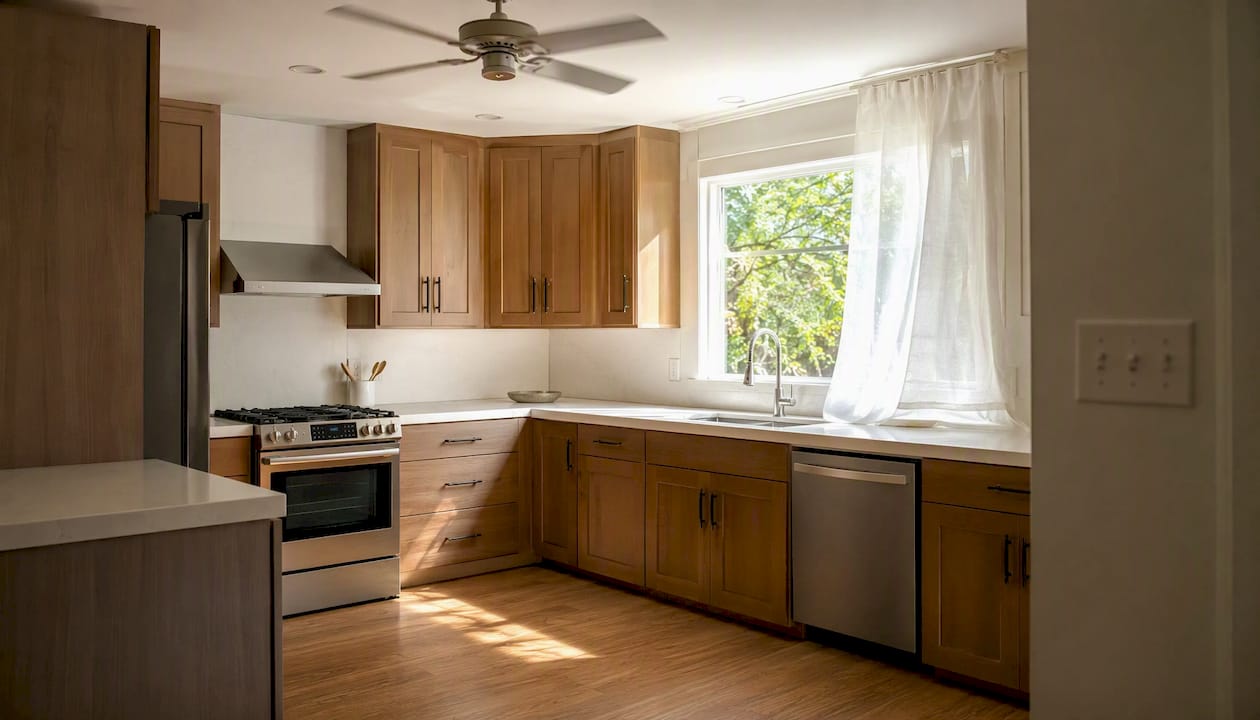
Buying compliant cabinets is the most effective single step. But even compliant panels off-gas at some level, particularly in the first 30–90 days, and the effect compounds when multiple new products are installed simultaneously.
Practical post-installation steps:
- Open windows and run exhaust fans for at least 72 hours after installation
- Maintain indoor humidity below 50% — higher humidity accelerates off-gassing from composite panels
- Leave cabinet doors and drawers open during the initial ventilation period
- Avoid layering other VOC sources (new paint, adhesives, flooring) in the same space at the same time
- Use a low-VOC or zero-VOC finish on any unfinished or cut panel edges exposed during installation
First 72 hours after installation:
- Ventilate continuously — open windows on opposite sides of the room to create cross-ventilation
- Run the kitchen exhaust fan or a portable air mover pointed toward an open window
- Keep children and pets out of the space during peak off-gassing
- Do not seal the kitchen (close doors to adjacent rooms, not to the outside)
First 3 months:
- Ventilate the kitchen for at least 15 minutes daily, even in cold weather
- Monitor humidity with an inexpensive hygrometer and use a dehumidifier if levels exceed 50%
- Wipe down interior cabinet surfaces with a damp cloth monthly to remove surface residue
- Avoid storing strong-smelling chemicals (cleaning products, paints) inside new cabinets during this period
Pro Tip: For occupied homes during installation, give the homeowner a simple ventilation card: open two windows, run the range hood, and stay out of the kitchen for the first four hours after the installer leaves each day. That single habit cuts peak exposure significantly.
How CARB Phase 2 became the U.S. standard and what to check when sourcing today
CARB Phase 2 took effect in phases between 2009 and 2012, establishing the emission limits that became the industry benchmark. The EPA then adopted those limits nationally under TSCA Title VI, with full enforcement beginning in 2019. From that point forward, any composite wood panel or finished good containing regulated panels sold or imported into the U.S. must meet the standard, regardless of origin.
Key milestones:
- 2009–2012: CARB Phase 2 limits phase in for hardwood plywood, particleboard, and MDF in California
- 2016: EPA finalizes TSCA Title VI, adopting comparable limits as the federal standard
- 2018–2019: TSCA Title VI enforcement begins; national compliance becomes mandatory for domestic manufacturers and importers
- Today: All composite wood panels and finished goods (including assembled cabinets) sold in the U.S. must meet TSCA Title VI / CARB Phase 2 limits
When sourcing domestically, confirm that the supplier's TPC is on the EPA's list of approved third-party certifiers. When importing panels or finished cabinets, the importer of record bears compliance responsibility under TSCA Title VI — a detail that matters for contractors sourcing directly from overseas manufacturers.
The EPA's TSCA Title VI program page is the authoritative source for current limits, approved TPCs, and labeling requirements. Check it before finalizing any supplier agreement.
Sample specification language and a procurement checklist for contractors and builders
Drop these templates directly into your submittals, purchase orders, or project specifications. Adjust the bracketed fields for your project.
Spec Template 1 — Owner/Architect language: "All composite wood panels and finished goods containing composite wood panels (including cabinets, shelving, and millwork) shall comply with TSCA Title VI and CARB Phase 2 emission limits. Contractor shall submit a Certificate of Compliance or Declaration of Conformity, third-party laboratory test reports, and product labels confirming compliance prior to installation."
Spec Template 2 — GC/Subcontractor purchase order language: "Supplier warrants that all composite wood products delivered under this order meet TSCA Title VI / CARB Phase 2 formaldehyde emission standards. Documentation including Certificate of Compliance, TPC identification, and lot-specific test reports shall accompany delivery or be provided within [X] business days of order confirmation."
Spec Template 3 — Closeout documentation requirement: "At project closeout, contractor shall provide the owner with copies of all TSCA Title VI / CARB Phase 2 Certificates of Compliance and third-party test reports for composite wood products installed under this contract."
Procurement checklist for project submittals:
- Required labeling confirmed on packaging (CARB Phase 2 / TSCA Title VI / NAF / ULEF)
- Certificate of Compliance or Declaration of Conformity received and filed
- Third-party lab test report on file (lot-specific, test method identified)
- Mill or producer ID and chain-of-custody records received
- SDS and product technical data sheet on file
- Acceptance criteria met (measured emissions below applicable limit per product category)
Trade tips:
- Add CARB 2 / TSCA Title VI compliance as a line item in your submittal log — treat it like fire rating or structural documentation
- Include the compliance requirement in your bid documents so suppliers price compliant products from the start
- At closeout, scan and upload all compliance docs to your project management platform alongside other O&M materials
Pro Tip: Require compliance documentation in your purchase order, not just your spec. A spec requirement without a corresponding PO clause is harder to enforce if a supplier delivers non-compliant material.
Why CARB 2 compliance is the baseline we recommend for every cabinet project
CARB Phase 2 / TSCA Title VI compliance is not a premium feature. It is the legal floor for composite wood products sold in the United States, and treating it as anything less puts homeowners, tenants, and building occupants at risk. What surprises many buyers is how easy it is to purchase non-compliant cabinets without realizing it, particularly through online channels where documentation is rarely surfaced at the point of sale.
The cabinets that hold up best over time, both structurally and for indoor air quality, tend to share a few traits: plywood box construction (which typically uses lower-emission adhesives than particleboard alternatives), documented compliance from a named TPC, and a supplier who can produce paperwork without hesitation. Those traits align directly with what Best Cabinet Specialist builds its product line around.
Best Cabinet Specialist offers CARB 2–compliant cabinets with documentation ready
Best Cabinet Specialist sources cabinets built with plywood box construction and solid wood doors, two construction choices that tend to produce lower formaldehyde emissions than particleboard-heavy alternatives. Every order ships fast, and compliance documentation is available to support your project submittals.
Whether you are a homeowner replacing a kitchen, a contractor managing a multi-unit build, or a builder specifying cabinets for a new development, Best Cabinet Specialist gives you the construction quality and the paperwork to back it up. You can request compliance documentation directly when you place your order, and the team is set up to support trade professionals with bulk pricing and project-ready solutions.
Browse the full cabinet collection and request compliance documentation at Best Cabinet Specialist. If you are comparing RTA cabinet options or need help with cabinet layout and configuration, those resources are available on the blog.
Sources
These are the primary government and industry resources to consult for official regulatory text, consumer guidance, and current compliance requirements.
- Formaldehyde emission standards for composite wood products | US EPA