Best Cabinet Specialist is a veteran-owned U.S. cabinet supplier offering plywood-box construction, solid wood doors, affordable pricing, and fast shipping. It's a practical, verified option for homeowners who want their renovation dollars to support a veteran-owned business without sacrificing quality or waiting months for cabinets to arrive.
- Veteran-owned status: Best Cabinet Specialist is a veteran-owned and women-owned business built around fast shipping and honest pricing.
- Next step: Browse the product line and request a quote directly from the landing page.
If formal proof of veteran ownership matters to your project or your own procurement rules, ask for documentation before you order. We cover exactly how to do that below.
Key Takeaways
Plywood-box construction, solid wood doors, verified veteran ownership, and a clear warranty policy together determine whether a cabinet purchase holds up over time.
| Point | Details |
|---|---|
| Verify before you buy | Check the VA's Vets First Verification Program or SAM.gov rather than relying on website claims alone. |
| Prioritize construction over labels | Plywood boxes and solid wood doors matter more to longevity than ownership status alone. |
| Match product tier to your timeline | RTA cabinets ship fastest; custom finishes and peak season both add weeks to lead time. |
| Ask direct questions before ordering | Confirm materials, lead time, shipping cost, and warranty coverage in writing. |
| Best Cabinet Specialist fits the brief | A verified veteran-owned and women-owned supplier offering plywood-box construction, solid wood doors, trade pricing, and fast shipping. |
Table of Contents
- What to Expect from Veteran-Owned Cabinet Companies
- How to Verify a Company's Veteran-Owned Status
- How to Choose the Right Veteran-Owned Cabinet Company
- Ordering Timeline, Cost, and Shipping Expectations
- Reputable Veteran-Owned Cabinet Companies to Consider
- What Customers Say About Veteran-Owned Cabinet Companies
- Warranty and After-Sales Service: What's Different Here
- Veteran-Owned vs. Non-Veteran-Owned Cabinet Companies: Does Quality Differ?
- Why Ownership Structure Shapes the Buying Experience
- Get Veteran-Owned Cabinets Without the Long Wait or the Markup
- Useful Sources to Check Next
What to Expect from Veteran-Owned Cabinet Companies
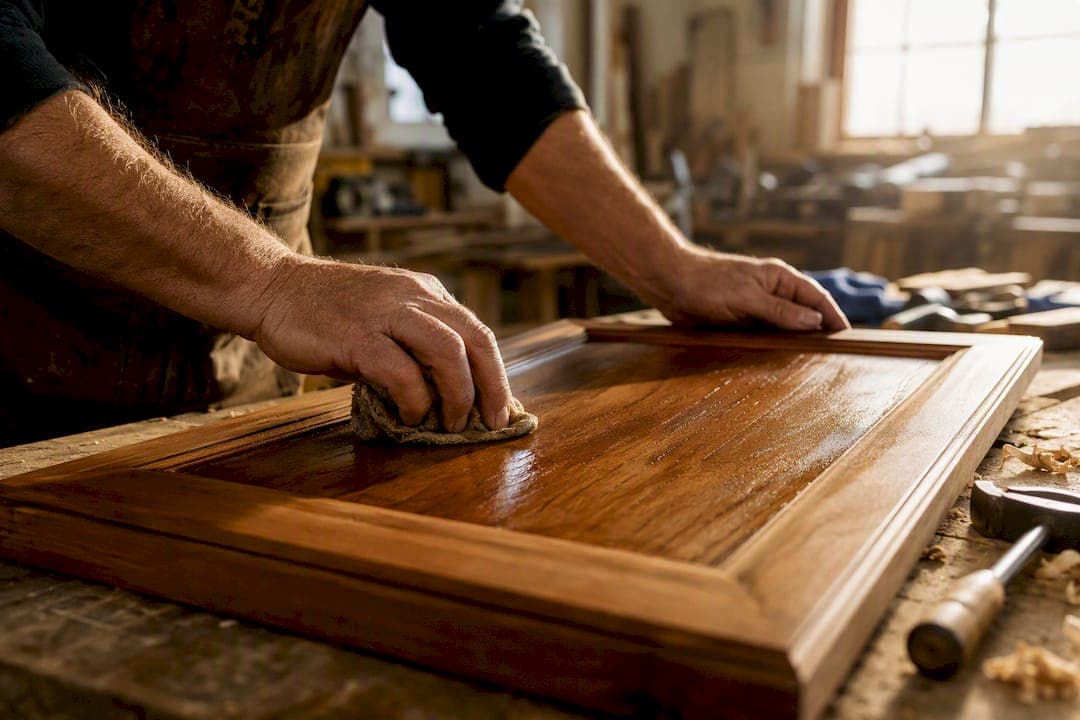
Quality cabinetry comes down to what's behind the door, not just the finish you see in the showroom photo. Most reputable shops, veteran-owned or not, build cabinet boxes from plywood rather than particleboard or MDF, because plywood resists moisture, holds screws better over time, and doesn't sag under the weight of dishes and cookware. Best Cabinet Specialist builds its boxes from plywood and pairs them with solid wood doors, a combination that costs more to produce than laminate-over-particleboard boxes but lasts considerably longer under daily kitchen use.
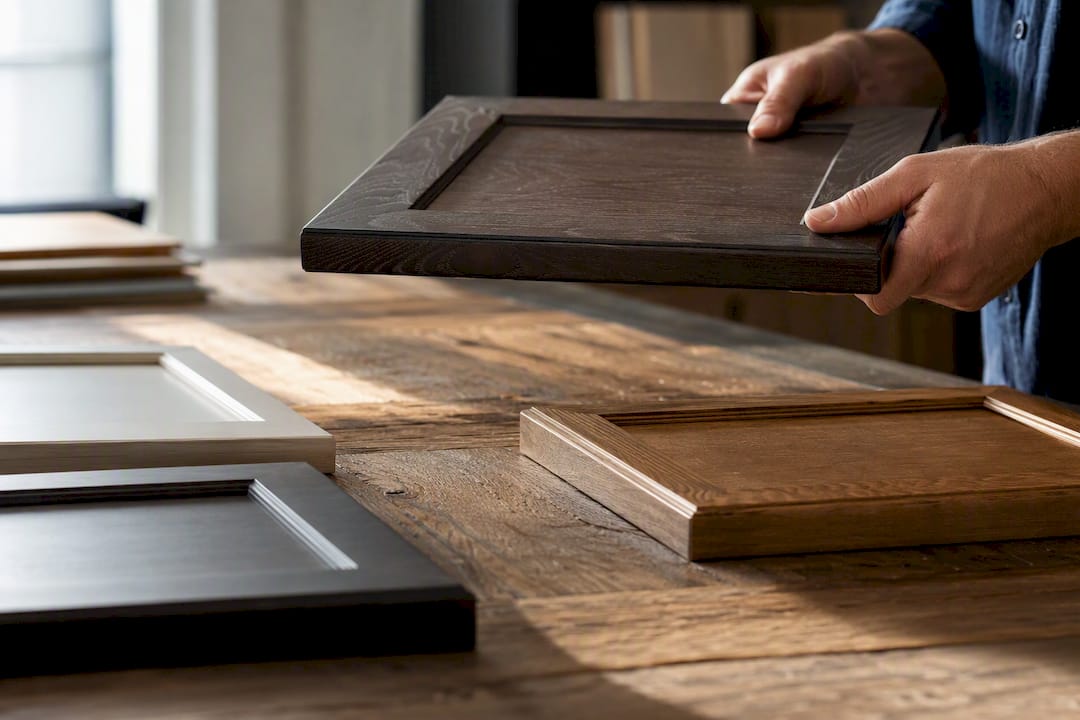
Door styles run the usual range: shaker, raised-panel, slab, and transitional profiles, typically available in painted, stained, or glazed finishes. When you're comparing specs sheets, look for a few concrete signals of build quality:
- Box material listed explicitly as plywood (usually 1/2 inch or 5/8 inch for sides, 3/4 inch for shelves)
- Dovetail or rabbet joinery at drawer corners instead of stapled butt joints
- Soft-close hinges and slides from a named hardware brand, not a generic "soft close" claim with no manufacturer behind it
- Solid wood door and drawer fronts rather than wood-veneer over engineered board
Veteran-owned shops tend to lean hard into service and community ties, since trust and referrals matter more to a small, mission-driven business than they do to a big-box retailer. That often shows up as more direct communication with a real person, trade pricing for contractors and builders, and a willingness to talk through your project instead of routing you to a call center.
Pro Tip: Ask for a physical door and drawer sample before you commit to a full order. A five-minute look at the joinery and finish tells you more than any spec sheet.
How to Verify a Company's Veteran-Owned Status
Anyone can put "veteran-owned" on a website. Verifying it takes a few extra minutes, and it's worth doing if that status factors into your decision.
- Check the VA's Vets First Verification Program (formerly VetBiz), which confirms service-disabled and veteran-owned small businesses for federal contracting purposes.
- Search Sam for the company's registration and business ownership designations if the vendor works with government or institutional clients.
- Look up state-level small-business or veteran-owned supplier registries, since many states run their own certification programs alongside the federal one.
Beyond the registries, ask the vendor directly for a certificate scan, a small-business ID number, or a SAM.gov listing. A legitimate veteran-owned company will have this documentation ready without hesitation.
Watch for these red flags:
- Vague language like "veteran-friendly" instead of a direct ownership claim
- No verifiable phone number, address, or named point of contact
- A company that can't produce any documentation when veteran ownership is central to its marketing
How to Choose the Right Veteran-Owned Cabinet Company
Once you've confirmed veteran ownership, the real comparison starts. A handful of factors separate a smooth cabinet order from a frustrating one, and most of them come down to questions you should ask before you pay a deposit.
Weigh these decision factors against each other:
- Construction method (plywood box vs. particleboard, solid wood doors vs. veneer)
- Warranty length and what it actually covers (hardware, finish, structural defects)
- Lead time for both standard and custom finishes
- Installation support, whether that's guides, video walkthroughs, or phone support
- Return policy for damaged or miscounted shipments
- Trade or bulk pricing if you're a contractor or ordering for multiple rooms
When you call or email a vendor, ask specifically:
- "What material is the cabinet box, and what's the door made from?"
- "What's your current lead time for standard finishes versus custom colors?"
- "Is shipping included, and what happens if something arrives damaged?"
- "Do you offer installation guidance, and is there a support line if I get stuck?"
- "Can you provide documentation of your veteran-owned status?"
Pro Tip: If speed matters more than customization, ask about in-stock or "project-ready" inventory first. Custom finishes almost always add weeks to your timeline, so knowing what's already on the shelf can save you a month of waiting.
Prioritize based on what actually matters for your project. A contractor juggling three jobs cares about lead time and trade pricing above all else. A homeowner doing a once-in-a-decade kitchen remodel might care more about finish options and warranty coverage than shaving a week off delivery.
Ordering Timeline, Cost, and Shipping Expectations
Ready-to-assemble (RTA) cabinets ship faster than fully assembled or custom-door options, because there's less labor and no glue-up or finish-cure time built into production. RTA options generally represent the fastest and most budget-friendly path for homeowners who don't need custom sizing or specialty finishes.
Several factors stretch out lead times: custom paint or stain colors, non-standard cabinet dimensions, and ordering during peak renovation season (spring through early summer tends to back up most shops). In-stock finishes and standard box sizes move faster, since there's no custom production queue to wait behind.
Pricing shapes out roughly like this across the market:
- Entry-level RTA cabinets: the most budget-friendly tier, suited to rentals, flips, or tight budgets
- Plywood-box, mid-range cabinets: the sweet spot for most kitchen remodels, balancing durability and cost
- Higher-end custom door upgrades: priced above standard lines due to added finish and joinery work
Cost callout: Beyond the cabinet price itself, budget for shipping (often calculated by weight and distance), and factor in a buffer for returns if a panel arrives damaged in transit. Comparing RTA and assembled tiers directly before you order helps you avoid paying for customization you don't actually need.
Reputable Veteran-Owned Cabinet Companies to Consider
The veteran-owned cabinet space skews toward small and mid-size operations rather than the big national chains, which is exactly the point if supporting veteran-owned business matters to your purchase.
Best Cabinet Specialist stands out for combining plywood-box construction and solid wood doors with fast shipping and trade pricing for contractors and builders. It's a direct-to-consumer model, so you're ordering straight from the source rather than through a distributor markup, and the veteran-owned and women-owned ownership structure is stated plainly on the site rather than buried in an "about us" page.
Beyond any single supplier, your search should include a mix of channels: regional custom cabinet shops run by veterans (often found through state veteran-business registries), online RTA retailers with verified veteran ownership, and local contractors who subcontract cabinet work to veteran-owned fabrication shops. Search engines and directories help, but the registries listed earlier in this guide are the only reliable way to confirm a claim rather than take a homepage's word for it.
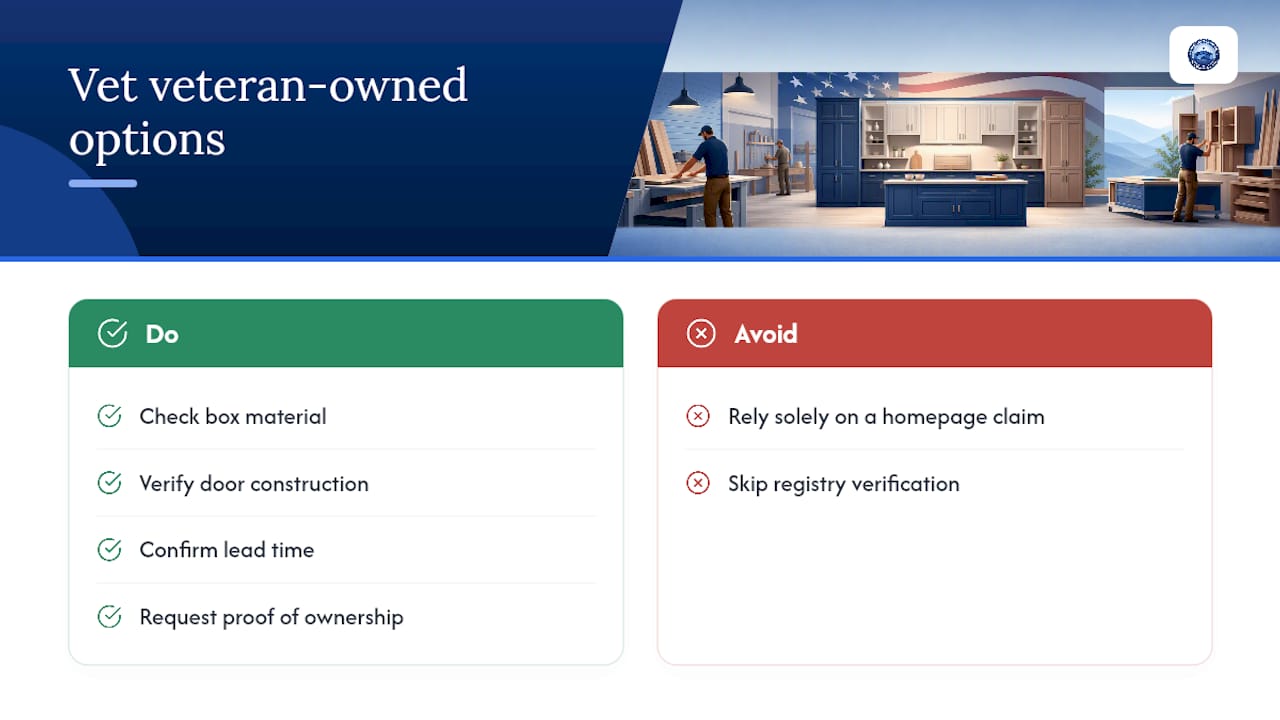
If you're weighing multiple veteran-owned options, run each one through the same checklist: box material, door construction, lead time, and documented proof of ownership status. A shop that answers all four clearly, without hedging, is usually the safer bet.
What Customers Say About Veteran-Owned Cabinet Companies
Reviews for veteran-owned cabinet shops tend to cluster around a few recurring themes: responsiveness, straightforward communication, and a sense that the company treats the sale as a relationship rather than a transaction. That tracks with how small, mission-driven businesses typically operate. There's more at stake in every review when your customer base is smaller and more local.
Common praise points in this category include accurate order fulfillment (boxes arrive matching the spec sheet), fast responses to shipping damage claims, and clear communication about lead times upfront rather than after a delay. Common complaints across the broader cabinet industry, veteran-owned or not, tend to focus on finish color variation between batches and confusion over installation hardware that wasn't included in the base price.
When you're reading reviews for any specific company, pay closer attention to how the business responds to a negative review than to the negative review itself. A company that owns a mistake, offers a concrete fix, and follows up publicly is telling you more about its service culture than five stars from someone who never had a problem to begin with. If a supplier has no reviews addressing shipping damage or lead-time changes at all, treat that as a gap in your research rather than a clean bill of health.
Warranty and After-Sales Service: What's Different Here
Warranty terms across the cabinet industry vary widely, from one-year limited coverage on hardware only to lifetime structural warranties on the box itself. Veteran-owned shops often extend more direct after-sales support simply because the team answering your warranty claim is closer to the people who built or sourced your cabinets, rather than a support queue several layers removed from production.
When you're comparing warranty language, look for the specifics: Does it cover the plywood box structurally, the door finish, or both? Is soft-close hardware covered separately, and for how long? What's the actual process if a drawer front warps or a hinge fails eighteen months in, do you need a receipt, photos, a case number, or all three?
After-sales service matters just as much as the warranty document itself. Ask whether replacement parts ship quickly for common issues (a cracked door, a bad hinge) or whether you're waiting behind a full production queue for a single replacement panel. A veteran-owned shop with a smaller customer base can often turn around a replacement part faster than a large manufacturer juggling thousands of active orders, but that's not guaranteed. It's worth confirming directly rather than assuming.
Veteran-Owned vs. Non-Veteran-Owned Cabinet Companies: Does Quality Differ?
Veteran ownership itself doesn't change plywood thickness or joinery technique. Construction quality comes down to the specific company's manufacturing standards, not the ownership structure sitting behind it. A veteran-owned shop using particleboard boxes isn't automatically better built than a non-veteran-owned shop using plywood, and the reverse holds just as true.
Where veteran-owned companies tend to differentiate is in service culture and communication style. Smaller, veteran-led operations often prioritize direct customer relationships, clear answers to specific questions, and a service ethic shaped by military experience with discipline, follow-through, and accountability. That's a real, if intangible, difference. It shows up more in how a company handles a shipping problem or a warranty claim than in the cabinet box itself.
The practical takeaway: don't buy from a veteran-owned company on ownership alone, and don't dismiss one for the same reason. Run every vendor, veteran-owned or not, through the same construction and service checklist covered earlier in this guide. Choosing to support a veteran-owned business becomes a genuine value-add once you've confirmed the underlying product meets your standards, not a substitute for that verification.
Why Ownership Structure Shapes the Buying Experience
Sourcing cabinets for a renovation project usually comes down to a tradeoff between speed and customization. Every homeowner wants both, but few suppliers deliver both at the same level, and understanding that tradeoff upfront saves a lot of frustration mid-project.
What's easy to overlook is how much ownership structure influences that tradeoff in practice. A veteran-owned shop with a smaller team often makes faster decisions on custom requests, because there are fewer layers between your question and someone who can actually answer it. That doesn't mean bigger always means slower, but it does mean the buying experience with a veteran-owned supplier tends to feel more direct.
The other underappreciated factor is accountability. Military-trained operators tend to build processes around clear standards and follow-through, which shows up in how consistently a company documents its construction specs and honors its stated lead times. That's not a guarantee, but it's a pattern worth weighing when construction quality between two vendors looks similar on paper.
Get Veteran-Owned Cabinets Without the Long Wait or the Markup
Best Cabinet Specialist is the direct alternative to the slow custom-shop timeline and the marked-up big-box showroom, built specifically for homeowners who want plywood-box durability and solid wood doors without a three-month wait. Every cabinet ships from a veteran-owned and women-owned business that prioritizes rapid shipping and project-ready inventory, so your renovation timeline doesn't get held hostage by a custom production queue.
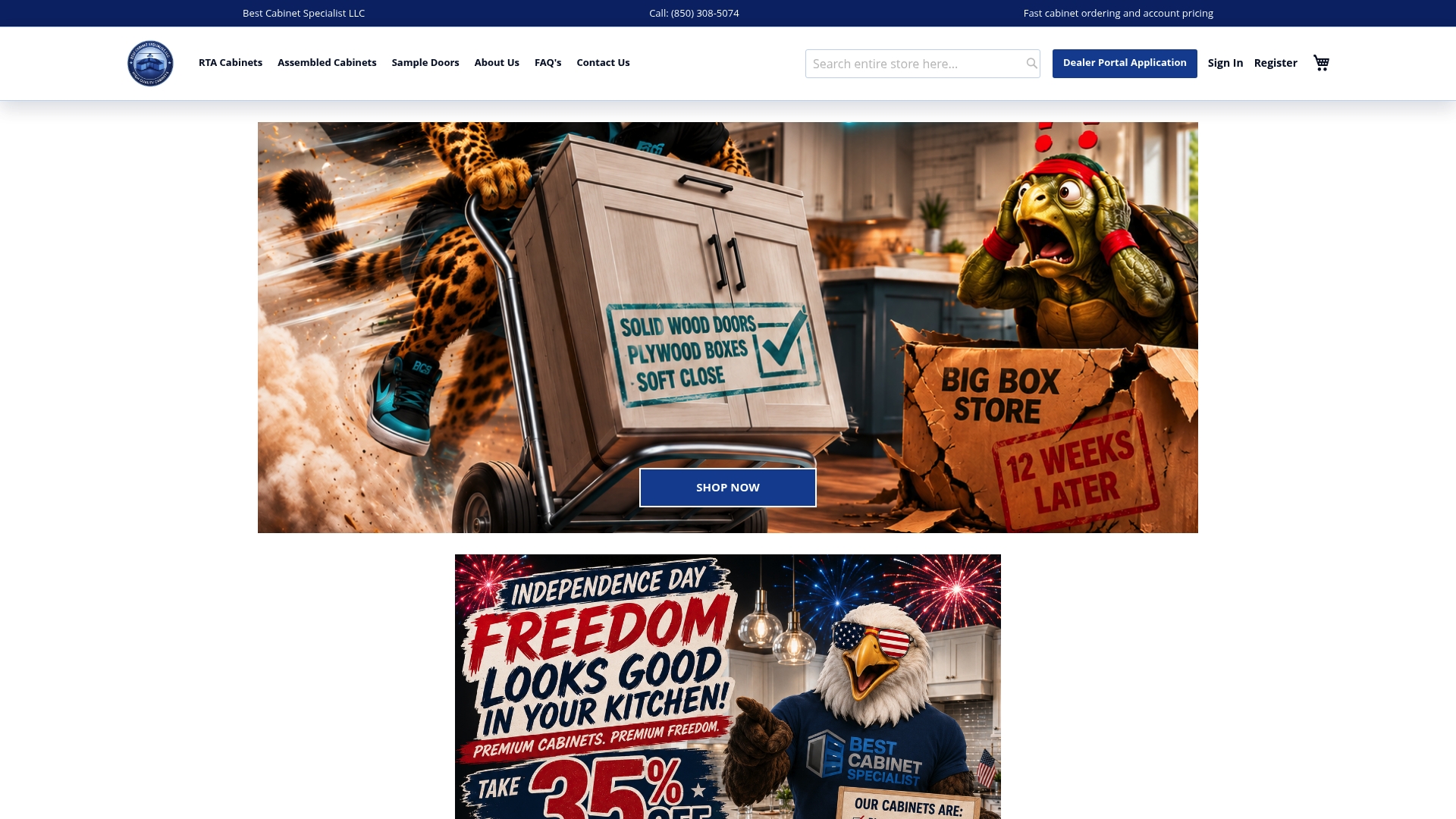
Trade pricing is available for contractors and builders ordering in bulk, and the direct-to-consumer model cuts out the distributor markup you'd pay through a traditional retail showroom. If you're planning a kitchen or bathroom remodel and want cabinets that arrive on schedule, request a quote through the Best Cabinet Specialist landing page and get a firm price and lead time before you commit to a single supplier.
Useful Sources to Check Next
- Top 3 Ready to Assemble Kitchen Cabinet Options for RTA-specific lead time and budget guidance
- Best Wholesale Kitchen Cabinets for Contractors and Homeowners for trade and bulk pricing details
- One Day Doors & Closets for coordinating interior door and closet upgrades alongside your cabinet order